Flat 50% OFF sitewide!
NOW & ON BLACK FRIDAY!


GIA Vs. IGI Lab Diamonds: Certification Guide for UK Buyers
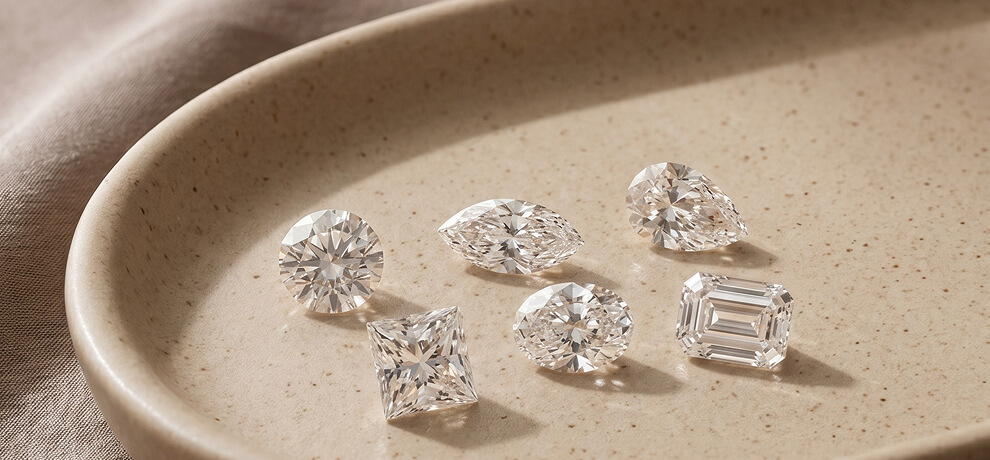
Suppose that you found two one-carat lab diamonds of about the same cost. The first one has an IGI-certified lab diamond, with specific colour and clarity grades. The second one is certified by GIA, and the label says “Premium.” What would be your choice?
The problem cannot be solved simply by choosing the more famous laboratory. To compare GIA vs. IGI lab diamonds, you have to know what the certificates mean, how the grading systems differ, and whether the diamond itself corresponds to its price.
Table of Content
- What Are GIA and IGI Diamond Grading Reports?
- GIA vs. IGI Lab-Grown Diamonds: Important Distinctions
- How Do GIA and IGI Grade Lab-Grown Diamonds?
- How Can You Check a GIA or IGI Lab Diamond Report Is Genuine?
- How to Choose a Certified Lab-Grown Diamond in the UK
- GIA or IGI: Which Is Right For You?
What Are GIA and IGI Diamond Grading Reports?
The GIA and IGI serve as independent gemological labs where diamonds are tested and evaluated. The grading reports issued by these labs are usually referred to as diamond certificates. But the term "diamond grading report" is much more accurate. It may be important to note that both aren't valuations nor any warranties on resale value.
What GIA does
The Gemological Institute of America (GIA) not only offers research and education in gemology but also grades diamonds. The assessments of eligible lab-grown diamonds within the colourless to near-colourless range have included Premium and Standard grades since October 2025.
What IGI does
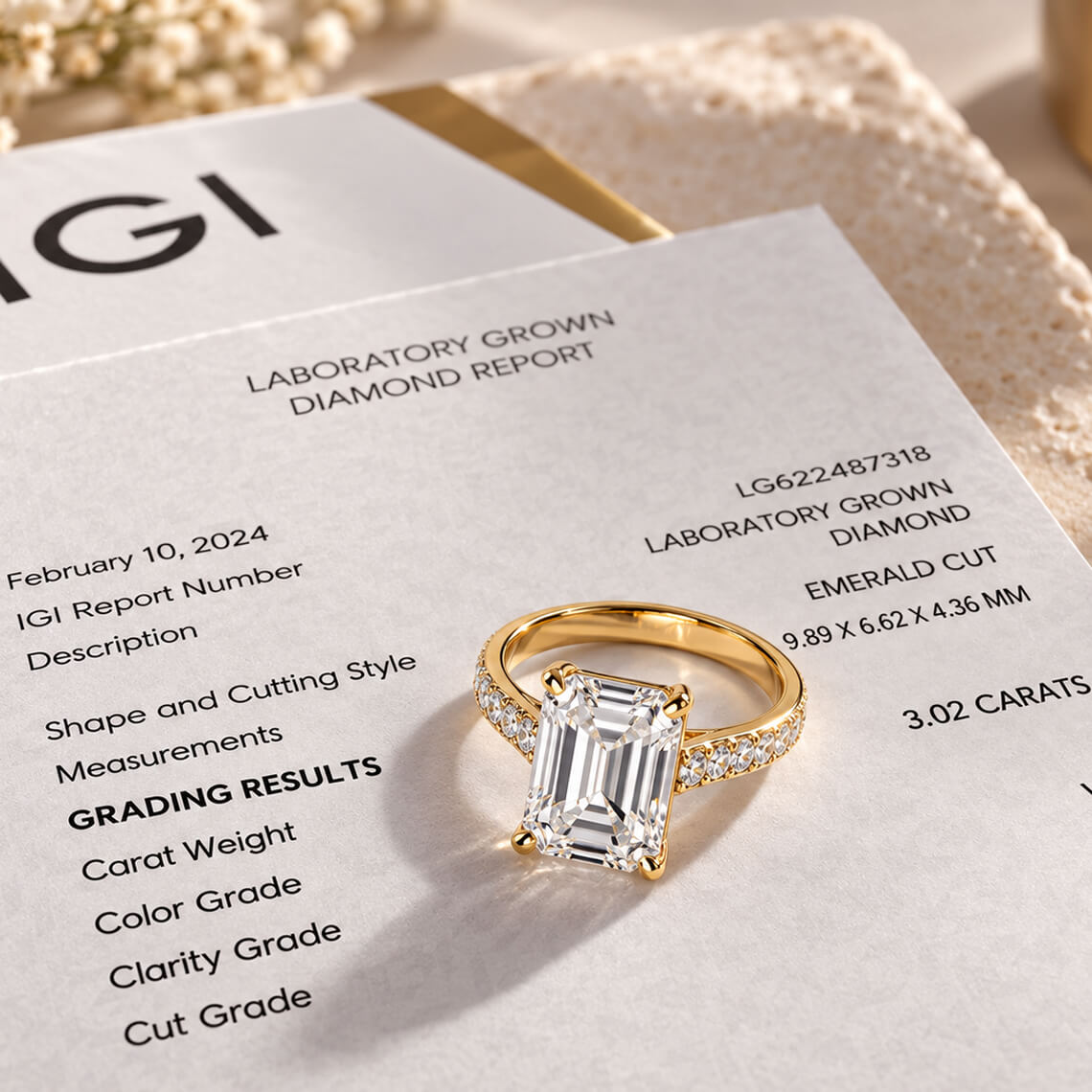
The International Gemological Institute (IGI) produces reports for natural and lab-grown diamonds. It records the properties of diamonds, such as carat weight, colour, clarity, and cut. Individual grades make it easier to compare diamonds with similar properties.
GIA vs. IGI Lab-Grown Diamonds: Important Distinctions
The key distinction lies in how the laboratories deliver the results. While IGI mostly employs individual grade descriptors, the GIA utilises an overall classification system for the newly assessed lab-grown diamonds.
|
Comparison |
GIA |
IGI |
|
Grading Reports and Terms |
Premium or Standard for qualifying stones using its more recent system |
Separate grading for colour and clarity with other specifications as appropriate |
|
Assessment & Documentation |
General quality grading; earlier evaluations might be different |
Specific reports on individual qualities |
|
Availability |
The new assessment requires certain eligibility criteria |
Reports available for different man-made diamonds and jewellery |
|
Cost concerns |
Depends on the service and associated charges |
Depends on the type of report and associated charges |
Grading report terms: The new grading system developed by GIA is not a one-to-one mapping to colour grade and clarity grade. For instance, an E-colour, VS1 diamond graded by IGI cannot be compared directly to a GIA Premium diamond using the names.
Information and documents: It will depend on the type of report as well as the date of issuance. Look at the specific document instead of assuming that all reports issued by the same laboratory have similar contents.
Report availability and costs: It will depend on the service. Even the retail price will also depend on the specifications of the diamond, as well as its provider and mounting.
How Do GIA and IGI Grade Lab-Grown Diamonds?
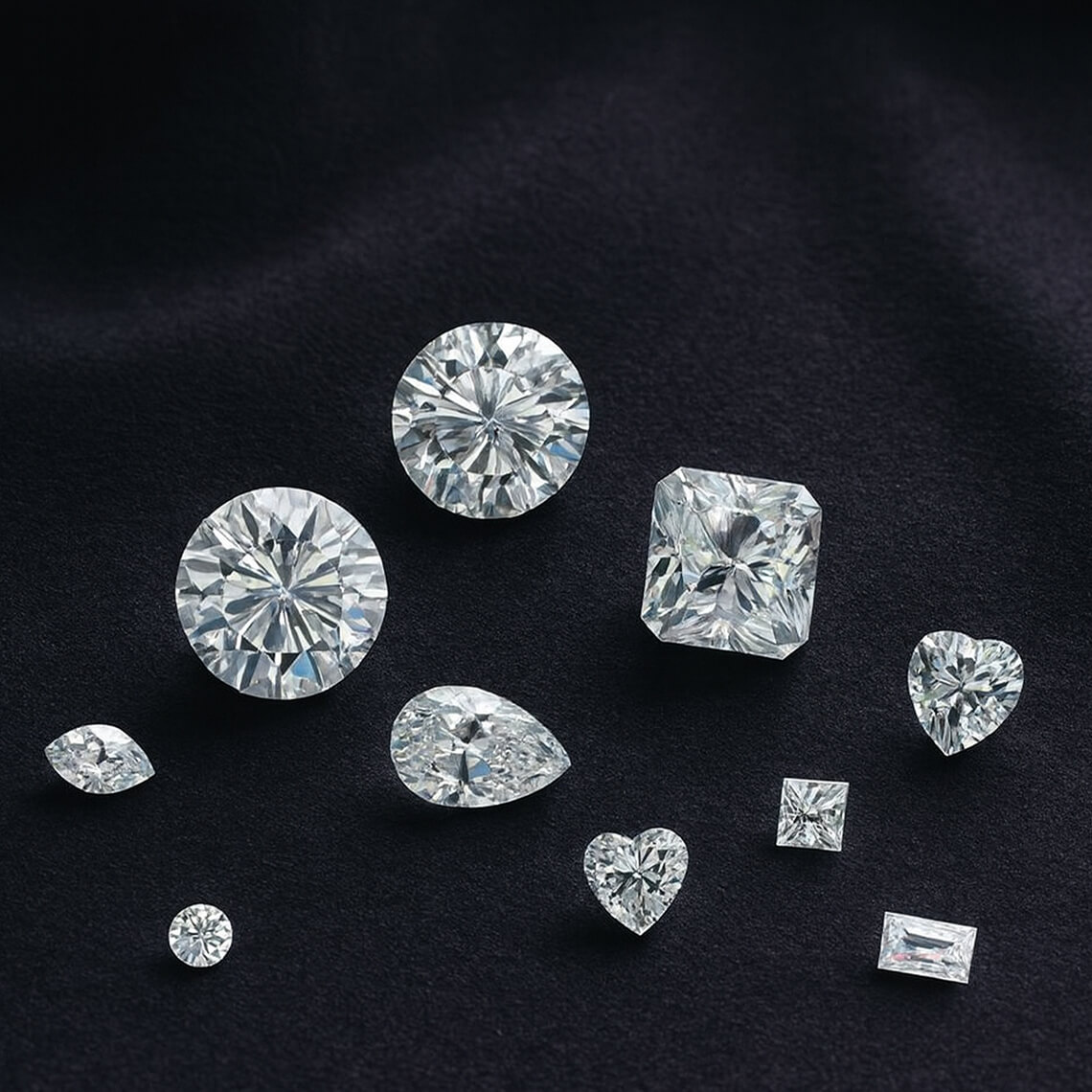
IGI and GIA assess the same basic qualities of a lab-grown diamond but present the results differently. IGI gives a separate grade for each characteristic, while GIA places eligible stones into an overall Premium or Standard category. Knowing how each system works makes it easier to compare diamonds with different reports.
How IGI Grades a Diamond Report
IGI reports give individual grades for all the characteristics. It makes sense to use the 4C’s to differentiate diamonds, especially when individual grades are provided in the report.
-
Carat: Diamond weight measurement; two one-carat diamonds can have different sizes.
-
Colour: Shows the place of a diamond on the colour grading scale.
-
Clarity: Shows the inclusions and surface characteristics of a diamond, their size, location, and visibility.
-
Cut: The proportions and finish affecting light performance, with the grading being available according to the report and the diamond shape.
How GIA Grades Diamond Reports
Newer GIA assessment involves a specific combination of quality criteria for an overall categorization of stones eligible for this type of evaluation. GIA classifies diamonds in two categories: premium and standard.
Premium: Diamonds that are graded highly in terms of clarity, cut, polish, and symmetry are classified as premium.
-
D colour grade
-
VVS or better clarity
-
Excellent cut, polish, and symmetry
Standard: Diamonds that are graded moderately in terms of clarity, cut, polish, and symmetry are classified as standard.
-
E-J colour grade
-
VS or better clarity
-
Good to Very Good cut, polish, and symmetry
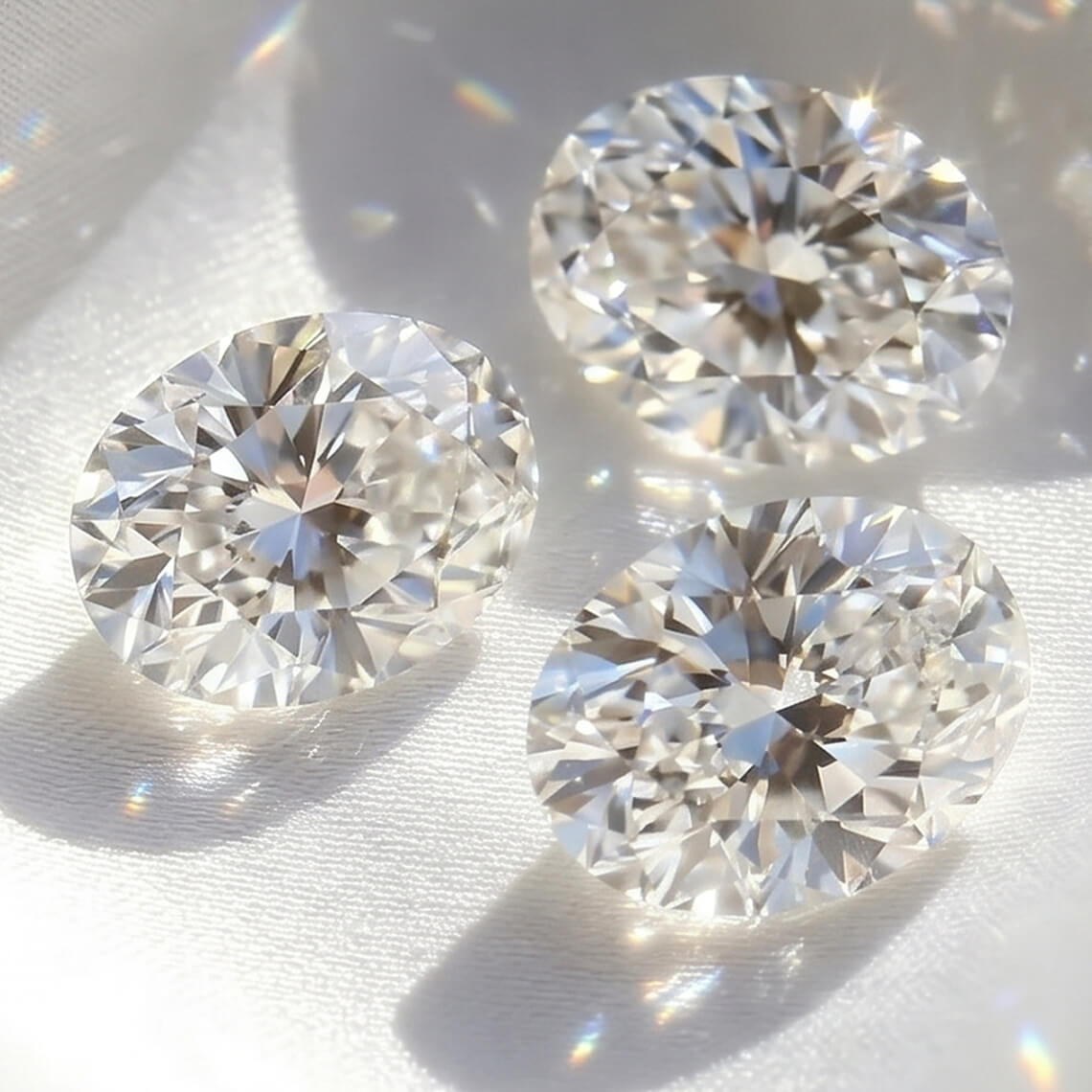
Diamonds with lower than minimum quality marks receive no grade by GIA. This does not mean that diamonds belonging to the same class will look the same. The proportions, the arrangement of facets, and the presence of visible inclusions might influence the appearance. Compare the diamonds using the report and photos.
How Can You Check a GIA or IGI Lab Diamond Report Is Genuine?
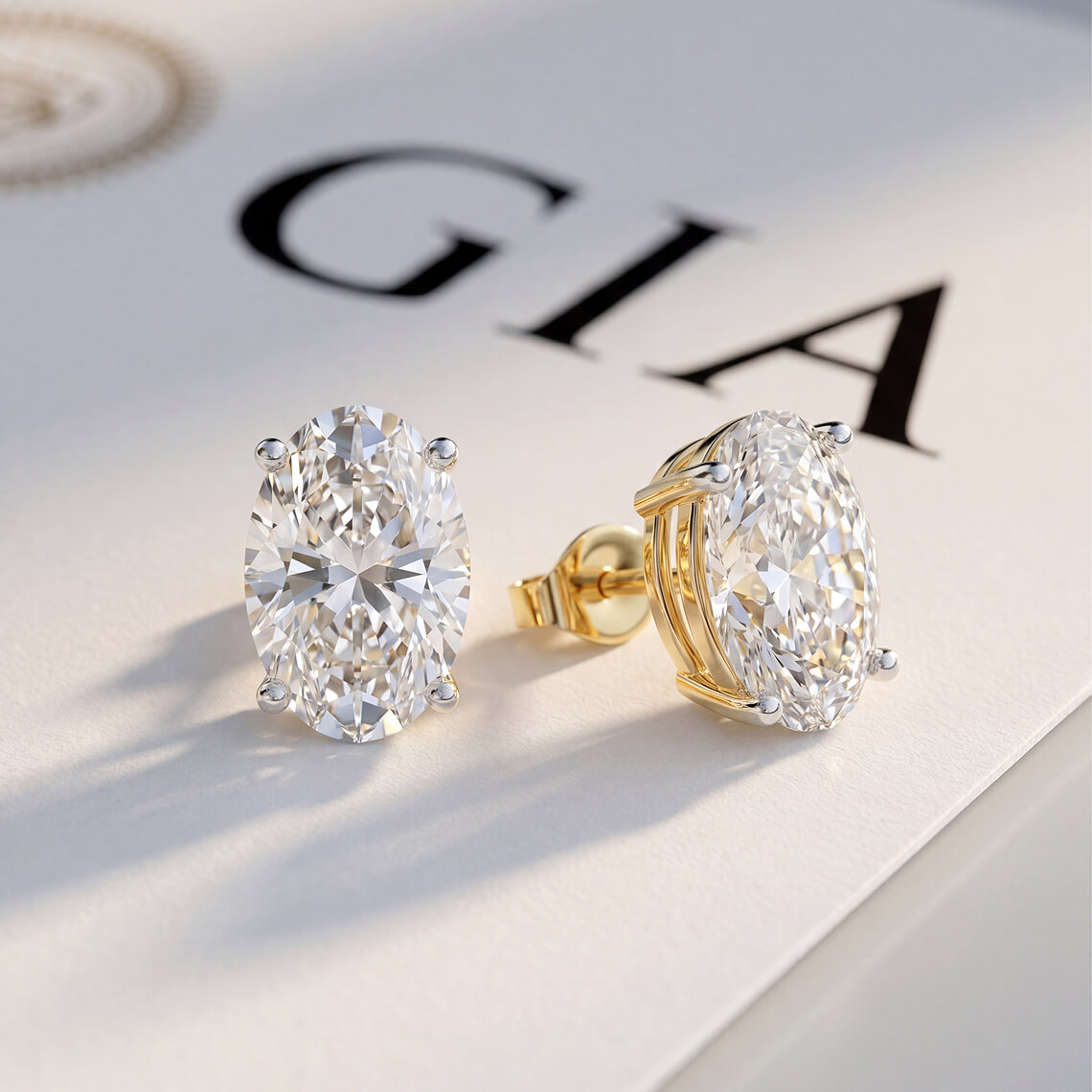
Enter the report number on the laboratory’s official verification service, then check that the shape, carat weight, measurements, and grades match the diamond you’re buying. Do this before you place an order, not after delivery.
Utilise the verification tool provided by the laboratory
Visit the official website of the laboratory and input the report number into their verification tool. Analyze the details from the tool itself rather than from the diamond certificate picture provided by the retailer.
Check for matching report number and diamond specifications
Compare the report with the description of the item. Compare the shape, carat weight, dimensions, and grades. If there are any inconsistencies, ask the seller about them before placing an order.
Inspect the inscription on the laser
Certain diamonds have a tiny laser inscription on their girdle, which is a thin ring on the outside of the diamond. If there is one, it could be the report number. The jeweller will use a microscope to see it and then match it against the diamond certificate. Not all diamonds have a laser engraving.
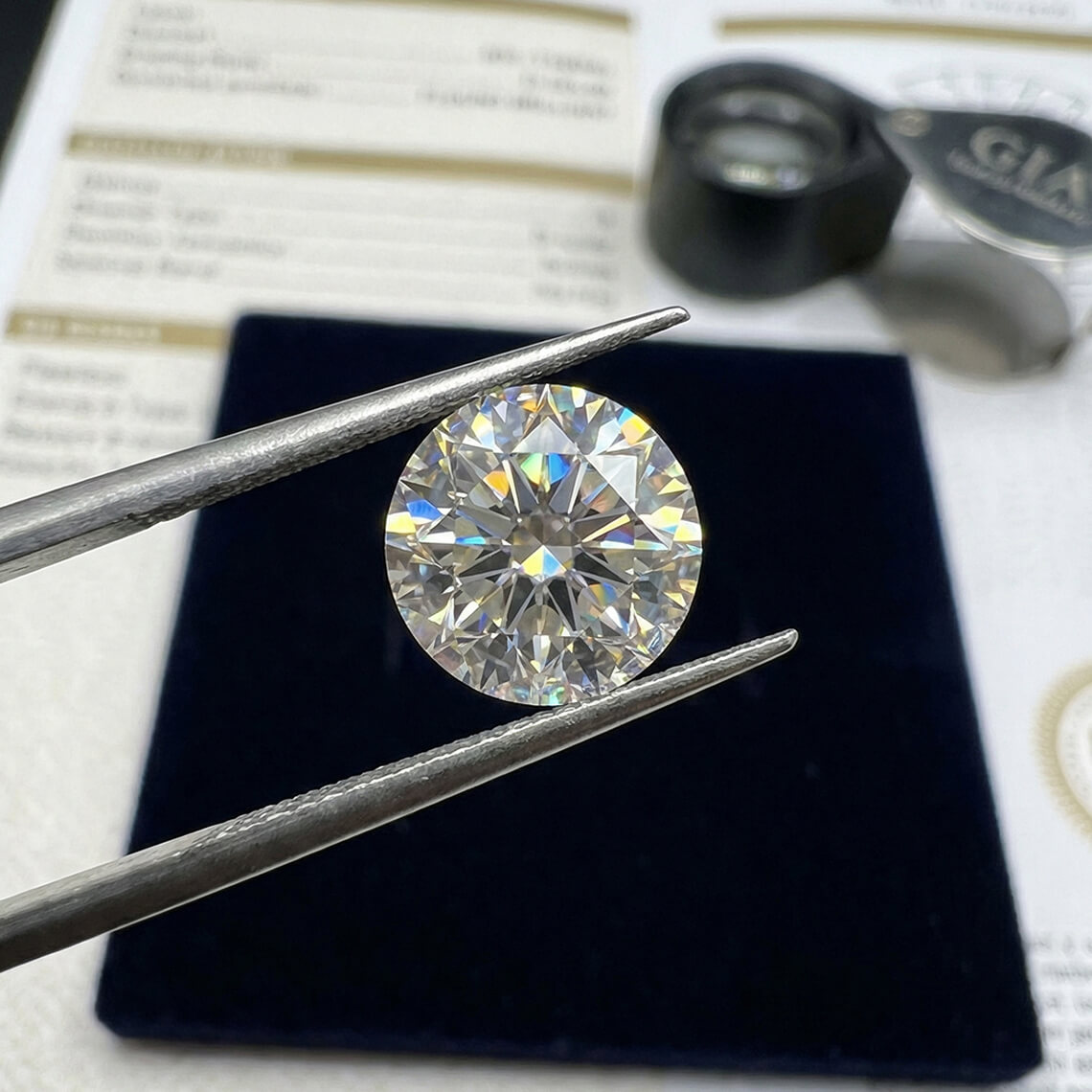
How to Choose a Certified Lab-Grown Diamond in the UK
A grading report is a starting point, not the whole decision. To choose a certified lab-grown diamond, compare stones with similar grades, check the measurements rather than relying on carat weight alone, and read the retailer’s returns and warranty terms before you order. Together, these three checks show whether a diamond is good value and whether your purchase is protected.
Compare diamonds of the same grade
Do not assume that IGI-certified lab diamonds are equivalent to GIA-assessed stones. Look at the underlying information and compare the prices for stones of comparable specifications. Evaluate if the difference in price is justified.
Consider measurements, not just carats
The number of carats does not provide you with the exact size of a diamond. Look at the measurements provided, especially when you are comparing stones of the same shape and weight.
Look at return policies and warranty terms
When buying from a UK dealer, consider the return period, the refund terms, the policy on resizing, and warranty. Delivery options should also be taken into account, including whether there are charges for return shipping, etc. The certification cannot substitute the seller's guarantee.
Remember that when analysing a diamond certificate, the document states the assessed features, not the amount of money you may get if selling the diamond later.
GIA or IGI: Which Is Right For You?
Neither laboratory is the best choice for every buyer. It depends on how you want to compare diamonds. IGI gives separate grades for different characteristics, while GIA groups eligible lab-grown diamonds into broader quality categories.
Choose an IGI-certified lab-grown diamond if you want to compare diamonds by colour, clarity, and cut. These separate grades make it easier to compare similar stones and understand what you’re paying for. IGI reports are also widely used for lab-grown diamonds, giving you more options to compare.
Choose a GIA-assessed diamond if you prefer an overall quality category instead of separate grades. GIA’s Premium or Standard result shows that the diamond meets the lab’s criteria, but it doesn’t provide exact colour or clarity grades.
Whichever report you choose, look at the diamond itself before making a decision. Compare its measurements, appearance in photos or videos, and price with similar diamonds. At Friendly Diamonds, use the grading report alongside these details to find a diamond that suits your preferences and budget.
FAQs
Is IGI certification for lab-grown diamonds trustworthy?
Are GIA-certified lab-grown diamonds better?
Can two diamonds of the same grade differ?
Can I verify the IGI or GIA report online?
Does the grading report prove the value of a diamond?