Flat 50% OFF sitewide! BLACK FRIDAY sale live now! 
Flat 50% OFF sitewide! BLACK FRIDAY sale live now!
Flat 50% OFF sitewide! BLACK FRIDAY sale live now!




How To Clean Jewellery At Home So It Sparkles On Christmas Day
Christmas brings plenty of reasons to dress up, from festive dinners and family gatherings to gift exchanges with loved ones. Your attire, as well as your jewellery, needs proper care to enhance your overall look. However, diamond rings, earrings, and necklaces tend to lose their brilliance with regular wear due to the buildup of natural skin oils and everyday residue.
The good news is that restoring their appearance does not require a trip to the jeweller. Knowing how to clean jewellery at home means your favourite pieces will be ready for Christmas without any risk of damaging delicate stones or settings.
Table of Contents
- Why Clean Your Jewellery Before Christmas
- What You Need to Clean Jewellery at Home
- A Simple Jewellery Cleaning Method
- How to Clean Diamond Jewellery at Home
- How to Clean Gold, Platinum and Other Jewellery
- Common Jewellery Cleaning Mistakes to Avoid
- How to Make Your Jewellery Sparkle for Christmas Day
- When Should You Take Jewellery to a Professional?
- Final Thoughts
Why Clean Your Jewellery Before Christmas?
Even jewellery that looks clean can collect oils, dust, soap, and skincare residue. Diamonds attract oil, which means hand creams and natural skin oils can leave a thin film across their surfaces. This reduces the amount of light they reflect.
Cleaning removes this buildup and helps restore the diamond's natural brilliance.
It also lets you examine your jewellery before Christmas parties and family photographs. Check for loose stones, damaged clasps or worn prongs before wearing valuable pieces.
A little preparation helps your jewellery stay looking its best throughout the celebrations.
What You Need to Clean Jewellery at Home
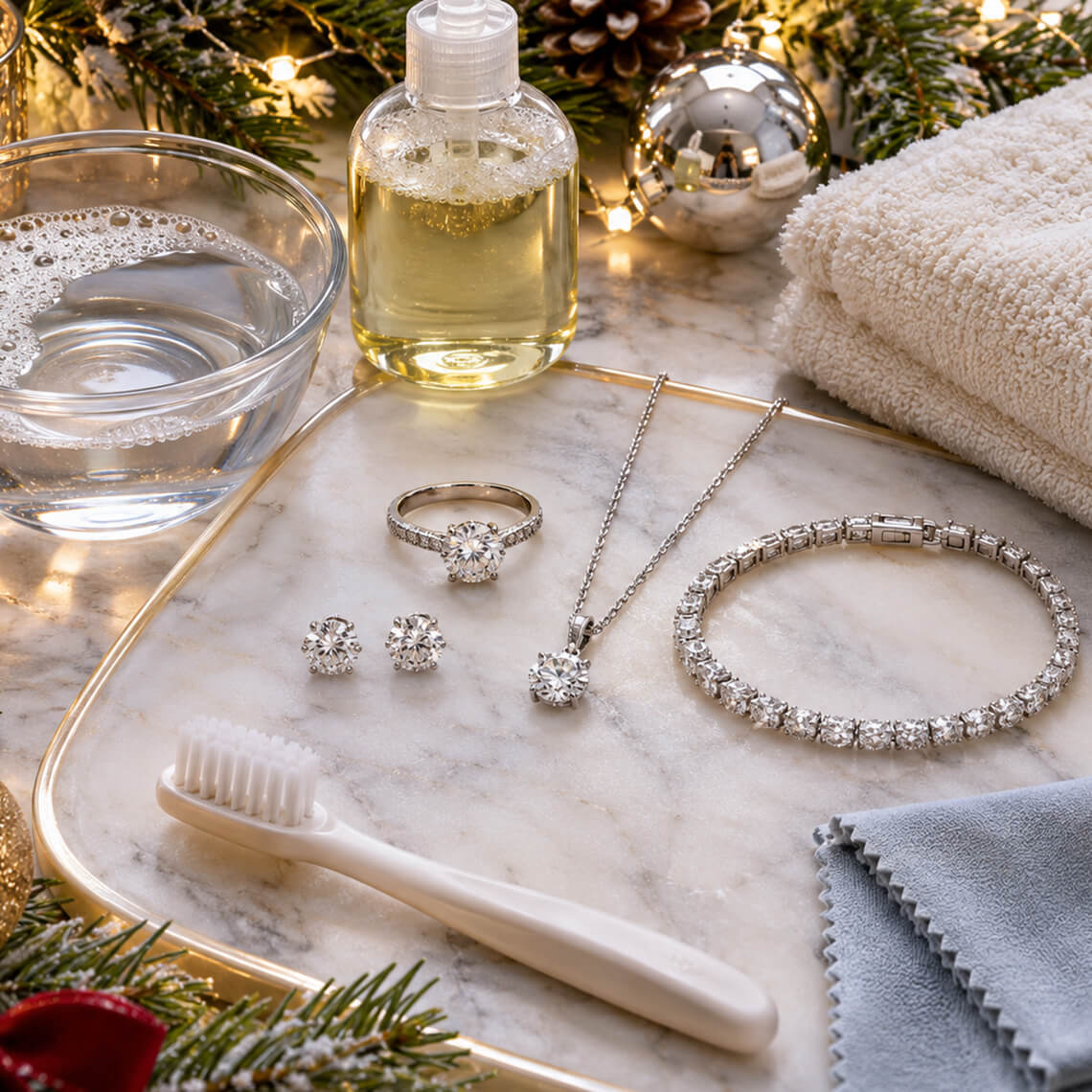
You do not need expensive cleaning equipment for most securely set diamond jewellery.
Prepare these simple items:
-
A small bowl of lukewarm water
-
A few drops of mild liquid dish soap
-
A soft-bristled toothbrush reserved for jewellery
-
A clean microfibre or lint-free cloth
-
A soft towel for drying
-
A small jewellery cleaning brush for intricate settings, if needed
Never clean jewellery directly over an open drain; use a bowl instead. Small earrings, loose backs, or delicate components can easily slip into the drain.
A Simple Jewellery Cleaning Method
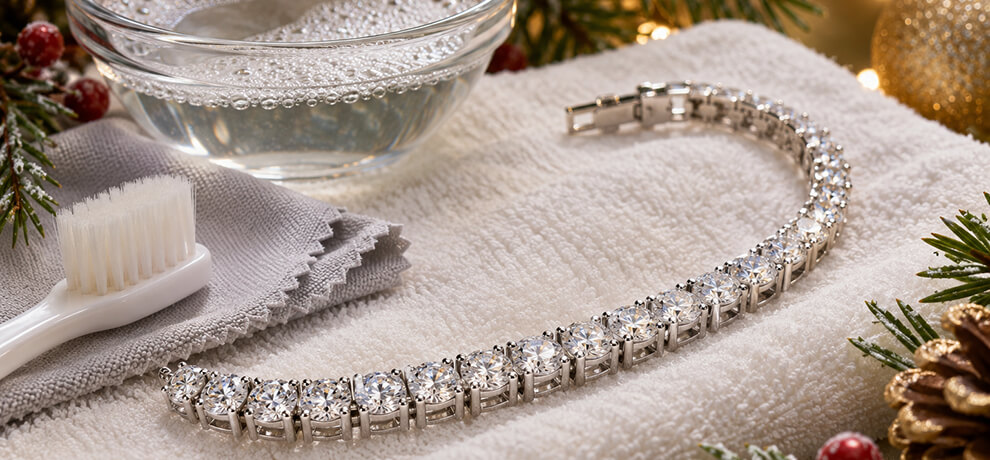
For most untreated diamond jewellery in secure gold or platinum settings, follow these steps:
-
Mix a few drops of mild liquid soap with lukewarm water.
-
Place the jewellery in the solution for approximately 10–15 minutes to loosen everyday residue.
-
Gently brush around the diamond and setting without applying pressure to the prongs.
-
Rinse carefully in a separate bowl of clean water.
-
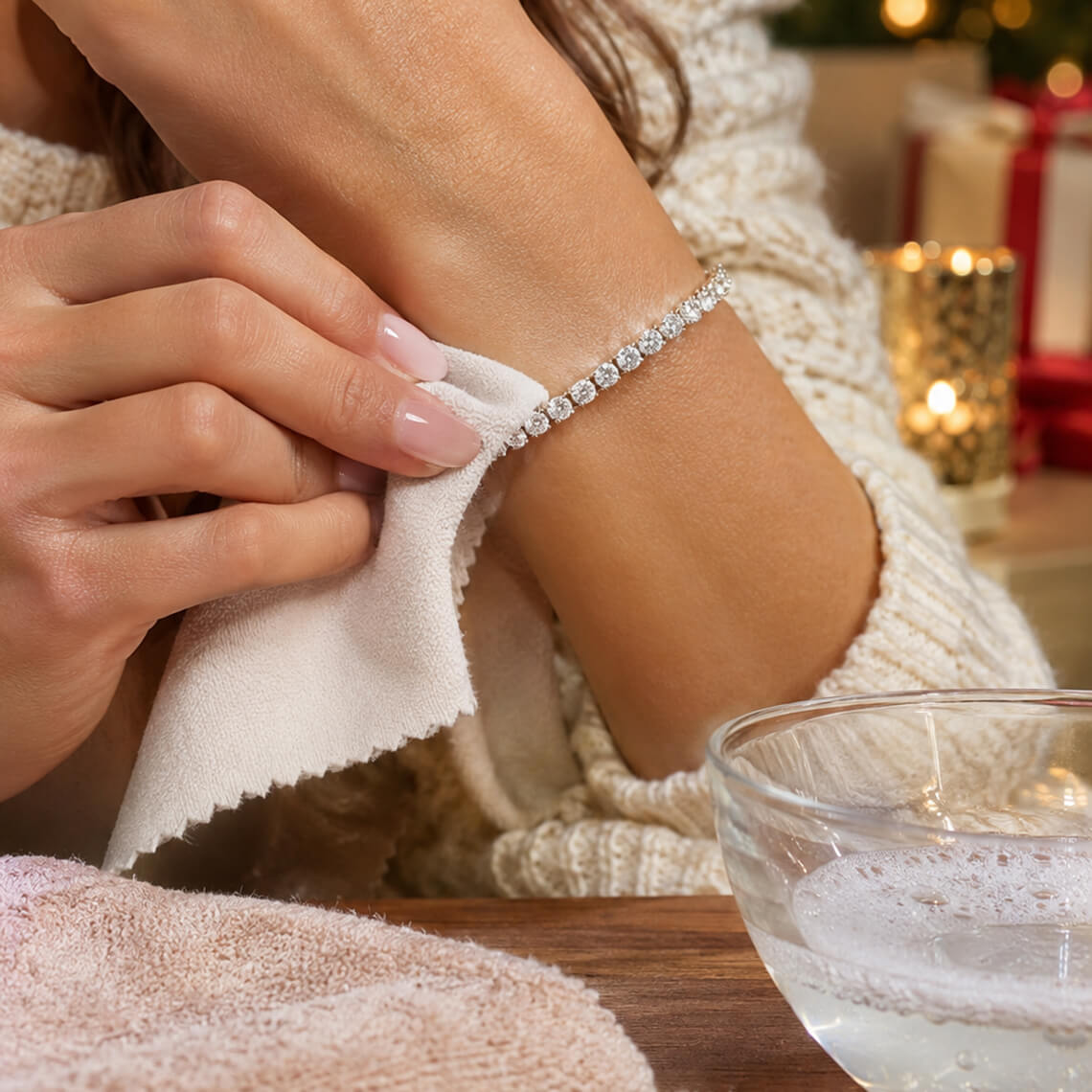
Pat dry with a lint-free cloth and leave the piece on a soft towel until completely dry
If your jewellery came with specific care instructions, check those first. Pieces with treated gemstones, unusual finishes, or any existing damage may not be suitable for even this gentle method.
How to Clean Diamond Jewellery at Home
Different jewellery designs collect dirt in different places. Use these techniques to suit each type of diamond jewellery.
How to Clean Lab-Grown Diamond Rings
Lab-grown diamonds have essentially the same physical, chemical, and optical properties as mined diamonds. They can generally be cleaned using the same gentle methods.
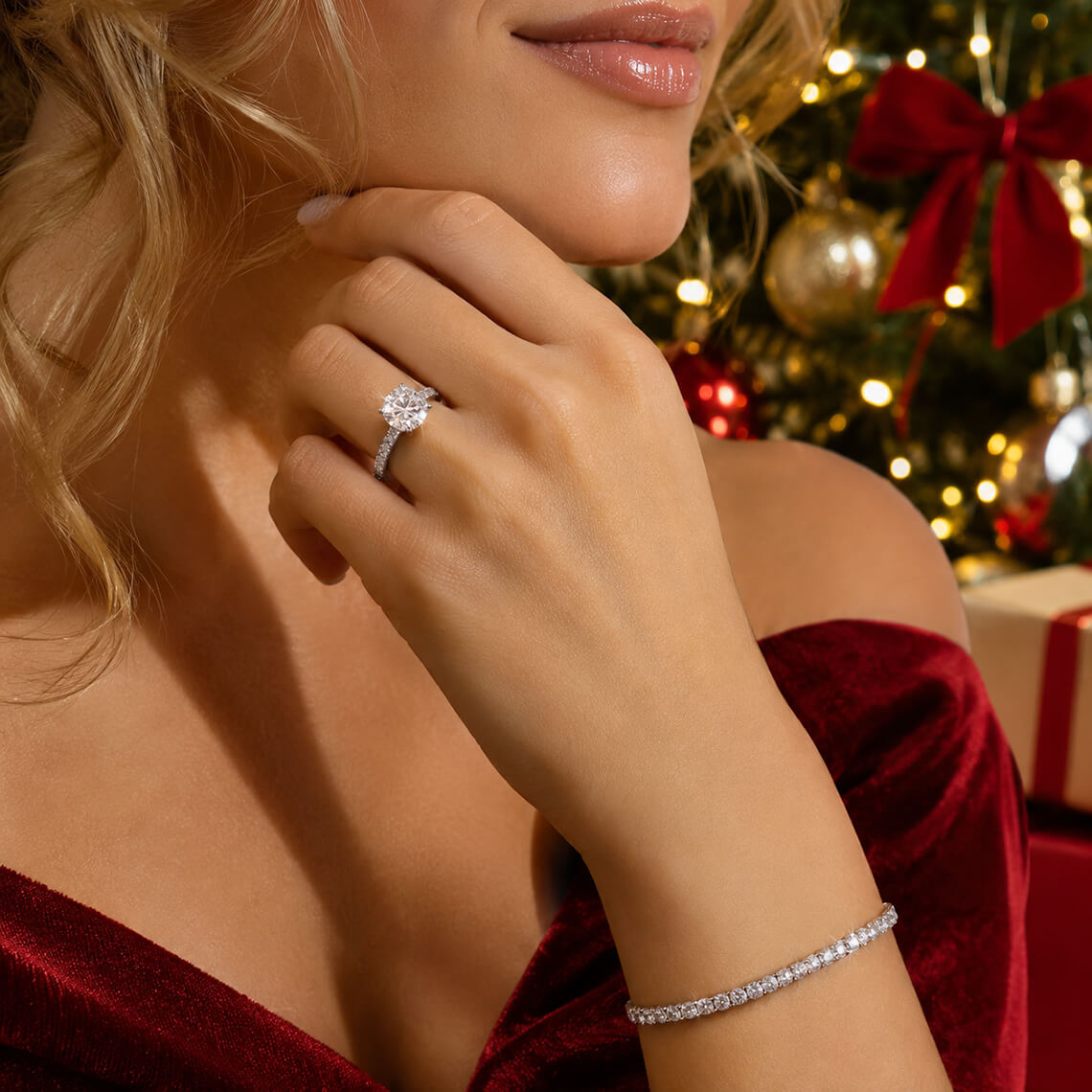
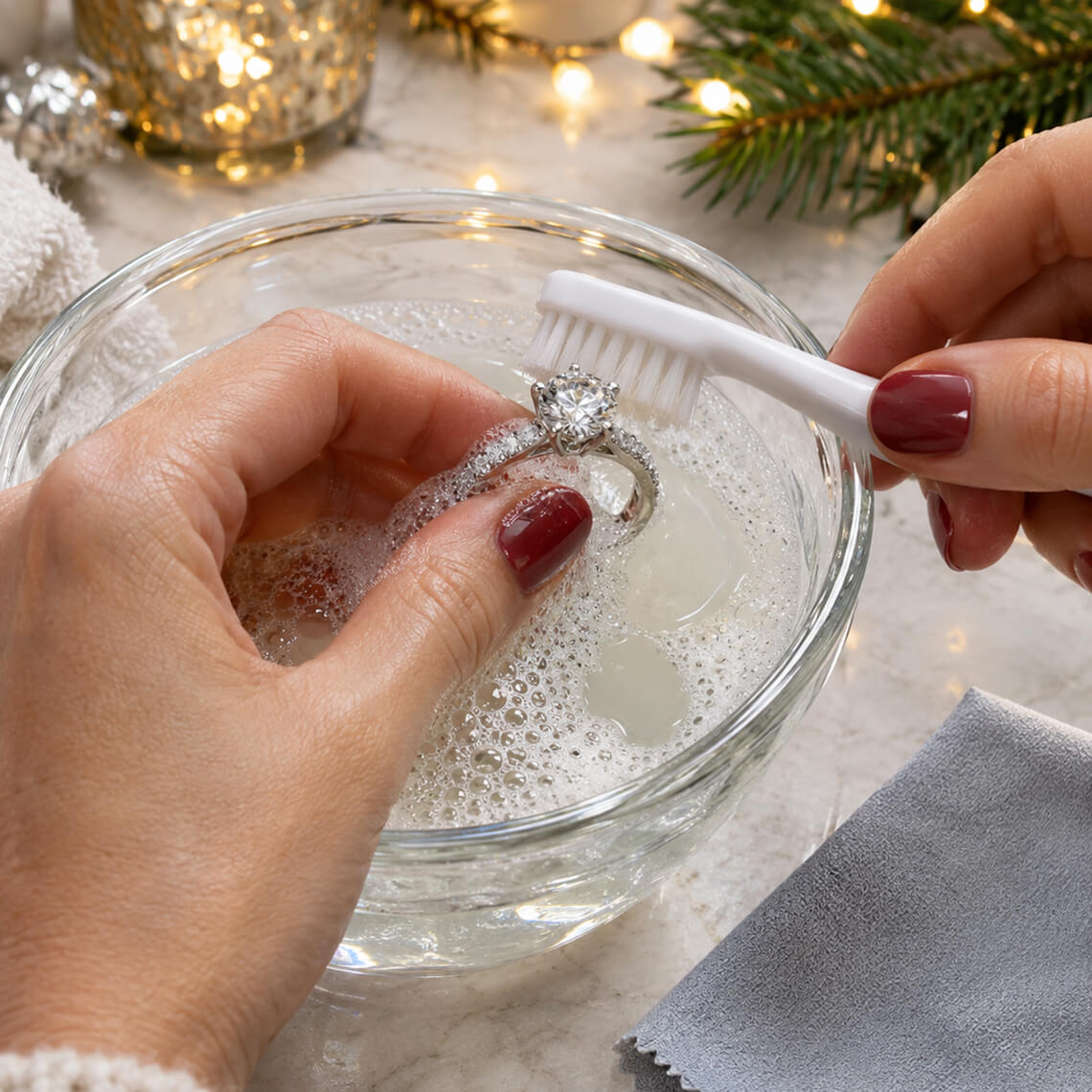
If you are wondering how to clean diamond rings, concentrate on the areas beneath and around the centre stone. These spaces often collect hand cream, soap, and natural oils.
Use a soft brush to clean around the basket and underneath the diamond. Be sure not to push against delicate prongs or smaller accent stones.
For pavé and halo rings, brush carefully around the smaller diamonds rather than scrubbing across the settings.
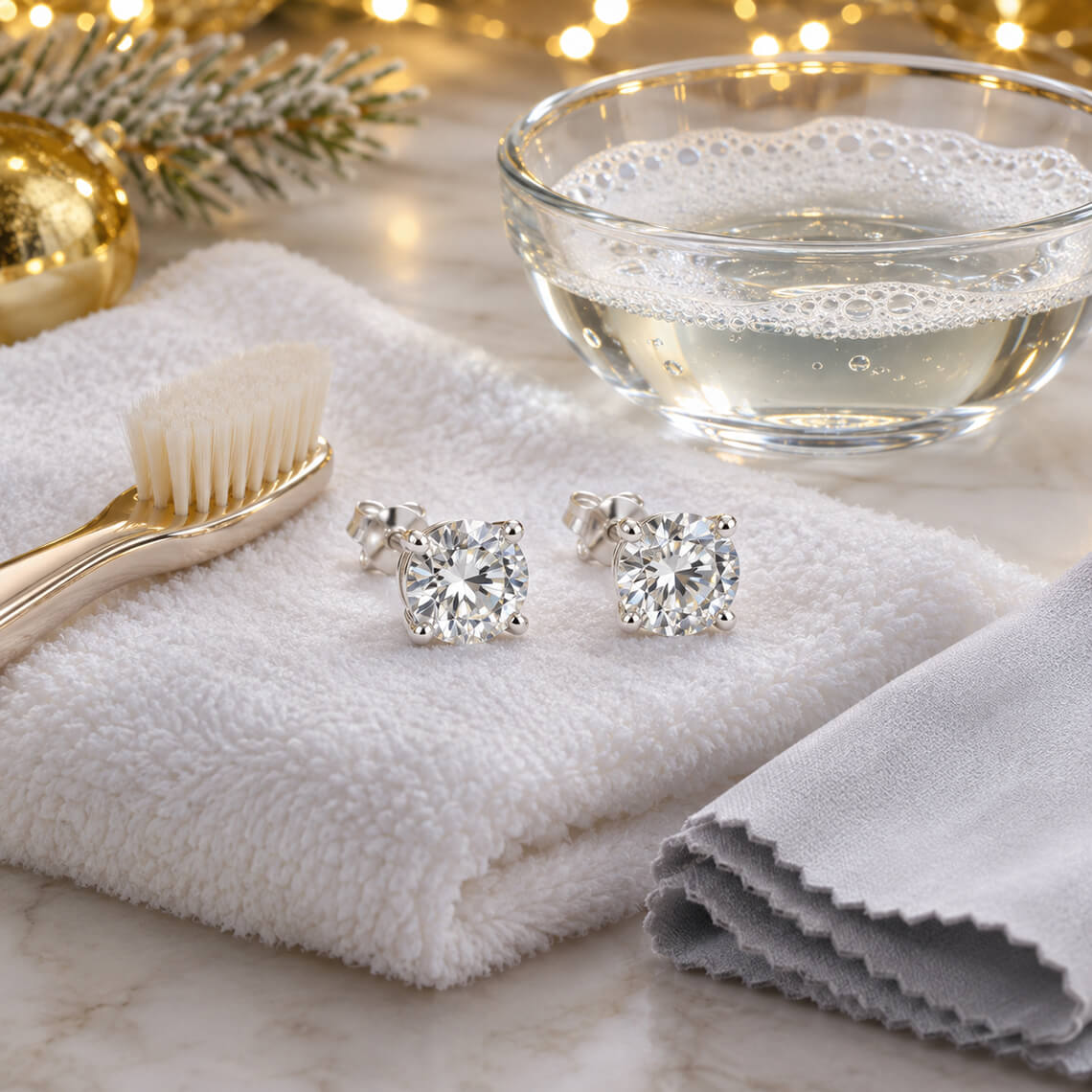
How to Clean Diamond Earrings
Before cleaning, check whether your earrings have any delicate components or glued elements that may be affected by water. If they came with specific care instructions, follow those instead.
Earrings accumulate residue faster than most other jewellery because they sit close to hair and skin throughout the day.
Remove them before cleaning, then use a soft brush and mild soapy water around the stones and settings. The backs deserve particular attention since residue can often build up there.
After rinsing, let the earrings dry thoroughly. Also, check that any butterfly backs or screw fittings are still properly secure before putting them back on.
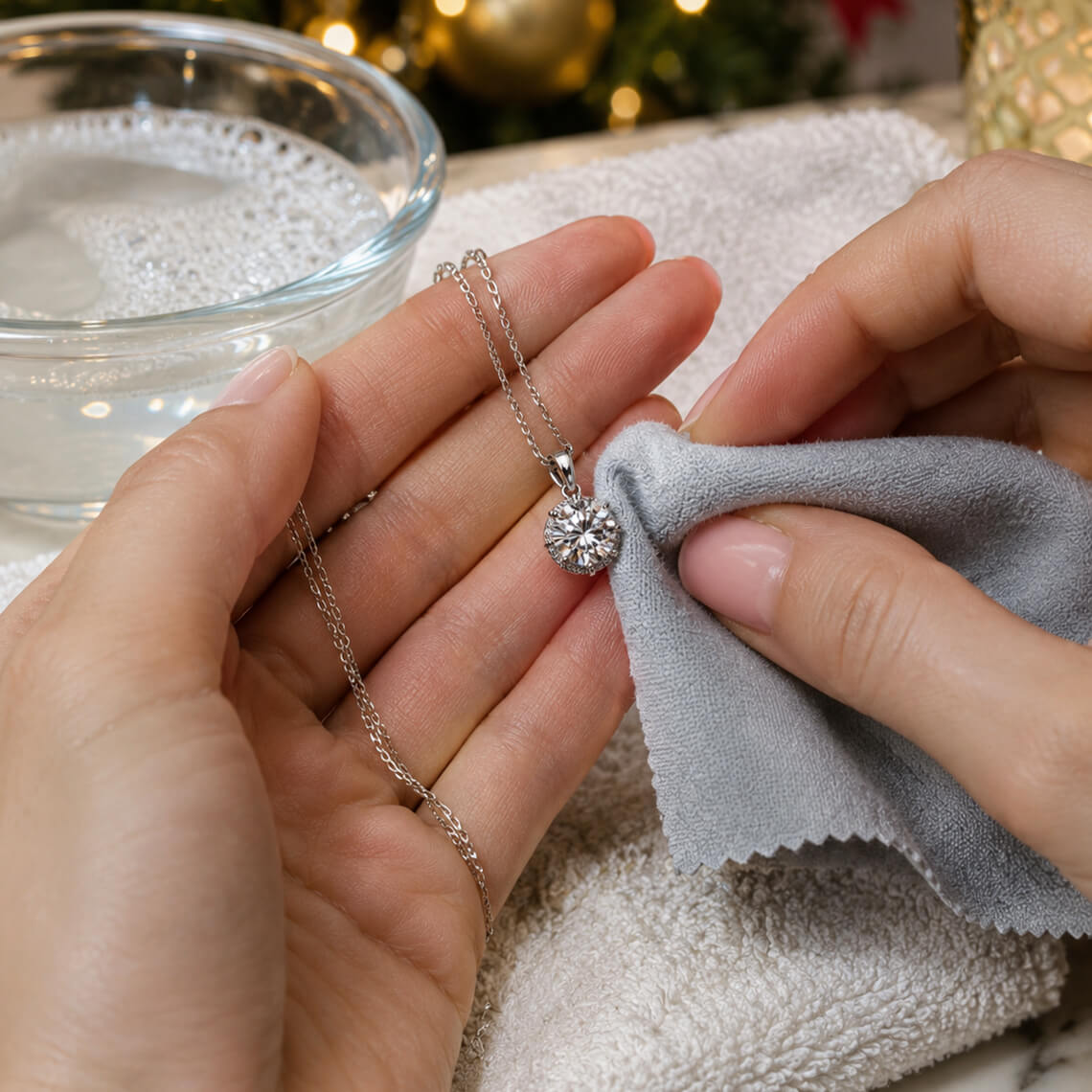
How to Clean Diamond Necklaces and Pendants
The main thing to watch when cleaning necklaces is the chain. Fine chains can tangle quickly during cleaning if you're not careful with them.
Soak the piece in soapy water, clean around the pendant setting, and use a soft cloth rather than a brush along delicate links.
After rinsing, lay it flat on a towel rather than hanging it, and give it time to dry completely before storing it in its box.
Before soaking a necklace, check its materials and care instructions. Fine chains, glued components, and pieces with treated gemstones may require a different cleaning method.
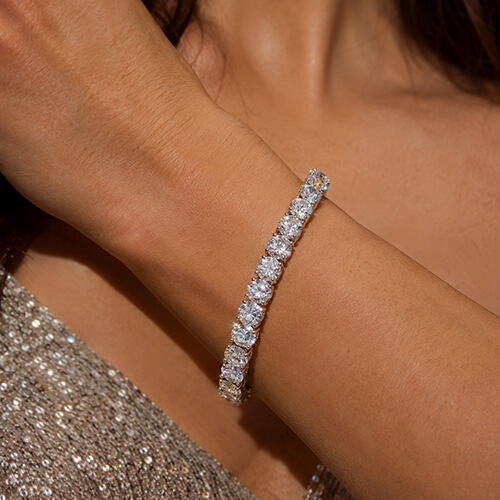
How to Clean Diamond Tennis Bracelets
Tennis bracelets feature numerous individually set diamonds, which means oils and residue can collect between the stones and links.
Use a soft brush to clean the bracelet gently. Pay particular attention to the spaces around the diamond settings.
Take care not to bend the bracelet sharply or place any pressure on the links.
Check the clasp and safety catch after cleaning. If any diamond appears loose, arrange a professional inspection before wearing the bracelet.
How to Clean Gold, Platinum and Other Jewellery
Precious metals also need appropriate care, particularly when they have polished or plated finishes. Each metal needs slightly different care, so match your cleaning method to the metal to keep your jewellery looking its best.
|
Jewellery Metal |
Recommended Care |
|
Yellow or rose gold |
Mild soapy water and a soft cloth or brush |
|
White gold |
Gentle cleaning that protects its rhodium-plated finish |
|
Platinum |
Lukewarm soapy water and careful drying |
|
Sterling silver |
A suitable silver polishing cloth for tarnish, where appropriate |
|
Gold-plated jewellery |
Gentle wiping with a soft cloth; avoid abrasive polishing |
|
Pearls, opals and delicate gemstones |
Follow specialist care guidance rather than using general diamond-cleaning methods |
Platinum can develop a natural patina with regular wear. White gold may require professional rhodium replating when its bright finish begins to wear. Routine cleaning removes residue but cannot restore worn plating or eliminate deeper scratches.
Common Jewellery Cleaning Mistakes to Avoid
There's a lot of well-intentioned advice circulating about home jewellery cleaning that's worth staying away from.
|
Cleaning Mistake |
Why You Should Avoid It |
|
Chlorinated cleaners or bleach |
Can damage precious metal alloys and jewellery components |
|
Toothpaste |
Abrasive particles may scratch metal finishes |
|
Vinegar or lemon juice |
Acidic solutions can damage certain gemstones and finishes |
|
Boiling water |
Sudden temperature changes can damage vulnerable stones or treatments |
|
Hard-bristled brushes |
Can scratch metal and disturb delicate settings |
|
Ultrasonic cleaning without professional guidance |
Vibrations can loosen stones or damage certain gemstones |
|
Soaking jewellery with loose settings |
May worsen existing damage or increase the risk of stone loss |
Pearls, opals, emeralds and any treated gemstone need a different cleaning approach. If you're not sure what stones your jewellery contains, ask a jeweller before cleaning it at home.
How to Make Your Jewellery Sparkle for Christmas Day
Timing matters when preparing jewellery for a special occasion.
Clean your favourite pieces one or two days before Christmas rather than rushing through the process while getting dressed.
A few things to keep in mind after cleaning.
-
Dry thoroughly: Remove moisture from clasps, links, and settings before storage.
-
Check security: Inspect prongs, earring backs, and bracelet clasps.
-
Store separately: Use soft pouches or individual boxes for storage. This will prevent scratches and tangles.
-
Apply beauty products first: Allow perfume, hairspray and skincare products to dry before putting on jewellery.
-
Handle diamonds carefully: Hold rings by their bands and pendants by their metal components to avoid fingerprints.
If you're planning to wear more than one necklace, keep them separate until you are ready to put them on. The aim is to prevent the chains from tangling and save you a lot of frustration.
When Should You Take Jewellery to a Professional?
Home cleaning works for maintaining the jewellery, but it isn't a substitute for professional care in certain situations. See a jeweller if:
-
A diamond moves within its setting.
-
Prongs appear bent, worn, or damaged.
-
A necklace clasp won’t close securely.
-
Dirt remains trapped beneath intricate settings.
-
Jewellery contains fragile or treated gemstones.
-
Metal surfaces need professional polishing or replating.
A professional can assess the setting and recommend an appropriate cleaning method.
Do not continue wearing a ring with a loose diamond. Even a small amount of movement may indicate that the stone is no longer securely held.
Final Thoughts
Cleaning your jewellery before Christmas is one of those small tasks that makes a genuine difference. It restores the brilliance that builds up over months of daily wear, and it gives you a proper look at pieces you probably don't examine closely very often.
Whether you're wearing diamond studs, a solitaire pendant or an elegant tennis bracelet, a clean and well-stored piece simply looks better. Take the time before Christmas Day to clean your jewellery, and you won't need to think about its shine throughout the holidays.
FAQs
What is the best way to clean diamond jewellery at home?
Can I clean lab-grown diamond jewellery with washing-up liquid?
How often should I clean my diamond ring?
Is it safe to clean jewellery with vinegar?
Can I clean my diamond?
Are ultrasonic jewellery cleaners safe for lab-grown diamonds?