Flat 50% OFF sitewide!
NOW & ON BLACK FRIDAY!




Tennis Bracelet Sizing: A UK Guide To The Perfect Fit
A diamond tennis bracelet adds quiet elegance to both everyday looks and evening occasions. However, getting the length right matters just as much as selecting the diamonds or the setting. Wear a bracelet that is too snug, and it restricts movement; wear a bracelet that is too loose, and it twists, catches on fabric, or slides around constantly. When you know how tennis bracelet sizing works, you can choose a piece that sits beautifully, feels comfortable, and remains secure throughout the day.
Table of Content
- How Should a Tennis Bracelet Fit?
- How to Measure Your Wrist for a Tennis Bracelet
- Tennis Bracelet Size Chart UK
- How Much Extra Length Should You Add to Your Wrist Measurement?
- Does Diamond Size and Bracelet Design Affect the Fit?
- How to Choose a Tennis Bracelet Size for Different Occasions
- Buying a Tennis Bracelet as a Gift: How to Get the Size Right
- How to Check Your Tennis Bracelet Fit After Buying
- Conclusion
How Should a Tennis Bracelet Fit?
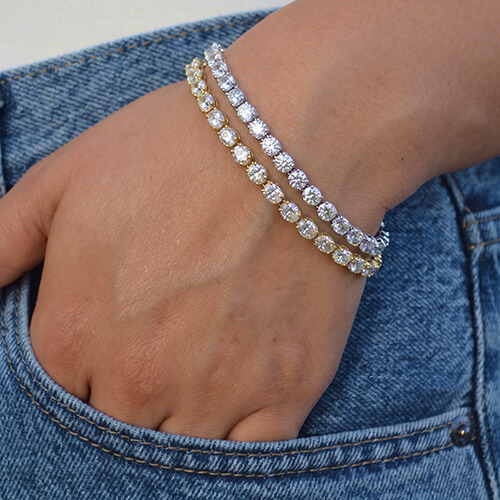
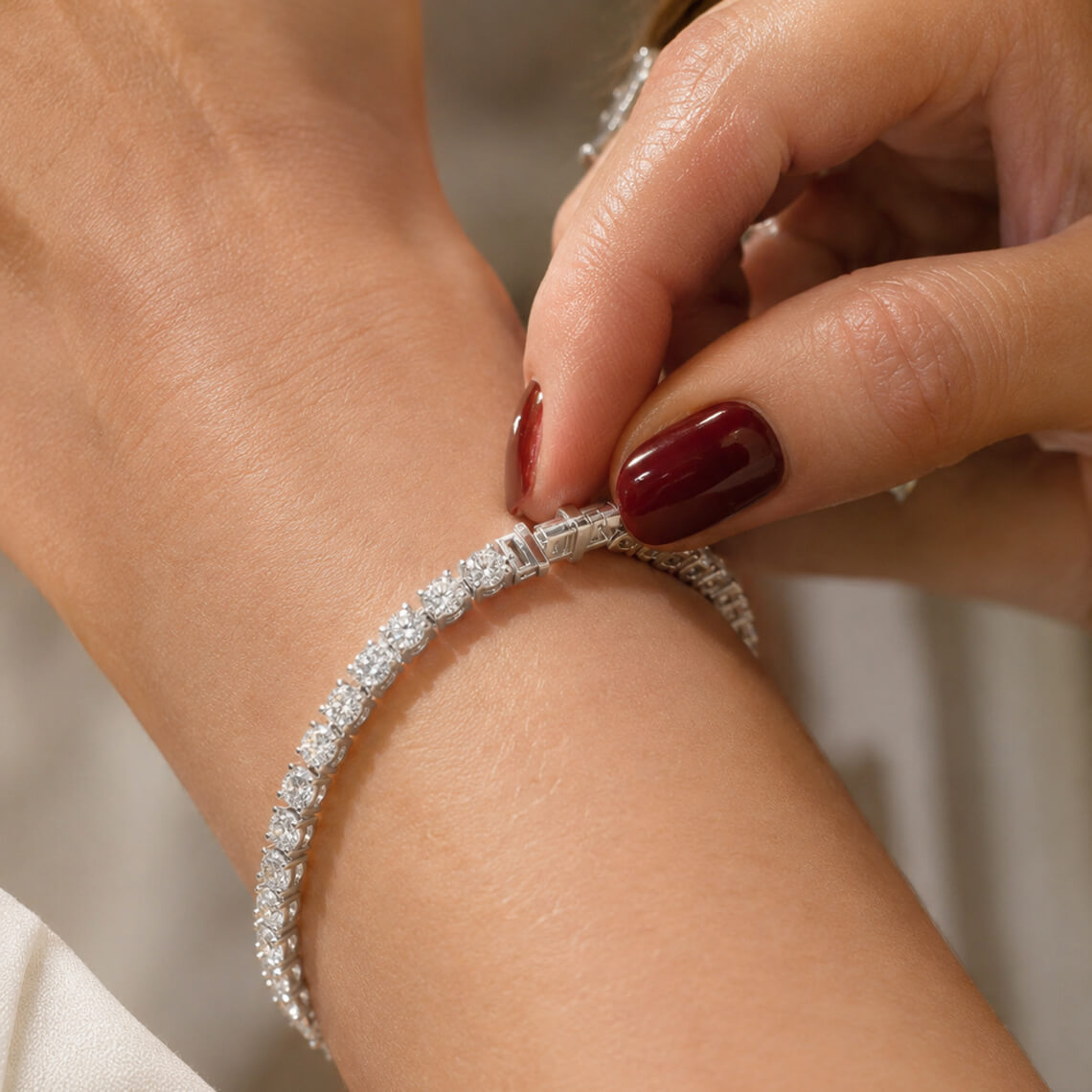
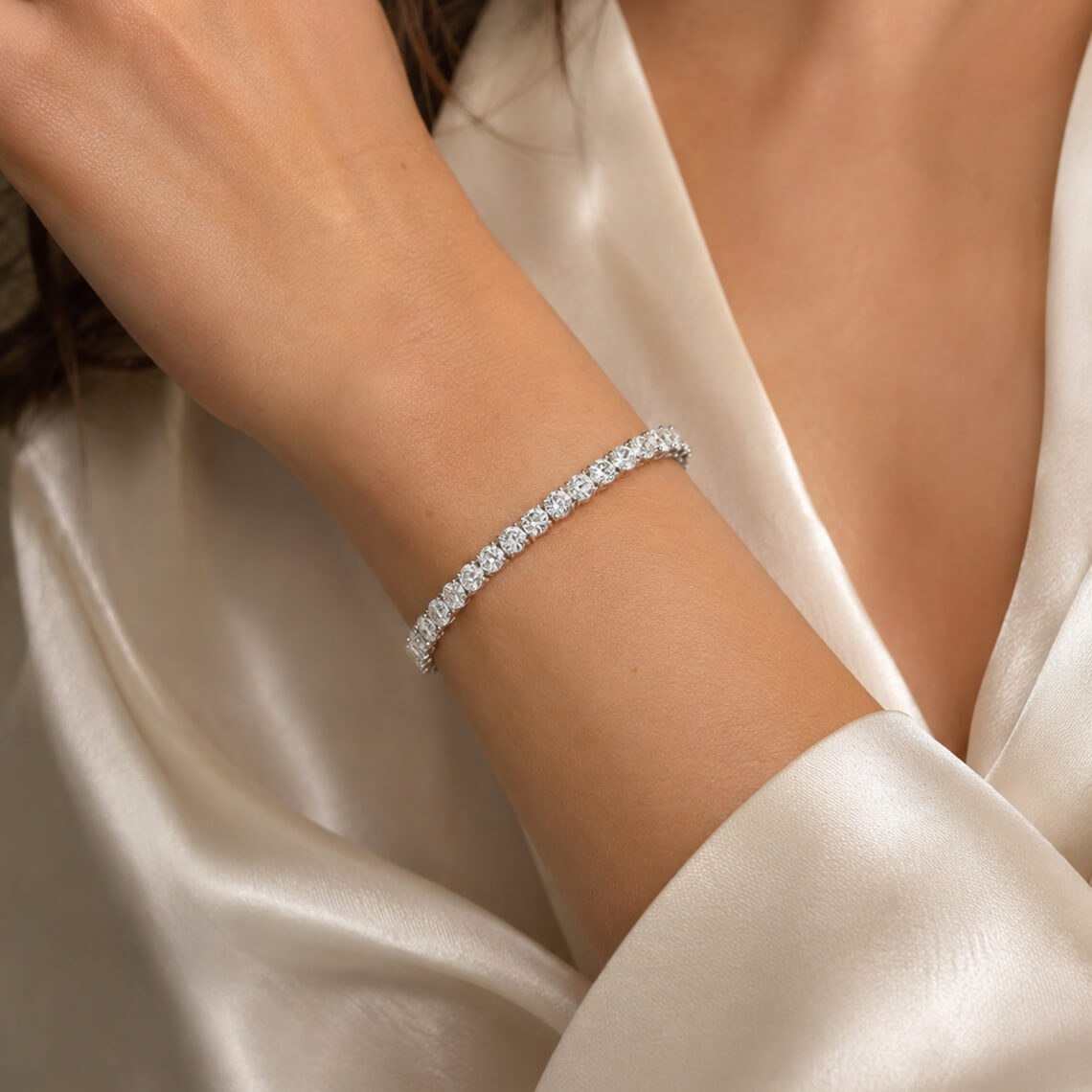
A well-fitted tennis bracelet should follow your wrist’s natural shape without pressing into the skin. It should shift slightly when you rotate your hand, but it should never be loose enough to slip over your knuckles.
The one-finger rule provides a useful starting point. You should be able to slide one finger comfortably between the bracelet and your wrist without stretching the bracelet or applying pressure.
|
Signs of a Tight Fit |
Signs of a Loose Fit |
|
Leaves noticeable marks on the skin |
Slides too far down your hand |
|
Restricts natural wrist movement |
Rotates excessively during wear |
|
Places pressure on the clasp |
Frequently catches on clothing |
|
Feels uncomfortable when bending your wrist |
Diamonds regularly turn towards the underside of your wrist |
Ideally, the diamonds should remain neatly positioned across the top of your wrist for most of the time, although some natural movement is normal.
How to Measure Your Wrist for a Tennis Bracelet
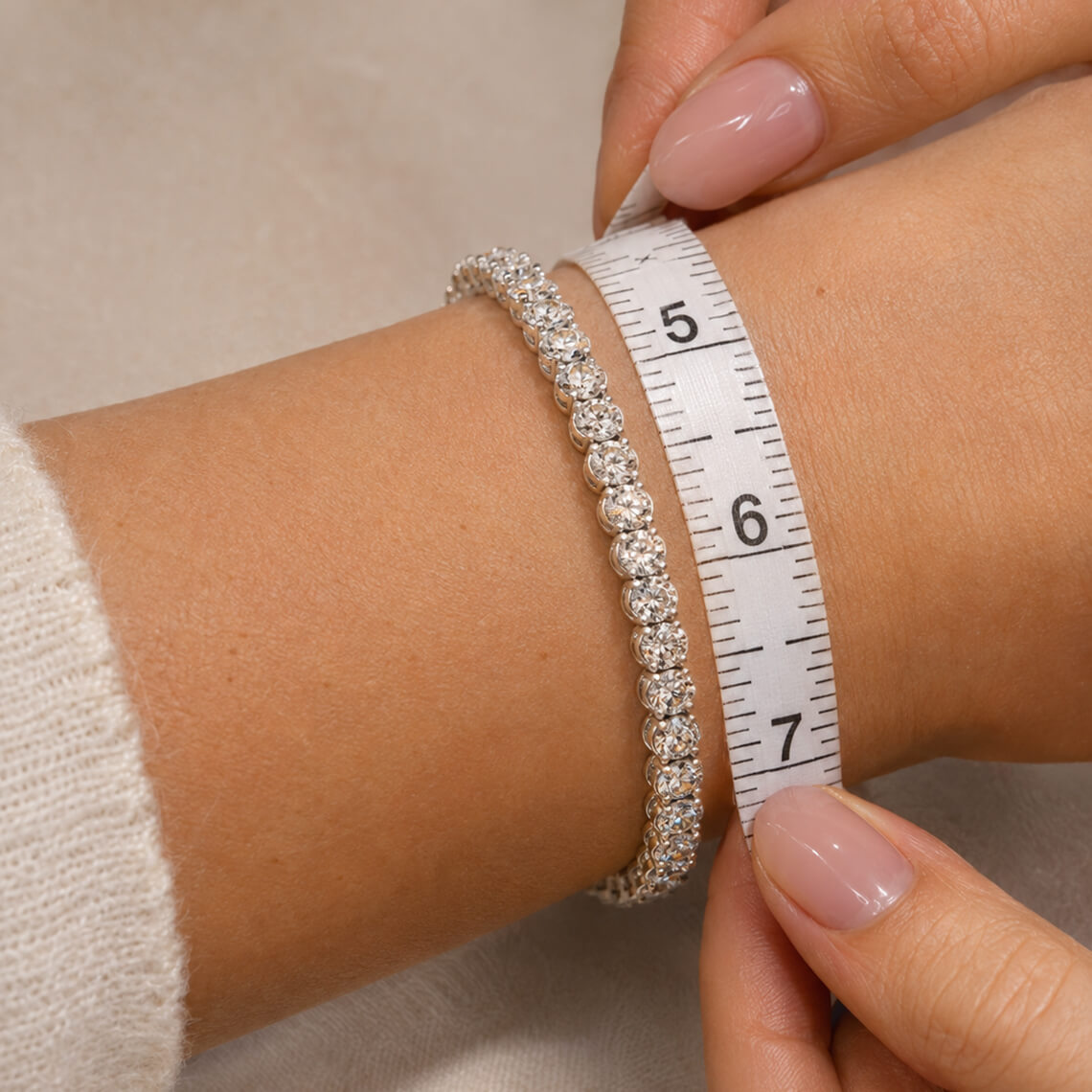
You will need a flexible measuring tape. If you do not have one, a non-stretch strip of paper or string and a ruler will do the job.
Step 1: Position the measuring tape
Locate your wrist bone and place the measuring tape around your wrist, just below it. This is where most bracelets sit.
Step 2: Record your wrist circumference
When measuring, the tape must remain in contact with your skin and not be too tight. Note down the measurement where the ends meet.
Step 3: Measure with a ruler if needed
If you are using paper or a string, mark the overlapping point. Then, flatten the paper or the string and measure the marked length against a ruler.
Step 4: Check an existing bracelet
Lay a comfortable bracelet of similar construction flat and measure its length. Confirm how the jeweller accounts for the clasp.
Measure your wrist twice for accuracy. If your wrist tends to swell during the day, repeat the measurement later and account for the difference.
Tennis Bracelet Size Chart UK
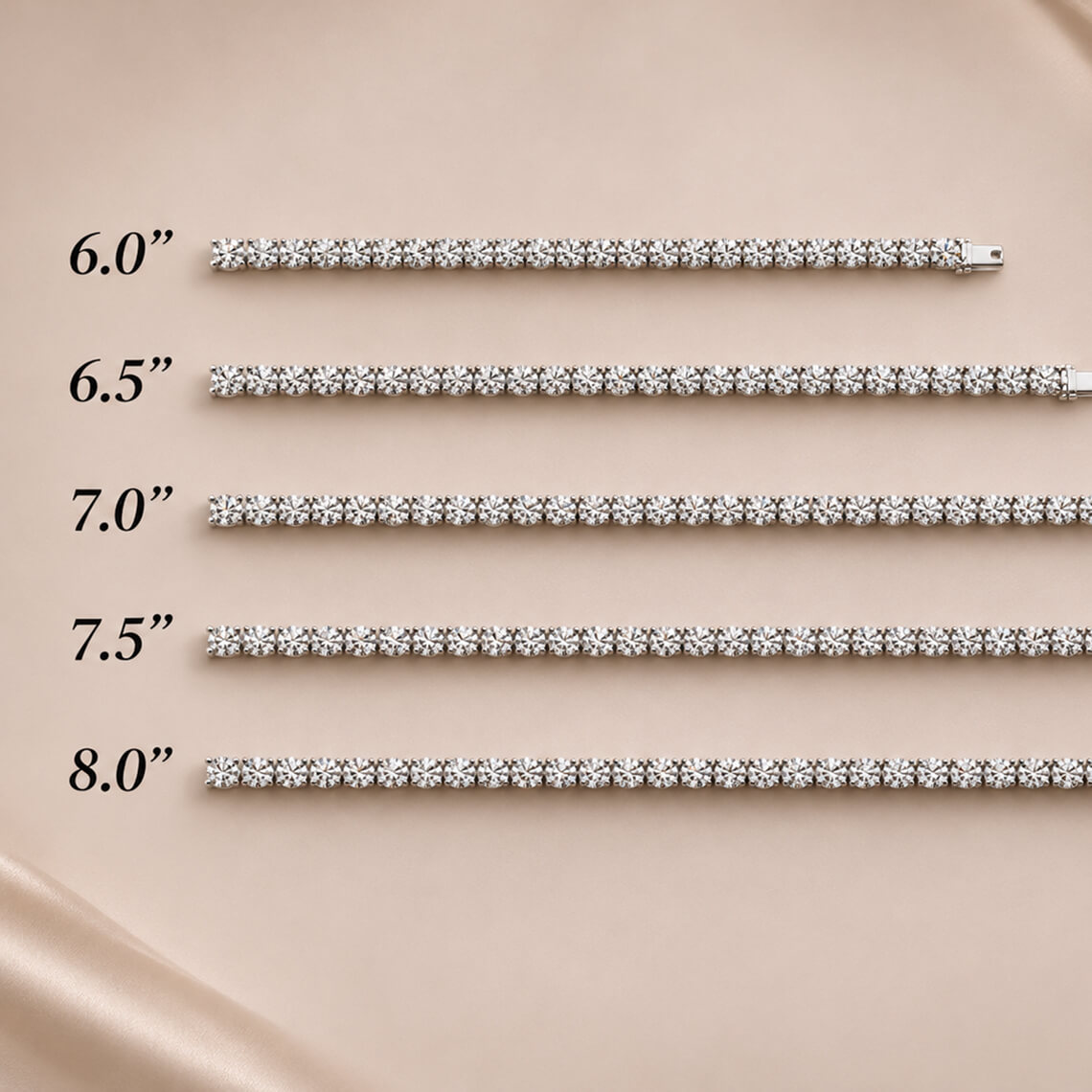
UK jewellers may list bracelet lengths in centimetres or inches. One inch equals exactly 2.54cm.
The following tennis bracelet sizing chart allows an additional 1.5–2cm for a comfortable fit.
|
Wrist Circumference |
Recommended Bracelet Length |
Length in Inches |
|
13–13.5cm |
15cm |
5.91” |
|
14–14.5cm |
16cm |
6.30” |
|
14.5–15cm |
16.5cm |
6.50” |
|
15–15.5cm |
17cm |
6.69” |
|
15.5–16cm |
17.5cm |
6.89” |
|
16–16.5cm |
18cm |
7.09” |
|
16.5–17cm |
18.5cm |
7.28” |
|
17–17.5cm |
19cm |
7.48” |
|
18–18.5cm |
20cm |
7.87” |
|
19–19.5cm |
21cm |
8.27” |
Remember that wrist circumference and bracelet length are different measurements. If you fall between available sizes, consider the larger option, provided it does not slide excessively. Check the jeweller's specific sizing chart before ordering.
How Much Extra Length Should You Add to Your Wrist Measurement?
The amount of extra length you need depends on how you like your jewellery to feel.
|
Fit Preference |
Additional Length |
Example for a 16cm Wrist |
|
Snug fit |
Approximately 1cm |
17cm bracelet |
|
Comfortable everyday fit |
1.5–2cm |
17.5–18cm bracelet |
|
Loose fit |
2.5cm or more |
18.5cm or longer bracelet |
These measurements are starting points rather than universal sizing rules. A wide or substantial bracelet may require slightly more room than a delicate design of the same length.
Does Diamond Size and Bracelet Design Affect the Fit?
Two tennis bracelets of the same length can feel quite different on your wrist. Pay attention to these design specifications when comparing your options.
Diamond Size and Bracelet Width
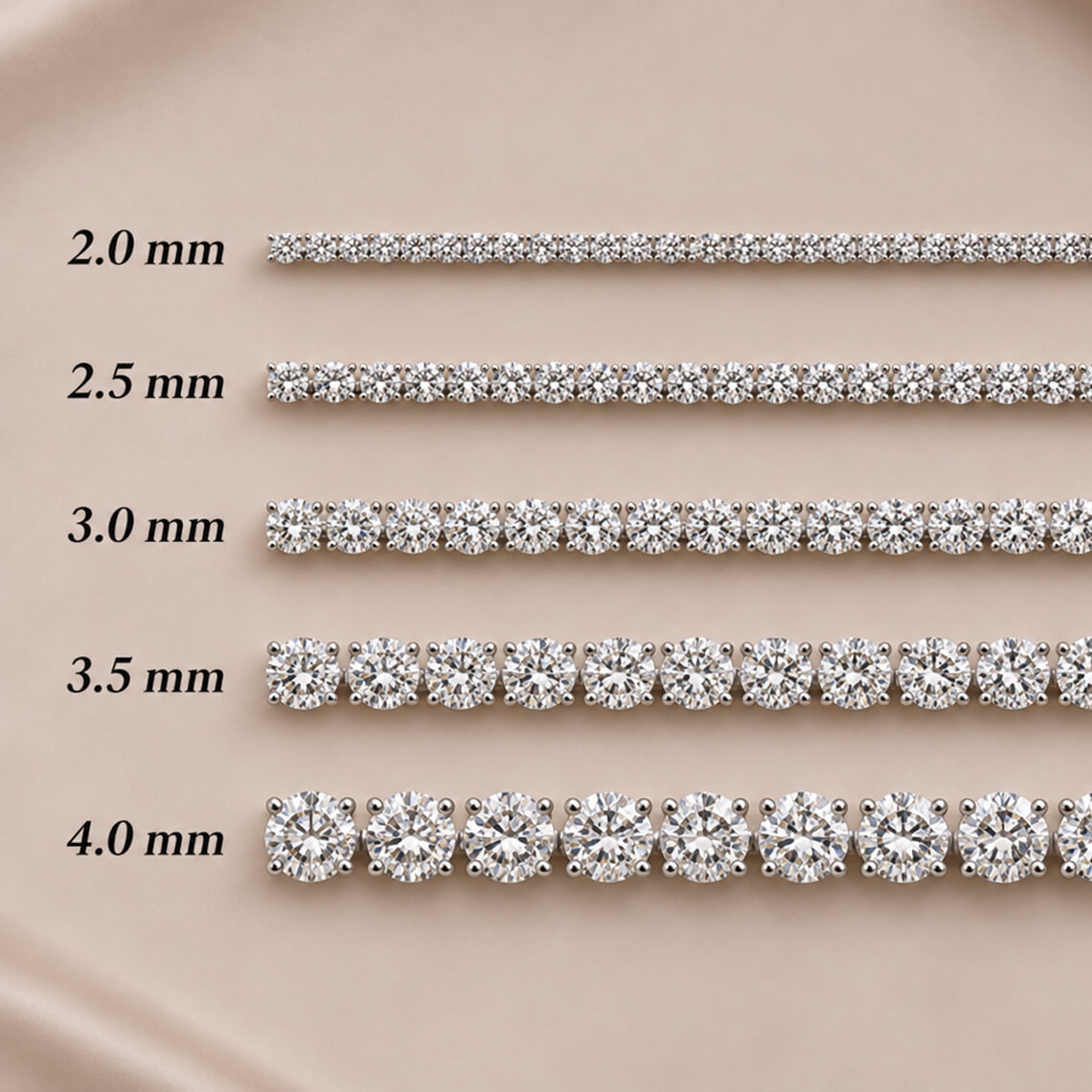
Larger diamonds can make a wider, heavier bracelet, depending on the number of stones and the overall design. A delicate piece set with 2 mm diamonds will sit closer to the wrist than one featuring 4 mm stones.
Claw vs Bezel Settings
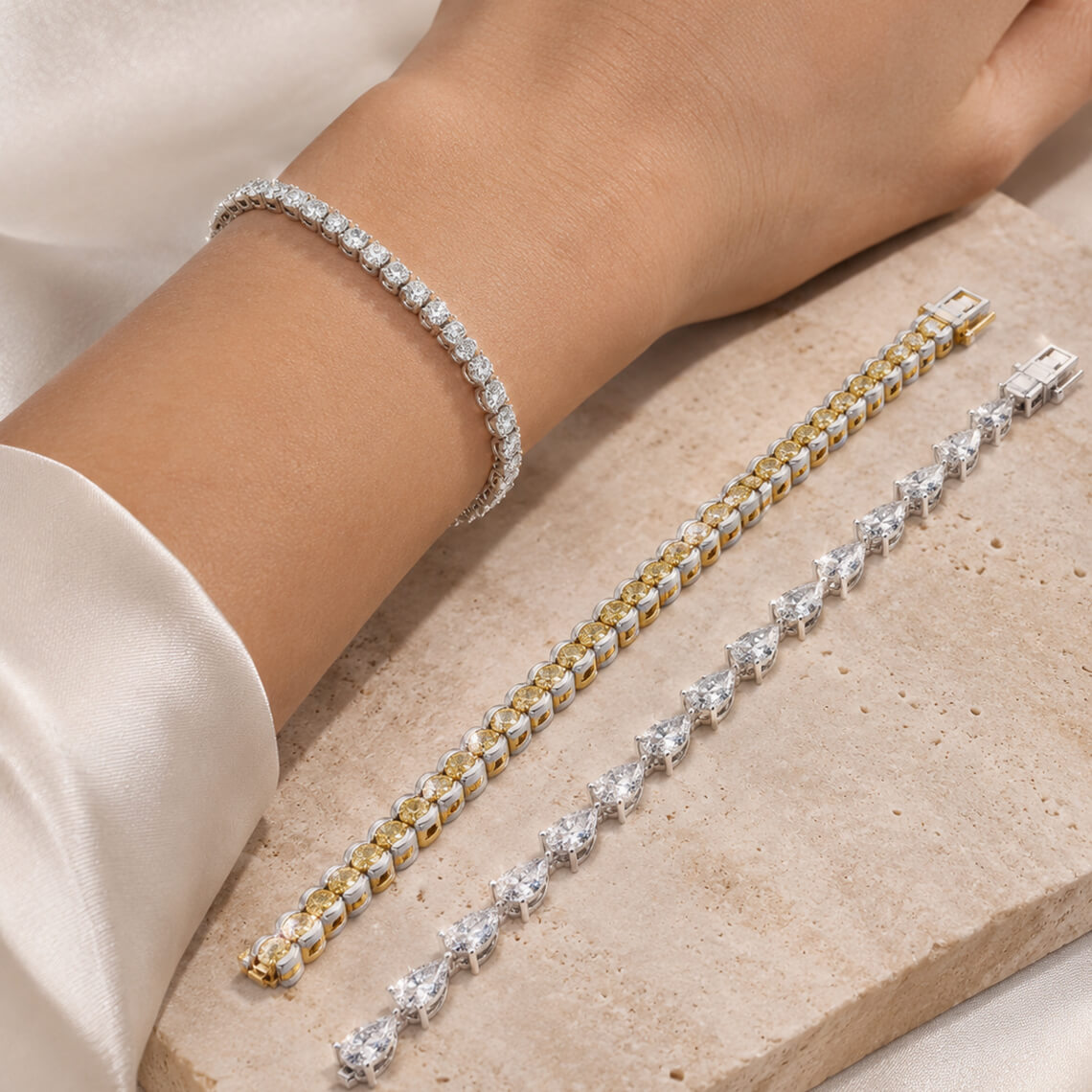
Claw settings hold the diamond using small metal prongs, leaving more of each diamond visible. Bezel settings wrap each stone in a metal rim, creating smoother edges which are less likely to catch on clothing.
Single-Row vs Multi-Row Designs
Single-row bracelets often have a narrower profile, while multi-row designs cover a greater surface area. The flexibility and construction of the bracelet also influence how comfortably it sits on your wrist.
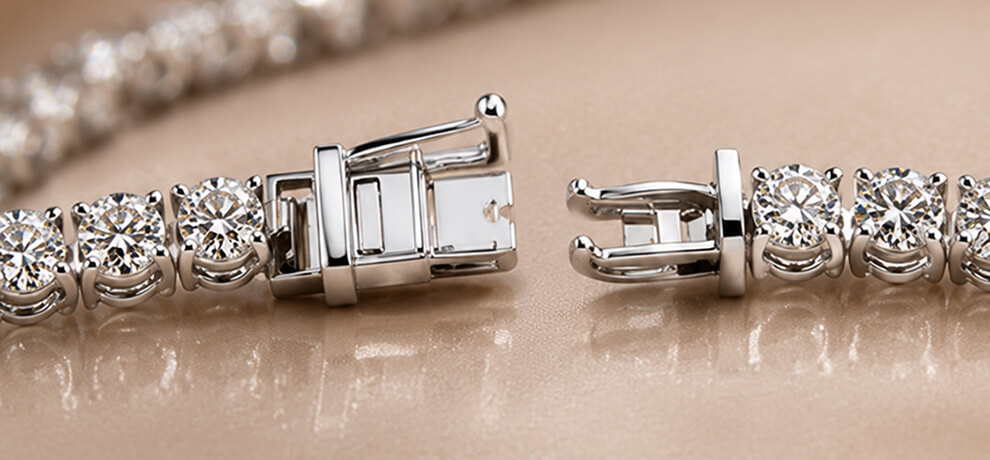
Link Construction and Clasp Design
Bracelets that have articulated links will move comfortably with the movement of your wrist. If the bracelet has rigid links or a large clasp, it could cause discomfort in case the wrist comes into contact with hard surfaces.
How to Choose a Tennis Bracelet Size for Different Occasions
Your wearing habits should influence your final bracelet size.
|
Wearing Preference |
Recommended Fitting Allowance |
|
Everyday wear |
1.5–2cm |
|
Stacking with bracelets or watches |
Around 1.5–2cm, depending on positioning |
|
Statement styling |
2–2.5cm, provided the bracelet remains secure |
|
Active daily routine |
Choose a comfortable fit that allows natural wrist movement |
If you wear a watch alongside your bracelet, check the circumference at the exact point where the bracelet will sit. This area may be wider than your usual measuring point.
Men's and women's tennis bracelet sizing follows the same principles. Actual wrist measurements provide a more reliable guide than gender-based size classifications.
Remove fine diamond jewellery before strenuous exercise, contact sports, or activities that could damage the setting.
Buying a Tennis Bracelet as a Gift: How to Get the Size Right
Buying for someone else without their knowledge is genuinely difficult when it comes to bracelet sizing. The most reliable approach is to measure a bracelet they already wear regularly, ideally one of a similar construction.
If that is not possible, a 7-inch (17.78 cm) bracelet is one option to consider, as it is a commonly available length. However, it won't fit every wrist, so check the jeweller's sizing options before purchasing. It will not be the right fit for every wrist. Before purchasing, check whether the jeweller can add or remove links later. Some pieces also accommodate a small extension, which can make the difference between a comfortable fit and one that is slightly too short.
Traditional tennis bracelets are usually fixed-length designs, so resizing typically means professional work rather than a simple adjustment at home.
How to Check Your Tennis Bracelet Fit After Buying
These simple checks will help you ensure the bracelet fits you right for regular use:
-
Bend and rotate your wrist to confirm free movement in every direction.
-
Lower your hand and check that the bracelet cannot pass over your knuckles.
-
Fasten the clasp and any secondary safety catches fully.
-
Check whether the diamonds rotate frequently to the underside of your wrist.
-
Wear the bracelet briefly to identify any uncomfortable pressure points.
If it feels too tight or slides repeatedly towards your hand, speak to your jeweller about resizing before you wear it.
Conclusion
To find the right tennis bracelet size, start by measuring your wrist and deciding how you want the bracelet to fit. Consider factors such as diamond size, bracelet width, setting style, clasp, and link construction, as these can all affect comfort.
A well-fitted tennis bracelet should allow natural wrist movement without feeling too tight or sliding around excessively. This helps ensure a comfortable fit for regular wear.
FAQs
What is the standard tennis bracelet size in the UK?
What size tennis bracelet should I get for a 6-inch wrist?
How tight should a tennis bracelet fit?
Should I size up when buying a tennis bracelet?
How do I measure a tennis bracelet without a measuring tape?
Can you wear a tennis bracelet every day?