Flat 50% OFF sitewide! BLACK FRIDAY sale live now! 
Flat 50% OFF sitewide! BLACK FRIDAY sale live now!
Flat 50% OFF sitewide! BLACK FRIDAY sale live now!


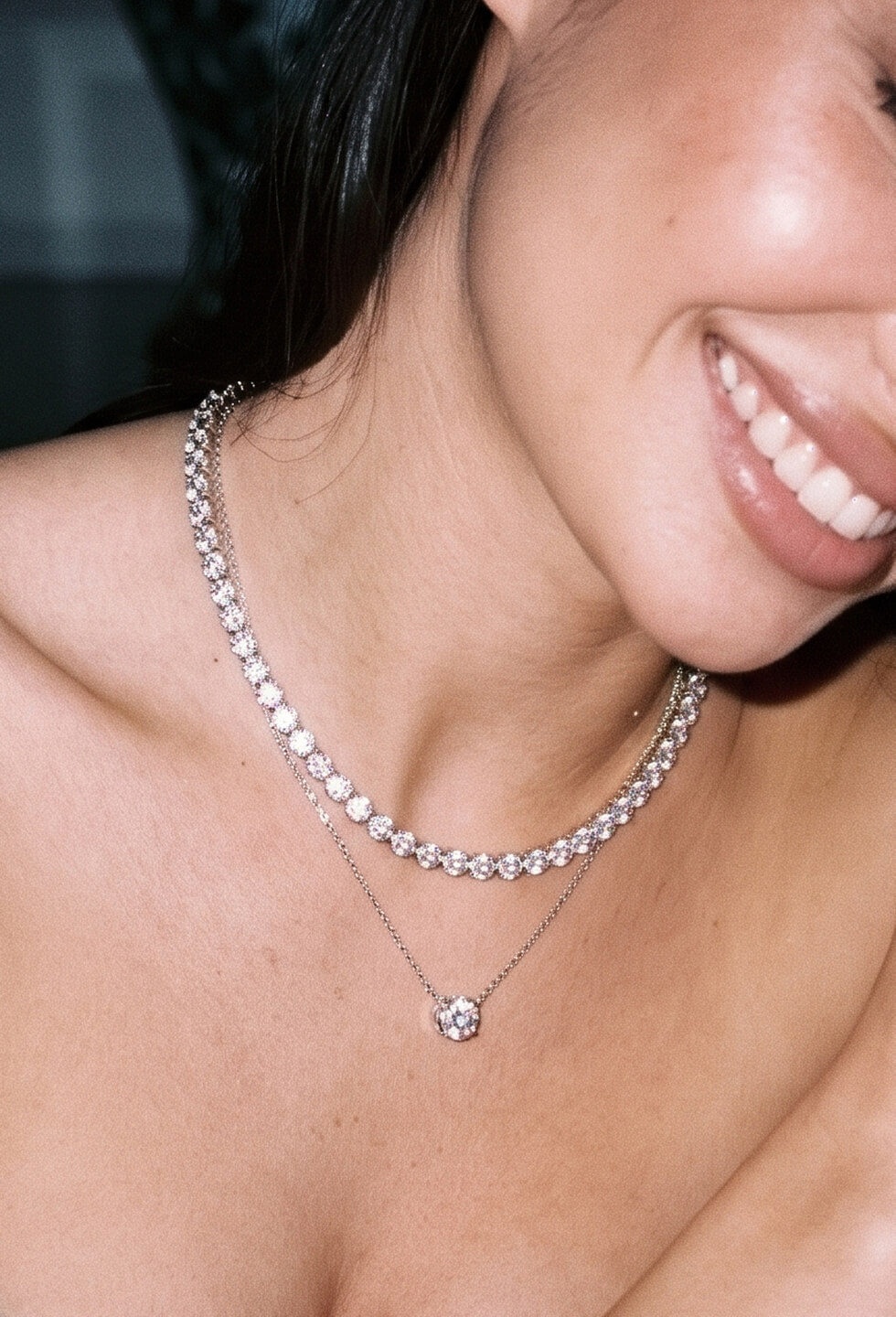


Tennis Bracelet Carat Comparison: 1ct, 3ct, 5ct and 10ct
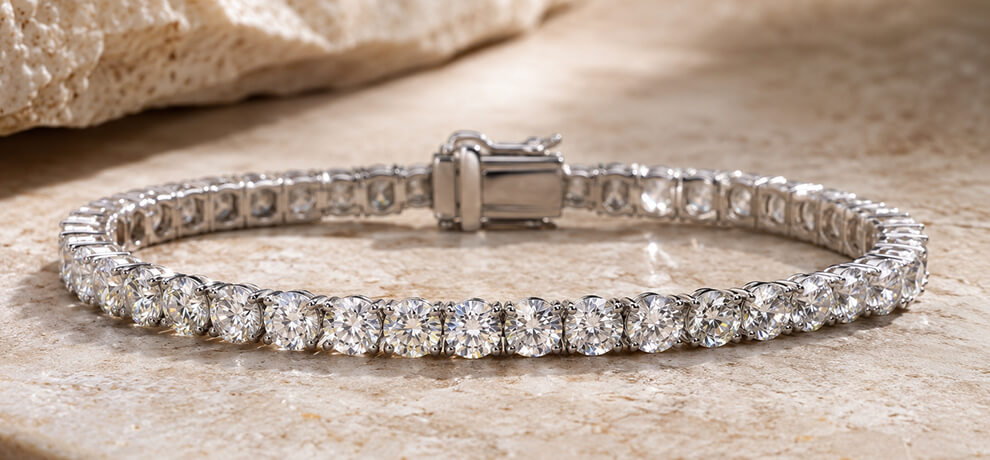
A delicate tennis bracelet sits elegantly with your everyday pieces, while a more substantial design draws the eye and anchors a whole look. Much of this difference comes down to total carat weight, though diamond size, bracelet length, and setting all influence its appearance, too. Here's how the four most popular carat weights compare. With this insight, you can figure out which one suits your wrist, your style, and your budget.
Table of Content
- What Does Carat Weight Mean in a Tennis Bracelet?
- 1ct vs 3ct vs 5ct vs 10ct Tennis Bracelet: What's the Difference?
- What Do Different Carat Tennis Bracelets Look Like?
- How Does Wrist Size Affect Tennis Bracelet Carat Appearance?
- What Other Factors Affect the Appearance of a Tennis Bracelet?
- How Much Does a 1ct, 3ct, 5ct or 10ct Tennis Bracelet Cost?
- Which Tennis Bracelet Carat Weight Should You Choose?
- Conclusion
What Does Carat Weight Mean in a Tennis Bracelet?
Total carat weight, or CTW, is the combined weight of every diamond in the bracelet. It does not describe the weight of an individual stone.
Take a 3-carat bracelet with 60 diamonds, for instance. Each stone averages around 0.05ct. A different 3-carat design might use fewer diamonds, each cut larger. Both bracelets share the same total diamond weight but can look quite different sitting on a wrist.
When you are comparing options, look at three things together: total carat weight, number of diamonds, and individual diamond dimensions in millimetres. These three details tell you far more than carat weight alone.
1ct vs 3ct vs 5ct vs 10ct Tennis Bracelet: What's the Difference?
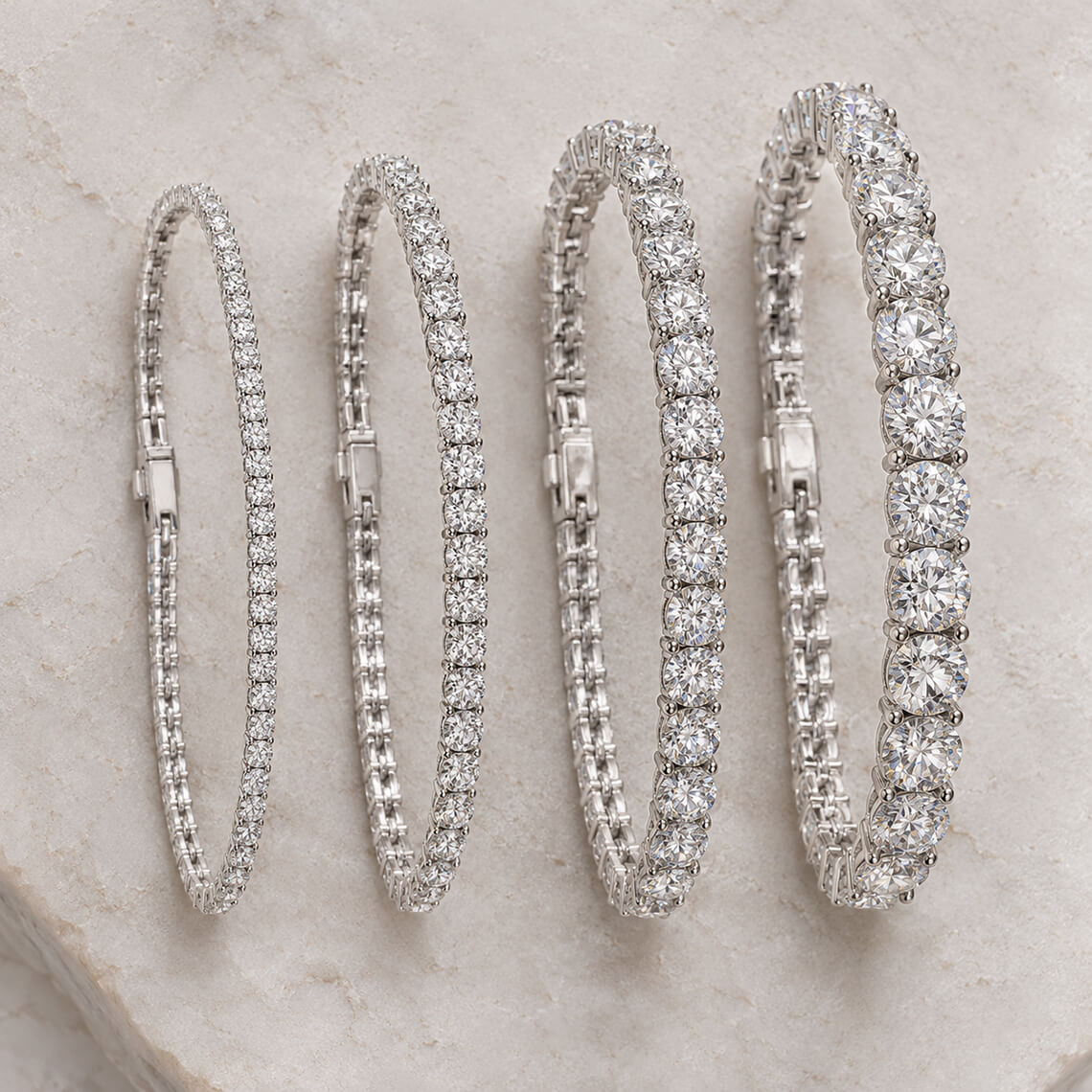
The following chart illustrates how diamond size generally increases across different total carat weights.
|
Total carat weight |
Approx. diamond diameter |
Approx. number of diamonds |
Appearance |
Best suited for |
|
1ct |
1.3–1.7mm |
90–140 |
Fine and delicate |
Minimalist styling |
|
3ct |
2.1–2.4mm |
60–85 |
Defined brilliance |
Versatile everyday jewellery |
|
5ct |
2.8–3.1mm |
50–65 |
Prominent diamonds |
Standalone styling |
|
10ct |
3.8–4.2mm |
38–48 |
Bold and substantial |
Statement jewellery |
These figures are approximate and based on a single-row bracelet around 7 inches (17.8cm) long set with round diamonds. Real stone counts and dimensions vary with construction, spacing, and setting design.
A longer bracelet may contain more diamonds if individual stone sizes remain unchanged. If the total carat weight stays fixed, however, those diamonds may need to be smaller.
What Do Different Carat Tennis Bracelets Look Like?
1-Carat Tennis Bracelet
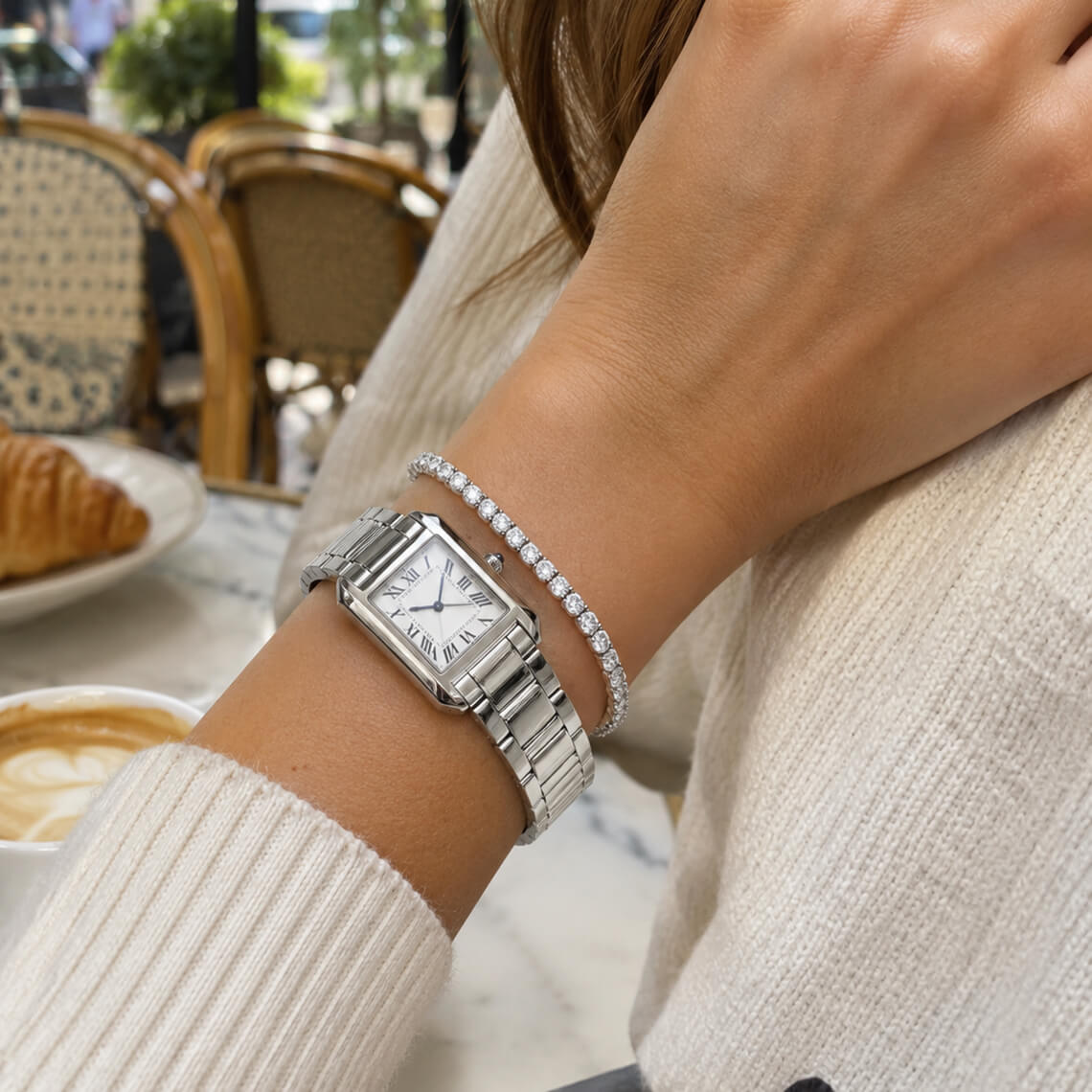
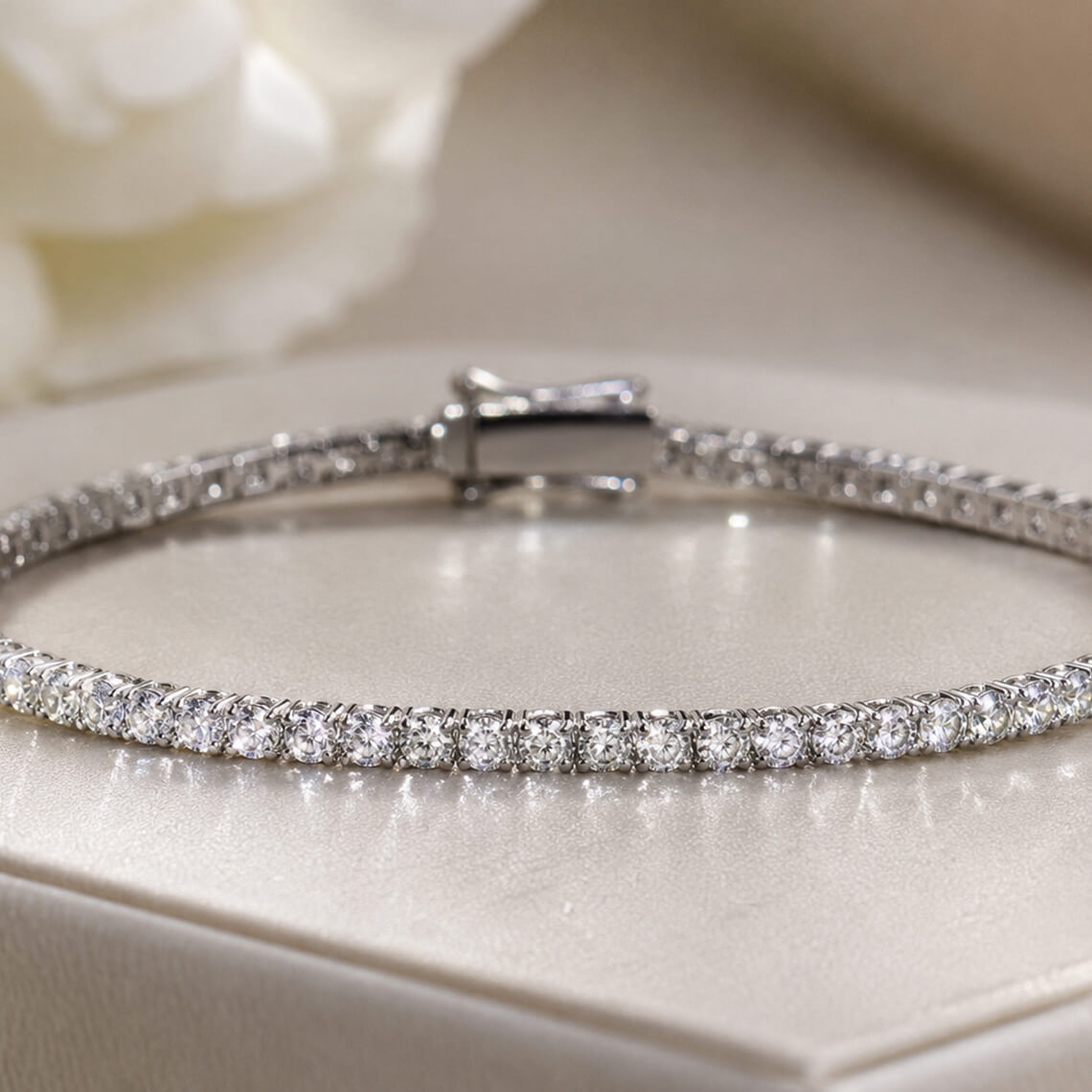
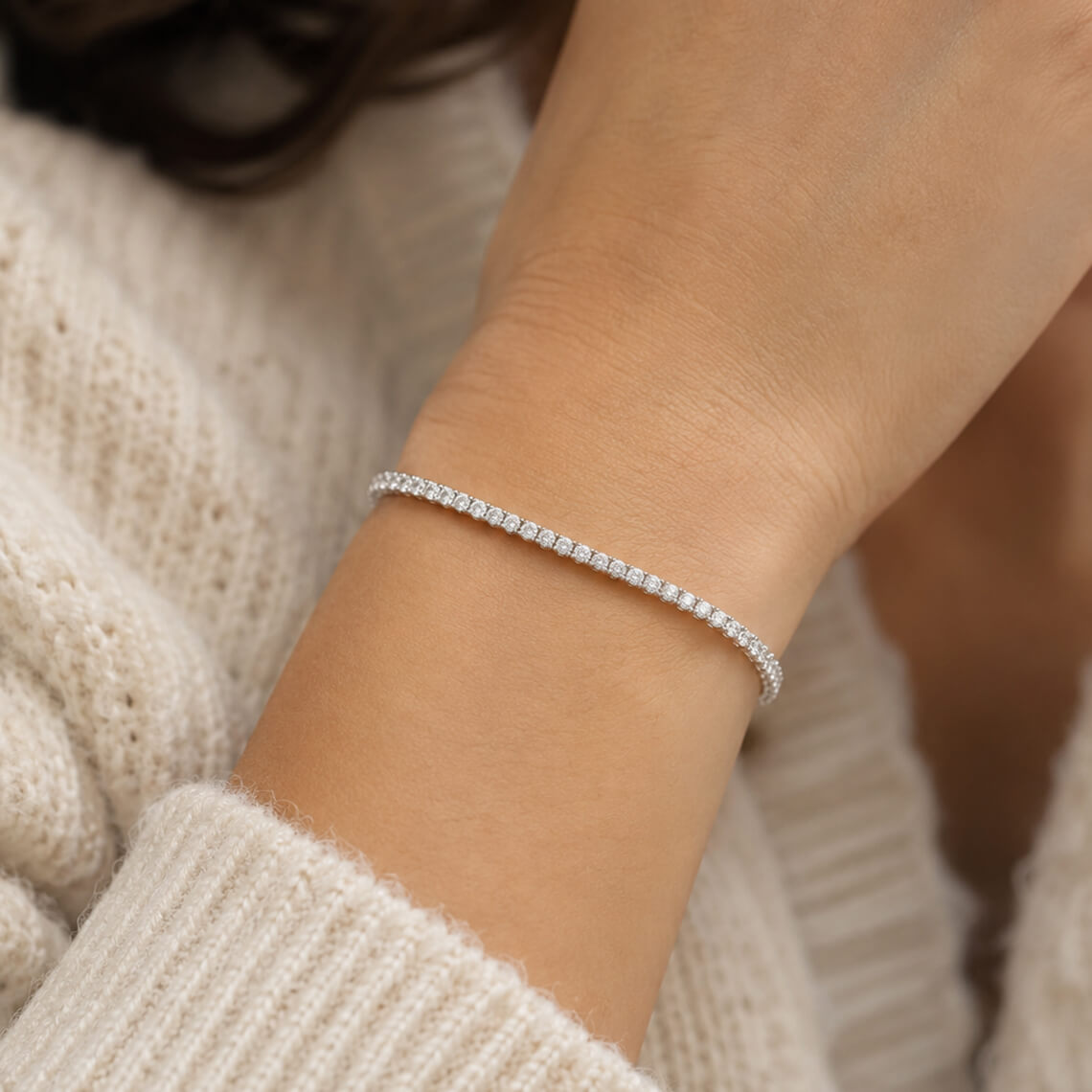
A 1ct tennis bracelet creates a fine line of delicate diamonds across the wrist. Its understated look sits well with everyday outfits, especially if you prefer jewellery that complements rather than competes with what you are wearing.
It also works beautifully alongside a watch or other slim bracelets. For first-time buyers, this weight offers a subtle introduction to diamond tennis jewellery.
3-Carat Tennis Bracelet
A 3-carat tennis bracelet offers a noticeable increase in diamond presence compared with a 1ct design.
The individual stones are larger, so the line of brilliance across the wrist feels more defined. Even so, the bracelet retains enough restraint for daily wear.
That balance makes 3ct one of the most versatile choices available. It works with workwear, weekend clothes, and evening outfits without feeling out of place in any of them. It also sits well next to a simple watch, as long as the bracelet length allows for comfortable movement.
5-Carat Tennis Bracelet
A 5ct tennis bracelet creates a more prominent appearance, with larger diamonds and greater visual coverage.
The individual stones become easier to distinguish, giving the design a stronger presence even when worn alone.
A 5ct tennis bracelet suits buyers who enjoy noticeable fine jewellery without necessarily choosing the boldest available design.
It can also make a thoughtful anniversary or milestone gift. Inspect the bracelet’s width and weight before purchasing, as a more substantial setting may feel different from a delicate one.
10-Carat Tennis Bracelet
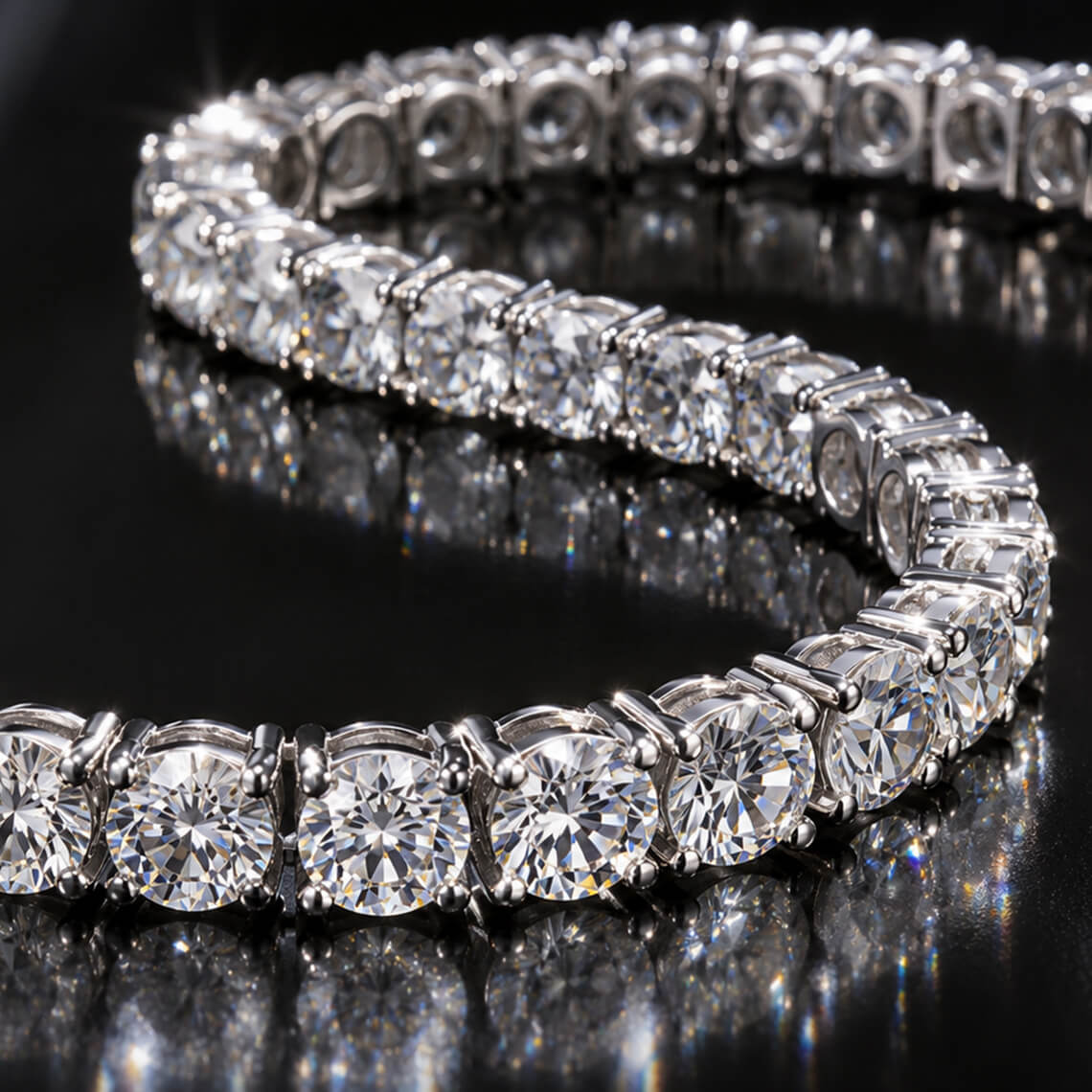
A 10ct tennis bracelet serves as a statement piece.
Its larger individual diamonds create a substantial line of brilliance around the wrist. This weight often appeals to buyers who prefer expressive jewellery or want a special-occasion piece.
However, appearance should not be the only consideration.
Consider the setting height, bracelet flexibility, and clasp security. A heavier bracelet sits and moves differently, and larger settings can affect how naturally it rests against the skin.
How Does Wrist Size Affect Tennis Bracelet Carat Appearance?
The same bracelet can appear very different on two different wrists. A 5ct design may look prominent on a slender wrist, while the same piece looks more in proportion on a broader one.
These guidelines offer a useful starting point:
|
Wrist circumference |
Suggested starting point |
|
Below 15cm |
1–3ct for a delicate to moderate look |
|
15–16.5cm |
3–5ct for balanced diamond presence |
|
16.5–18cm |
3–5ct, or up to 10ct for a bolder look |
|
18cm and Above |
5–10ct for greater visual presence |
These are styling suggestions, not sizing requirements. Your preference matters more than wrist circumference alone.
For comfort, measure your wrist and allow approximately 1.5–2 cm of additional length as a starting point. Check the finished bracelet dimensions before ordering.
What Other Factors Affect the Appearance of a Tennis Bracelet?
Carat weight tells only part of the story. Several design details influence the finished bracelet.
Diamond Shape and Size
Round brilliant diamonds are the classic choice and deliver a familiar, lively sparkle. Oval diamonds stretch the appearance lengthwise, while emerald cuts bring a more structured, geometric quality.
Always compare individual stone measurements directly rather than assuming the same carat weight produces the same look across different shapes.
Setting Style
Prong settings expose more of each diamond. A bezel setting creates a smoother outline by surrounding the stone with a metal rim.
The setting can also influence bracelet width, flexibility, and how closely the diamonds sit together.
Metal Colour and Diamond Quality
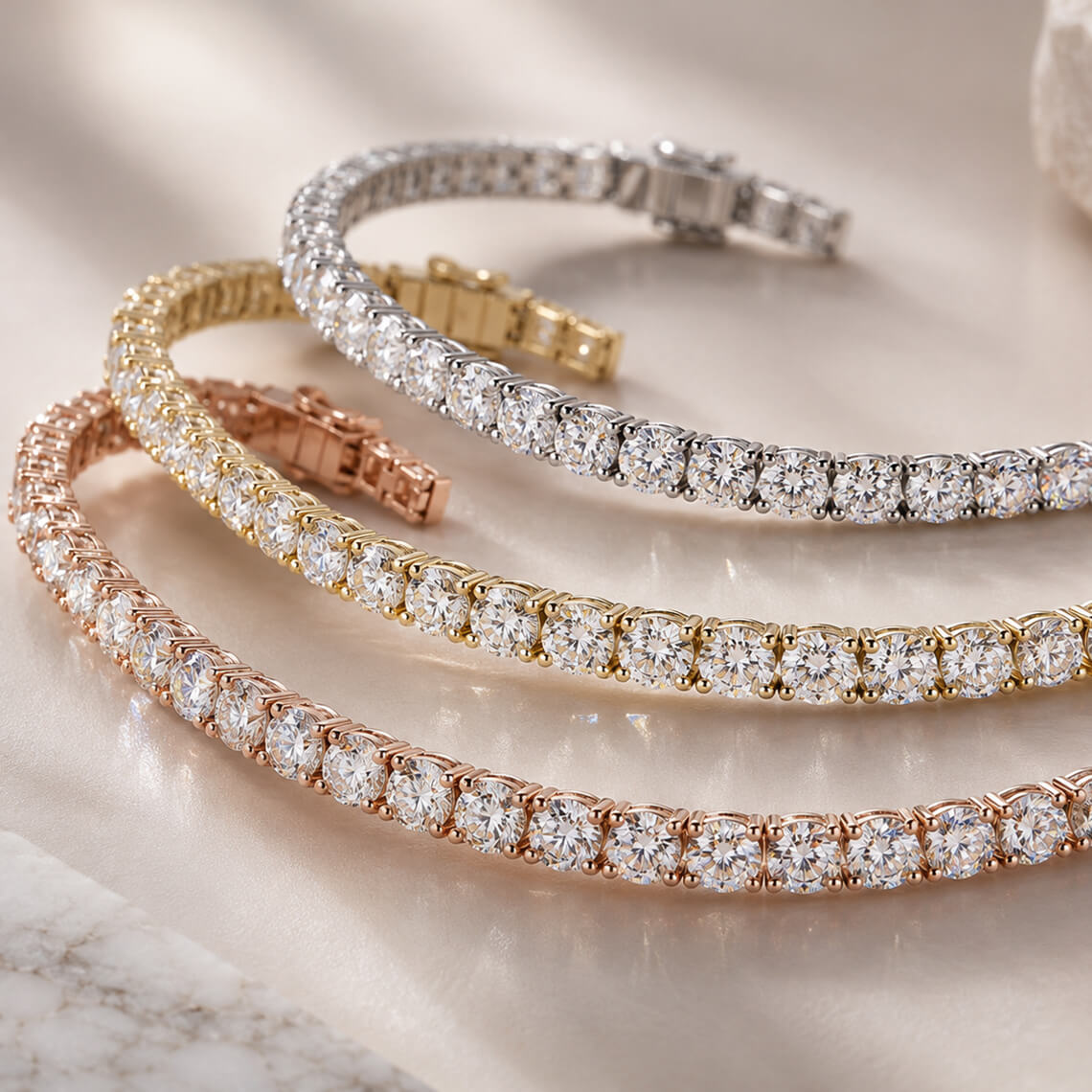
White gold and platinum create a cool-toned appearance. Yellow gold adds warmth, while rose gold provides a softer colour contrast.
Cut quality affects brilliance. Colour and clarity influence the appearance of individual stones, particularly in larger-carat designs.
Look for consistency across the diamonds rather than evaluating total carat weight alone.
How Much Does a 1ct, 3ct, 5ct or 10ct Tennis Bracelet Cost?
Higher total carat weights generally increase the diamond cost, particularly when other specifications remain comparable.
However, prices also depend on whether the diamonds are mined or lab-grown, their quality, the precious metal, and the setting.
Here are examples from Friendly Diamonds collection:
|
Carat weight |
Product example |
Listed price |
|
1ct |
No directly comparable current listing verified |
£900 |
|
3ct |
9ct Yellow Gold Darcy Round Lab Diamond Tennis Bracelet |
£1,335 |
|
5ct |
9ct Rose Gold Serene Pear Lab Diamond Tennis Bracelet |
£1,965 |
|
10ct |
9ct White Gold Aldea Oval Lab Diamond Tennis Bracelet |
£2,675 |
Prices were checked in November 2026 and reflect promotional listings. These examples use different diamond shapes and designs, so they illustrate available price points rather than direct like-for-like comparisons. To compare tennis bracelets properly, check the total carat weight, stone dimensions, and number of stones in each one. See all tennis bracelet prices.
Which Tennis Bracelet Carat Weight Should You Choose?
-
1ct: If you prefer a minimal look or intend to stack your bracelet with other bracelets, a 1 ct bracelet is a great choice.
-
3ct: If you want a bracelet for everyday wear with a little more presence, a 3ct bracelet provides noticeable sparkle without being too flashy.
-
5ct: A 5ct bracelet translates from everyday looks to party wear effortlessly. If you are looking for a versatile bracelet that you can wear for Mondays and milestones, a 5ct bracelet is a great choice.
-
10ct: A 10ct bracelet makes a statement on its own. If you are buying a tennis bracelet to wear on special occasions and want it to make headlines of its own, a 10ct bracelet is the one for you.
It is important to note that the presence of the bracelet also depends on the design, diamond quality, individual diamond weight, and not carat weight alone.
Conclusion
The ideal tennis bracelet strikes the perfect balance between diamond presence, comfort, style, and budget. You might choose a 1ct bracelet for delicate elegance, a 3ct for versatility, a 5ct for a more substantial appearance, or a 10ct to make a bold statement.
Review the individual diamond dimensions, bracelet length, and setting specifications to choose a piece that feels beautifully proportioned on your wrist.
FAQs
How many carats should a tennis bracelet be?
Is a 3ct tennis bracelet a good everyday choice?
Is a 10ct tennis bracelet too flashy?
Does a higher carat weight mean bigger diamonds in a tennis bracelet?
What is the most popular tennis bracelet carat weight?