 Flat 50% OFF sitewide!




Choosing a setting, in four moves
- Name their aesthetic. Quiet luxury, clean minimal or vintage revival: the look decides the setting family. Lookbooks
- Settle the close calls. Solitaire or halo? Prongs or bezel? Compare them side by side. Setting duels
- Fit it to their hand and day. Finger shape, band width and profile matter as much as taste. Hand fit
- Plan the stack, then shop. Pick a setting that works with the wedding band you want. Find a setting
New to settings? The Engagement Ring Guide’s setting chapter covers the basics; this guide goes further.
Chapter 1
The aesthetic edit
Most people already have a look, even if they’ve never put a name to it. These are the aesthetics you’ll see again and again across Instagram and Pinterest, and the ring formula that fits each one.
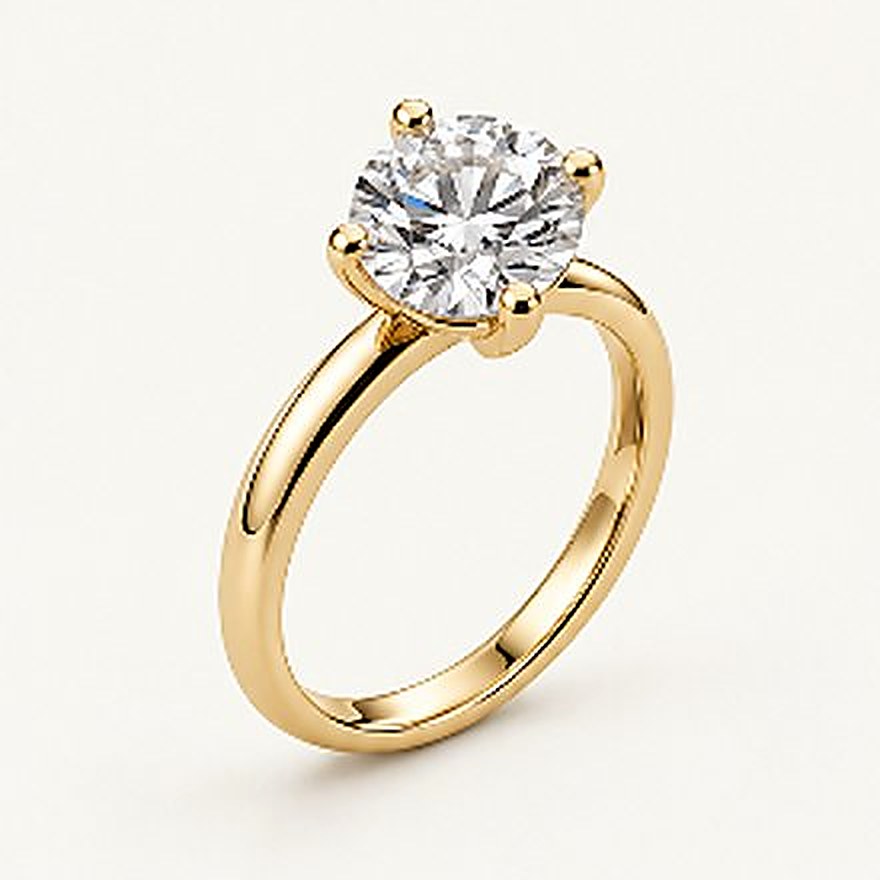 14K yellow gold solitaire
Aesthetic
Quiet luxury engagement rings
Old-money ease: nothing loud, everything excellent.
- Tailored neutrals, cashmere and loafers
- An heirloom watch, a single gold chain
- Logos never; quality always
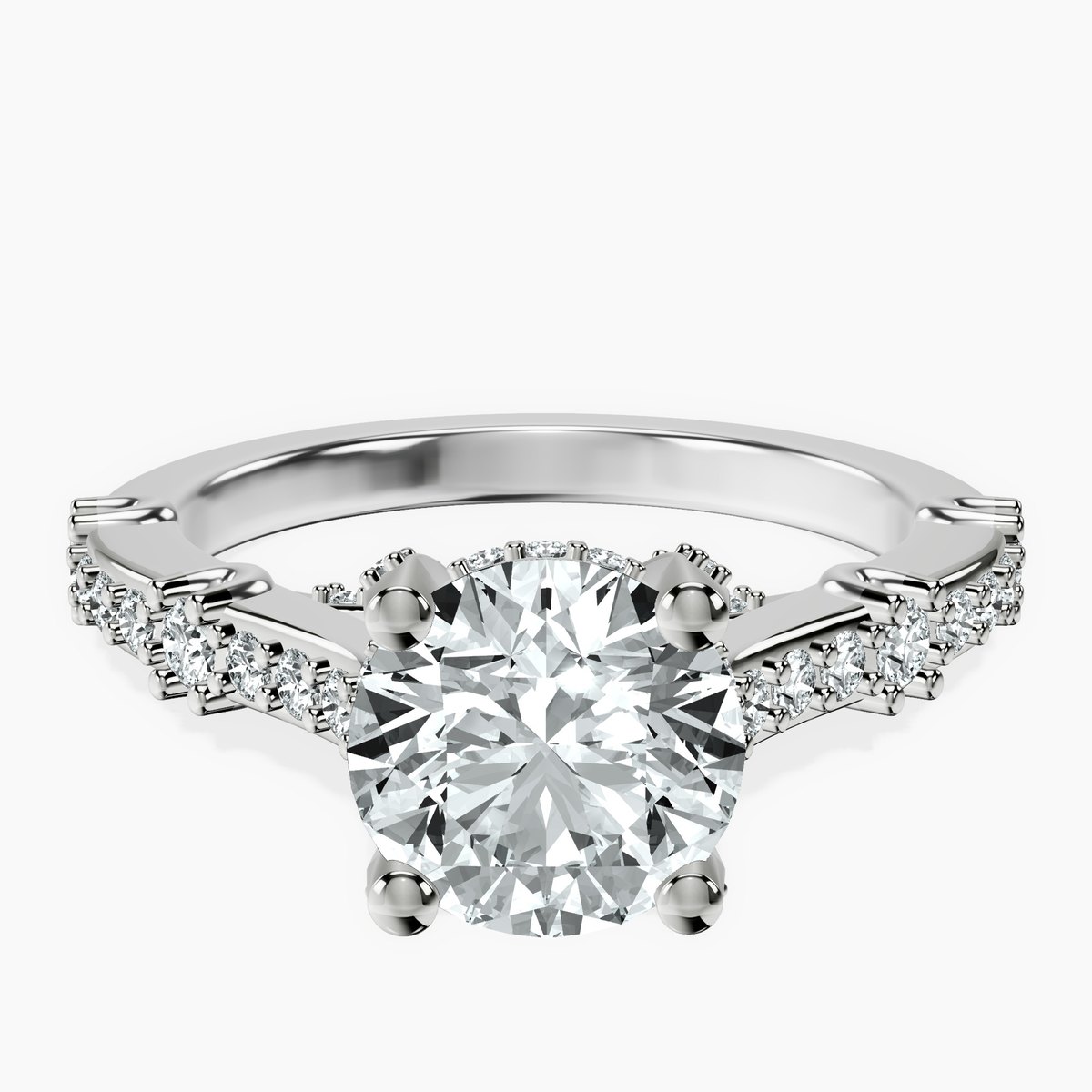
 Slim solitaire with a matching band
Aesthetic
Clean minimal engagement rings
Pared back and polished: the ring is the only statement.
- Slicked-back hair, a crisp white shirt
- Fine chains, tiny hoops, stacked thin bands
- A neutral, uncluttered home
 White gold vintage-inspired setting
Aesthetic
Vintage revival engagement rings
Art Deco geometry and Edwardian softness, made for now.
- Thrifted blazers, silk scarves, red lipstick
- Antique fairs and old photographs
- Milgrain, filigree and engraved detail
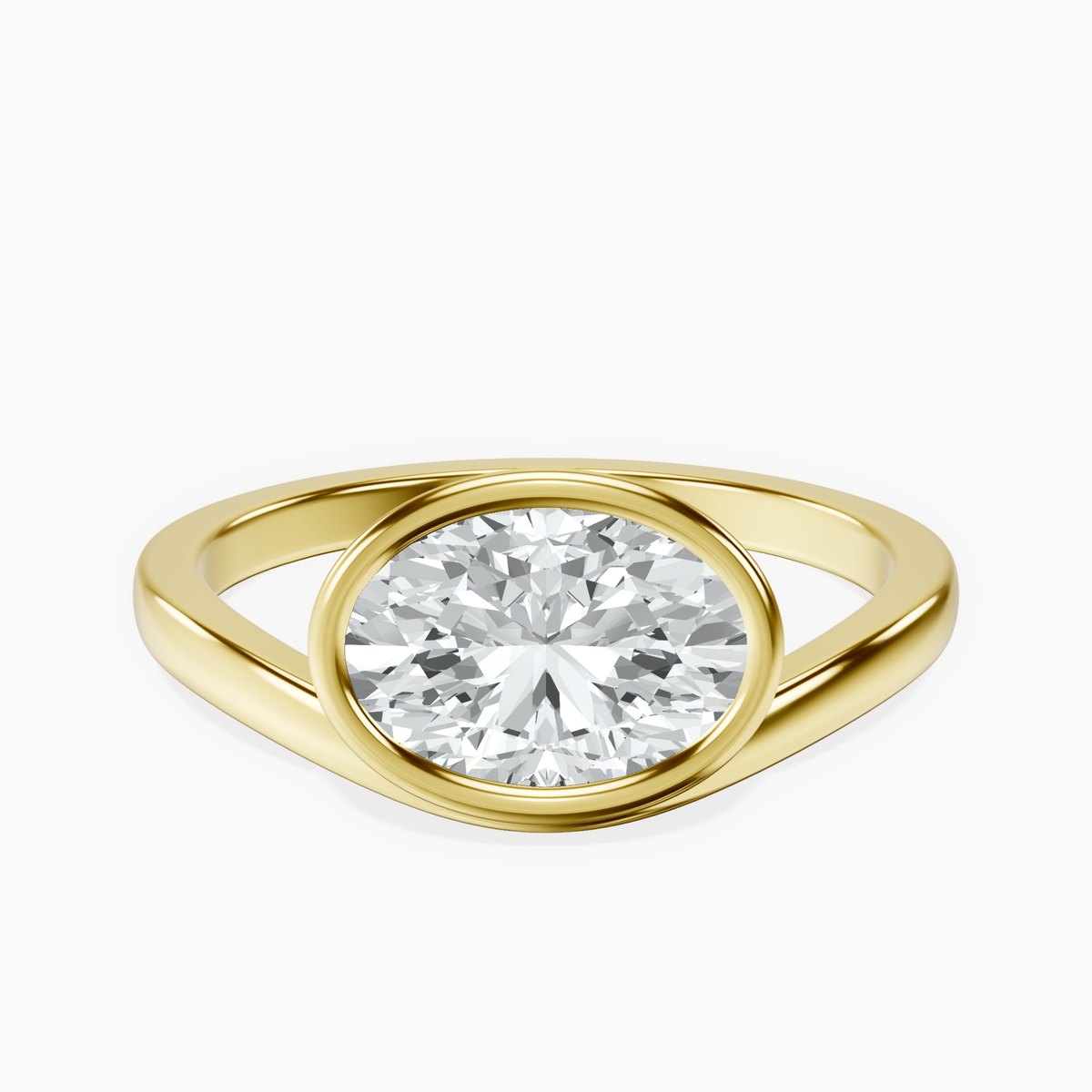 East-west oval · 14K yellow gold
Aesthetic
Modern architectural engagement rings
Geometry, negative space and the unexpected angle.
- Monochrome wardrobe, sculptural shoes
- Design galleries and concrete interiors
- One bold, perfectly made piece
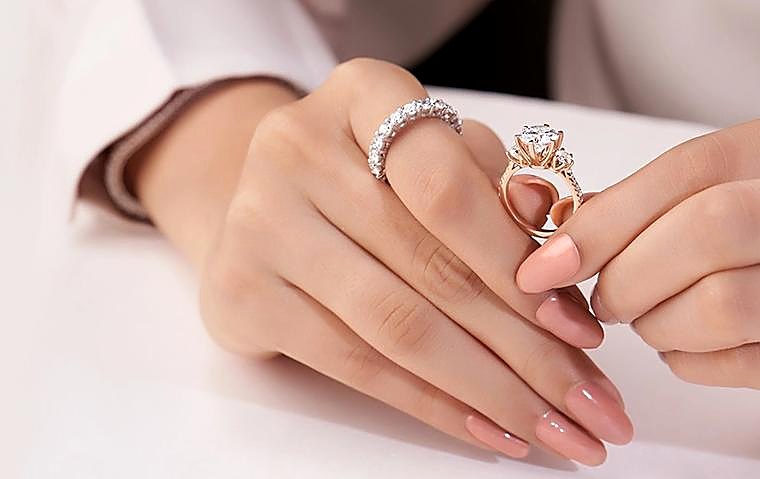 Rose gold halo with a pavé band
Aesthetic
Romantic soft glam engagement rings
Soft focus, rosy metal and sparkle from every angle.
- Florals, satin and blush tones
- Soft-glam makeup, glossy nails
- Candlelit dinners and handwritten notes
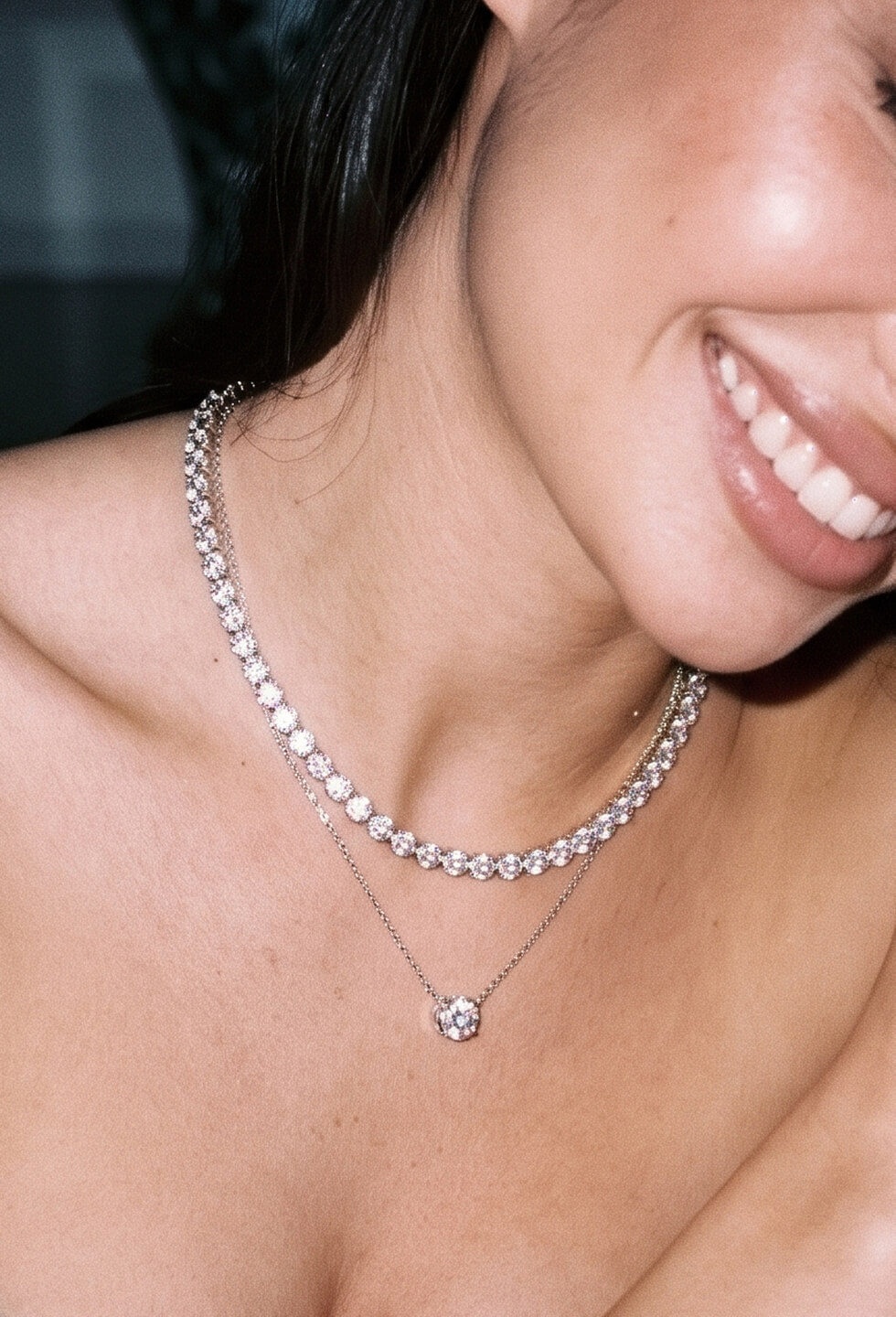
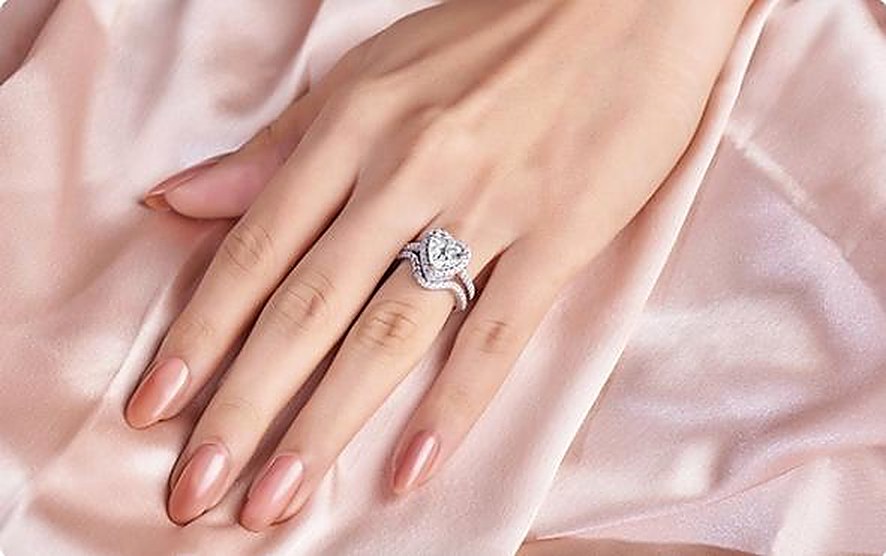
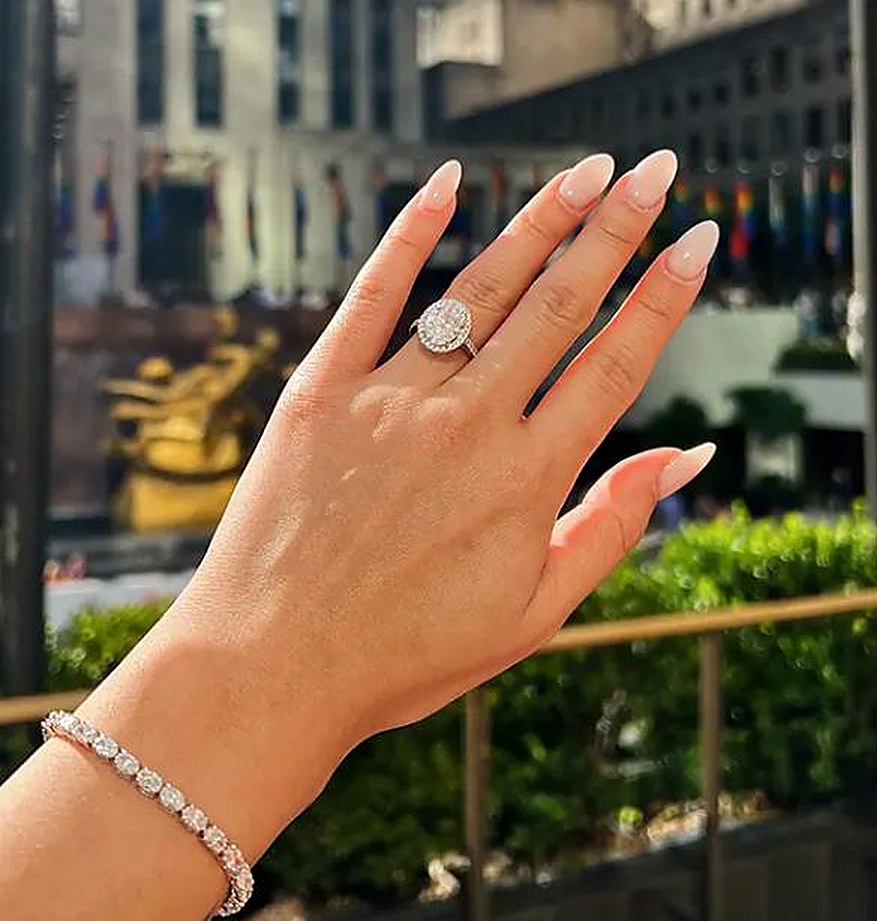 Halo engagement ring with a tennis bracelet
Aesthetic
City glam engagement rings
Polished, confident and made to be noticed across a room.
- Tailoring, statement coats, a tennis bracelet
- Rooftop bars and gallery openings
- Maximum sparkle, perfectly put together
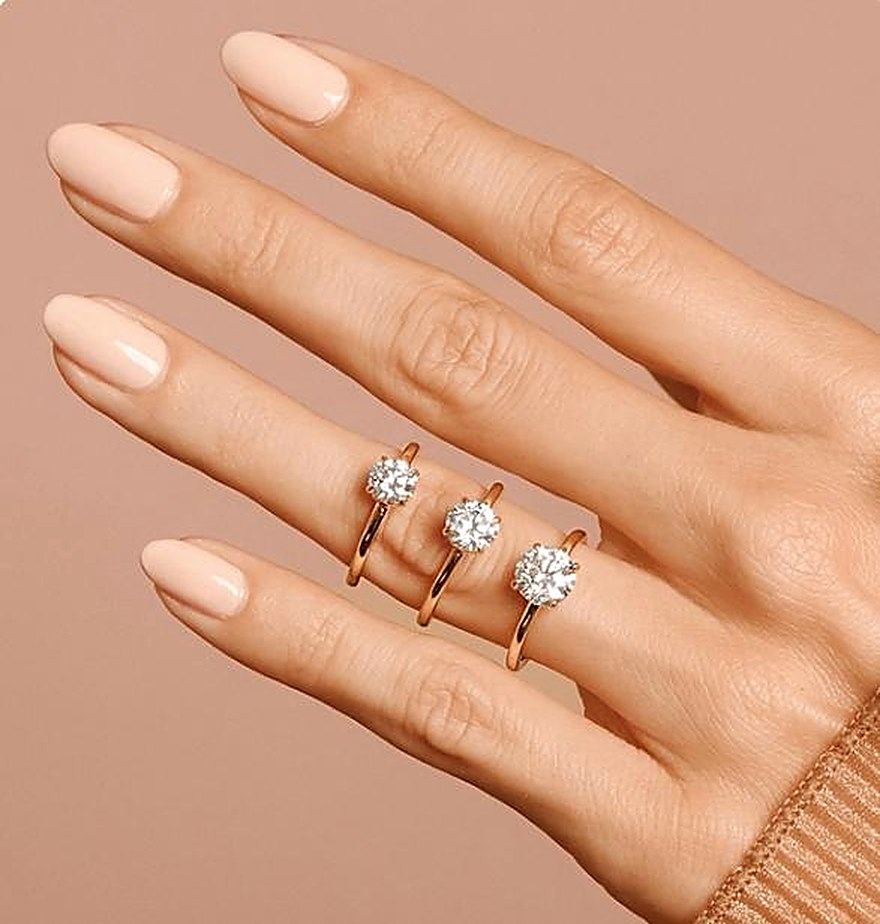 Mixed-metal rings worn together
Aesthetic
Maximalist stack engagement rings
More is more: mixed shapes, mixed metals, a stack with personality.
- Layered necklaces, rings on several fingers
- Color, print and playful styling
- Jewelry collected over years
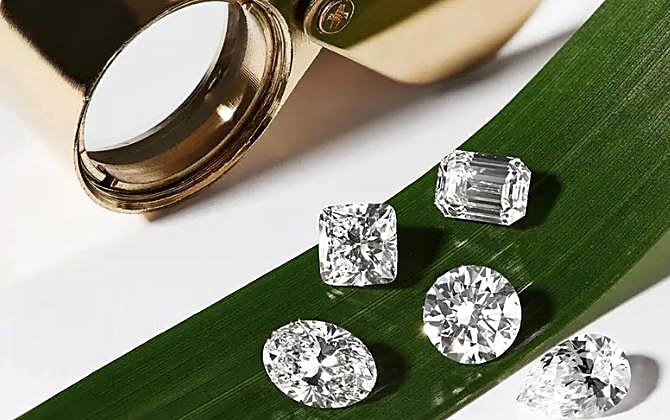 Lab-grown diamonds on a leaf
Aesthetic
Nature & organic engagement rings
Soft, asymmetric and inspired by the outdoors.
- Linen, knitwear and wildflowers
- Hikes, gardens and handmade ceramics
- Leaf, vine and twig motifs
Hashtags open Instagram, where the posts come from independent creators, not Friendly Diamonds. Use them for inspiration, then compare the formula with the rings in our catalogue.
Chapter 2
Setting duels: the close calls, side by side
Most decisions come down to two settings that look similar on a product page. Here they are head to head, scored on what you’ll actually notice and live with.
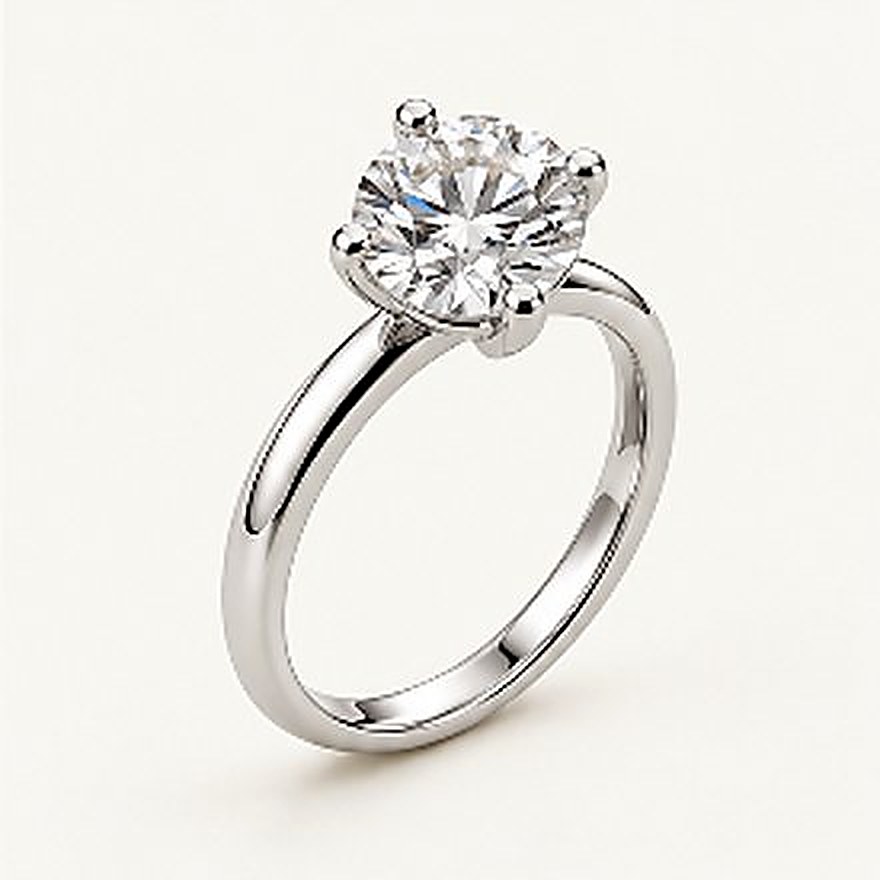
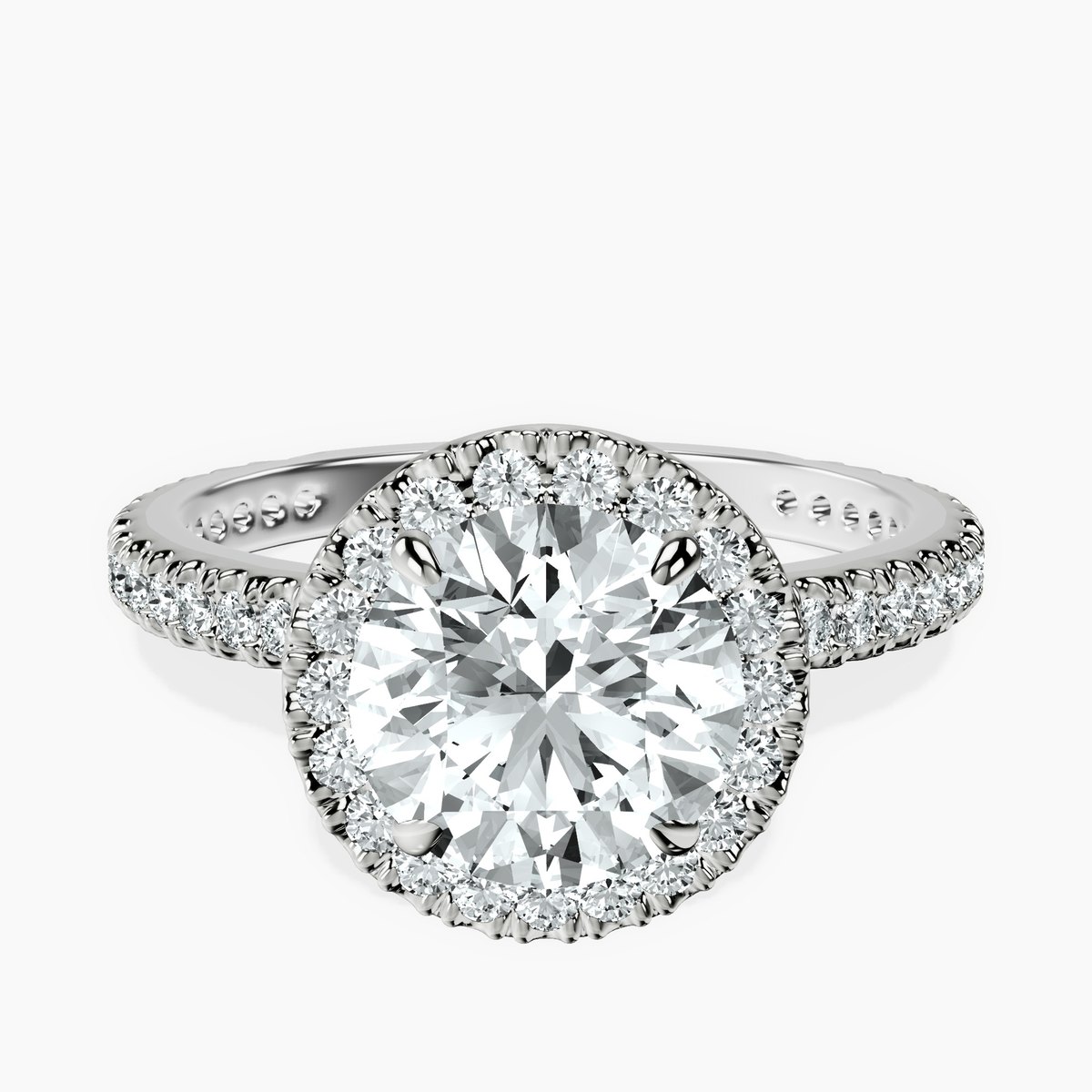
Solitaire vs halo: which is right?
A solitaire is a single diamond on a band, so the whole budget goes into the center stone and a straight wedding band usually sits close. A halo surrounds the center with small diamonds: from the top the stone reads larger and there is more sparkle, in exchange for small stones to check over time and, often, a curved band. If they love clean lines, choose the solitaire; if they want the biggest look for the budget, the halo.
- They want the diamond to speak for itself
- They prefer a timeless, minimal look
- They want a straight band to sit flush
- They want the center to look noticeably larger
- They love sparkle from every angle
- A slightly curved band is fine
The bottom line: A halo makes a diamond look up to about half a size larger face-up; a solitaire puts the whole budget into the center stone.
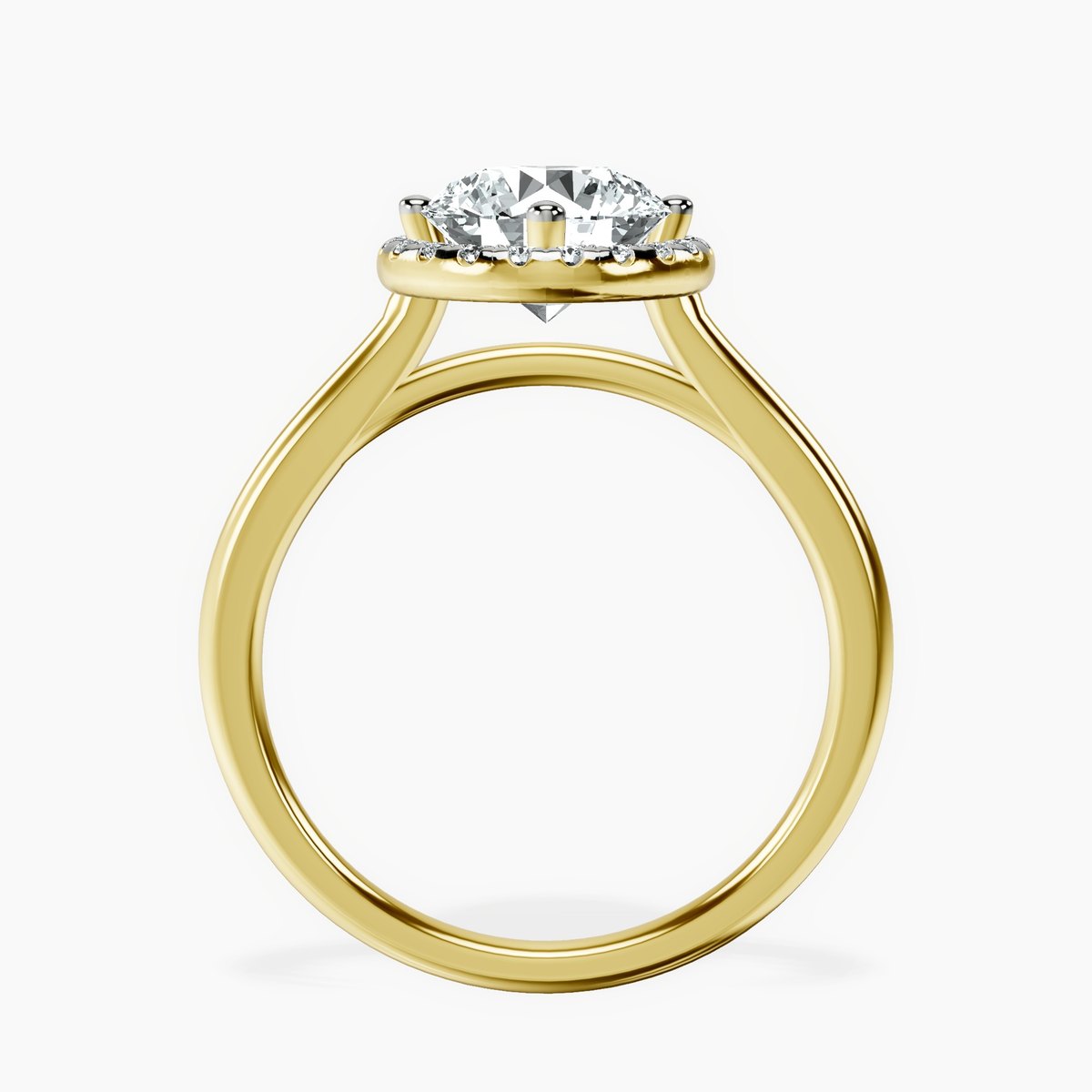
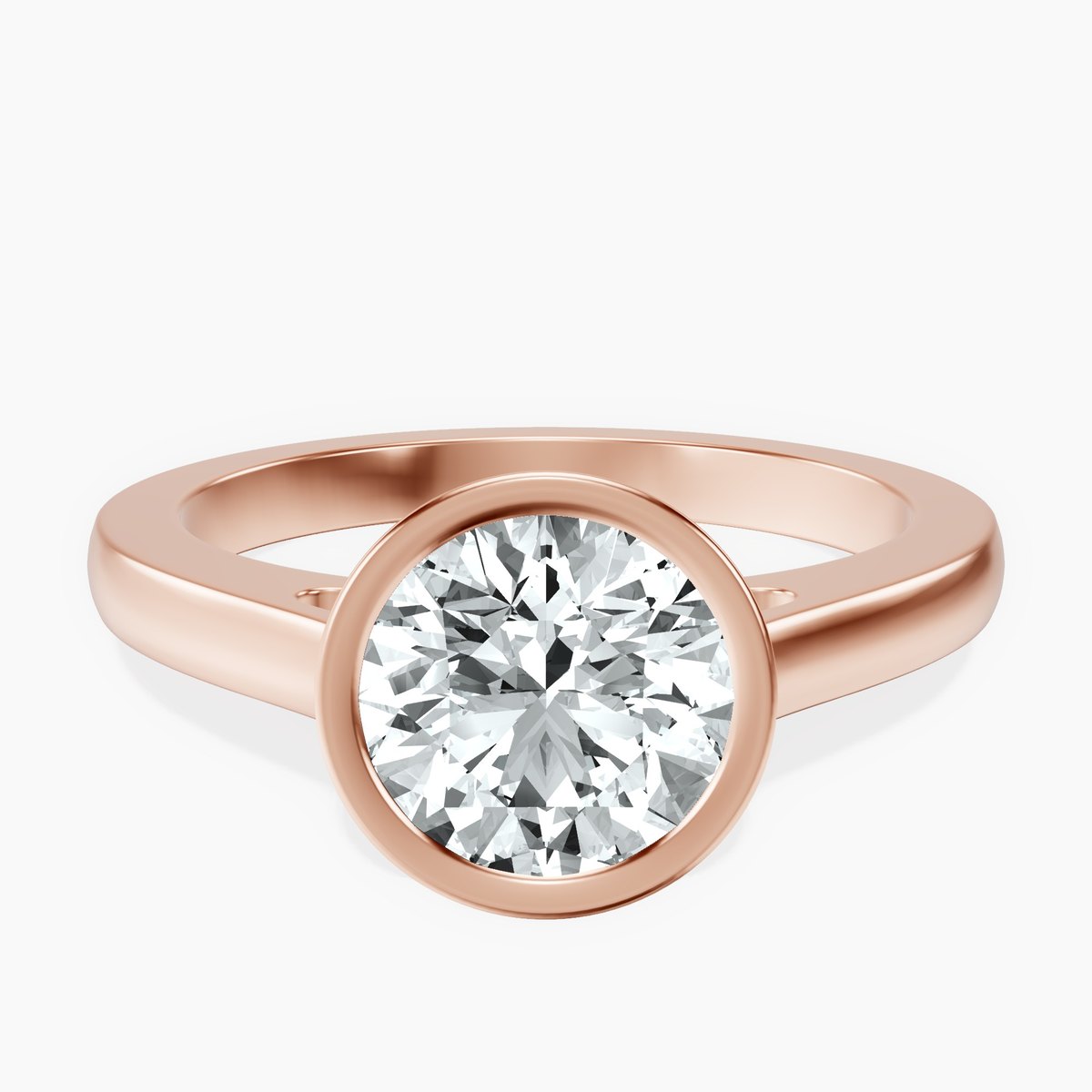
Bezel vs prong settings
Prongs hold the diamond with small claws and leave most of the stone open to light. A bezel wraps the edge in a rim of metal, the most protective option for active hands, with slightly less of the diamond’s sides on view. Both are secure when well made; what changes is how much edge is exposed and how the ring looks: traditional with prongs, sleek and modern with a bezel.
- They want as much light and diamond on show as possible
- They like a traditional look
- They work with their hands, play sport or wear gloves
- They like a sleek, modern outline
The bottom line: Prongs show more diamond; a bezel wraps the edge for the best everyday protection, with slightly less light from the sides. Good construction matters in both.
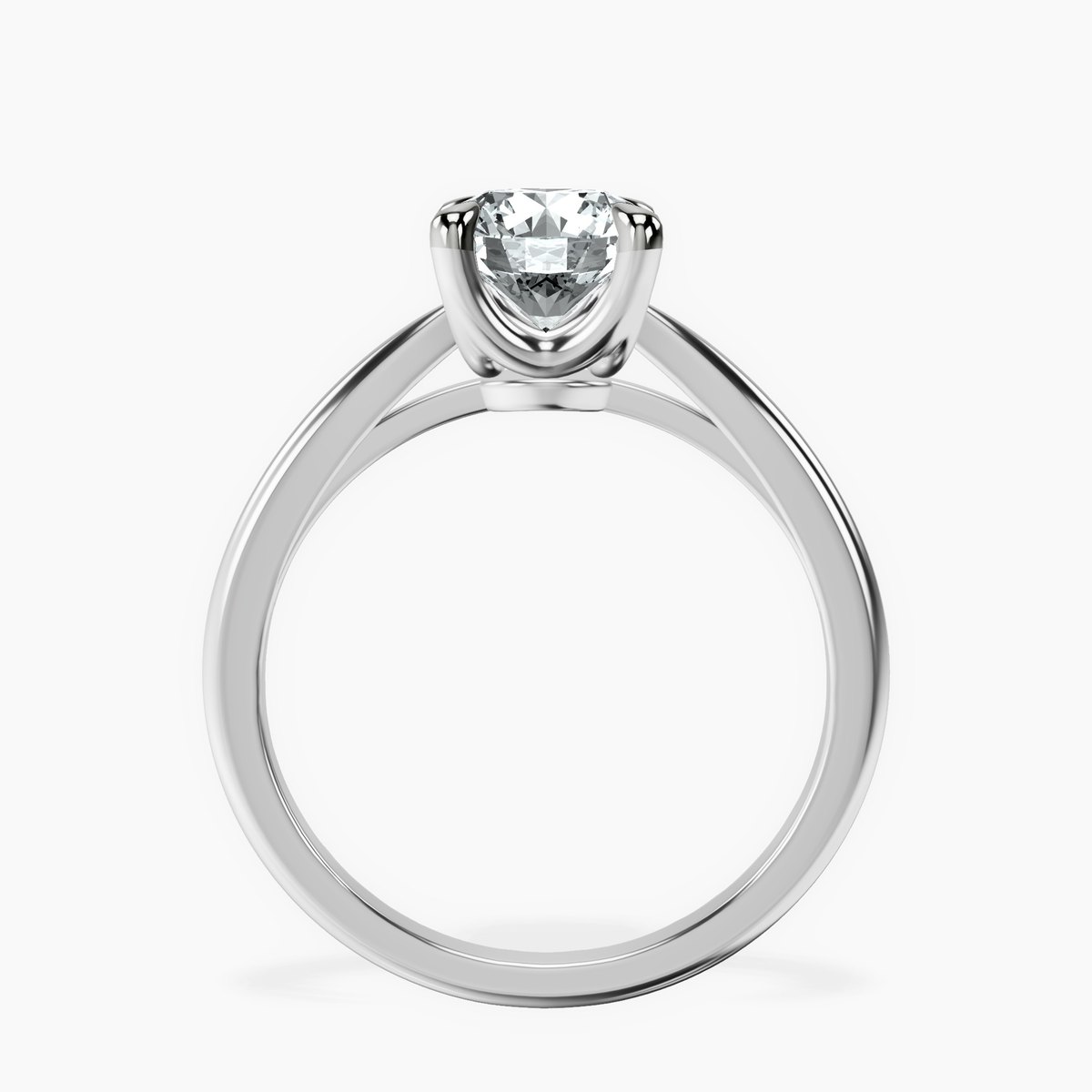
Cathedral vs basket settings
A cathedral setting lifts the head on arches that rise from the band, giving an elegant side profile and room for a straight band underneath. A low basket holds the stone closer to the finger, which is calmer for everyday wear. Height changes presence and band clearance, not sparkle: that comes from the diamond’s cut.
- They want an elegant, lifted profile
- They want a straight band tucked underneath
- They want a low, practical ring that rarely catches
- They prefer clean lines
The bottom line: A cathedral lifts the stone for presence and lets a band slide under; a low basket sits closer to the finger. Height alone doesn’t decide sparkle: the diamond’s cut does.
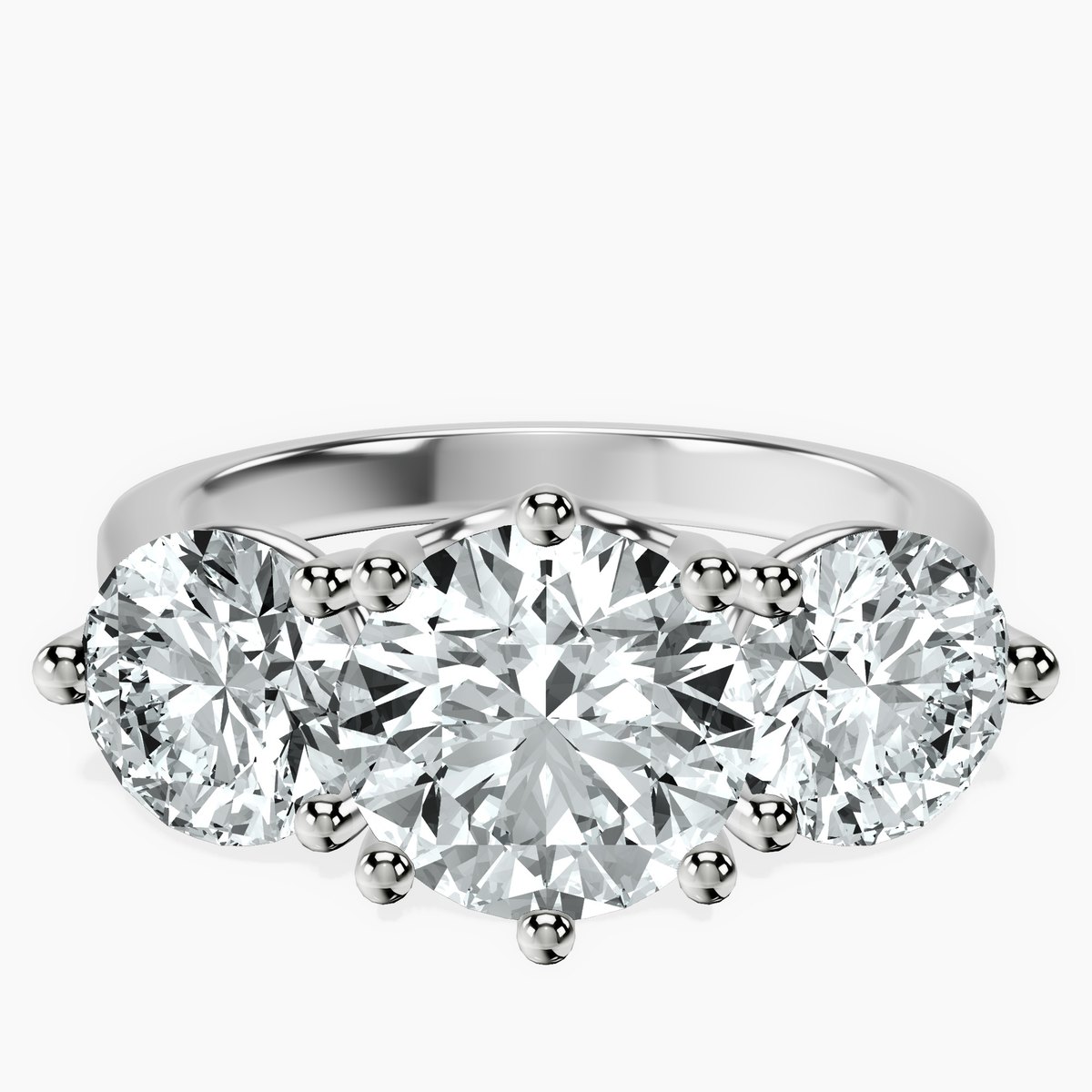
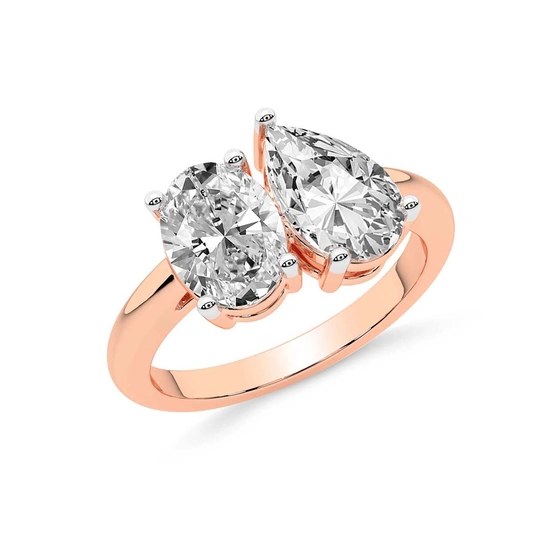
Three stone vs toi et moi
Both spread sparkle across the finger. A three stone ring is symmetrical, with a center diamond and two smaller side stones. A toi et moi pairs two main stones, often different shapes, for an asymmetric, fashion-forward look. Toi et moi designs usually need a curved or custom wedding band.
- They like symmetry and meaning (past, present, future)
- They want a classic statement
- They want something personal and fashion-forward
- They like mixing shapes
The bottom line: Both give presence across the finger. Three stone is balanced and classic; toi et moi is asymmetric and modern, and usually needs a curved or custom band.
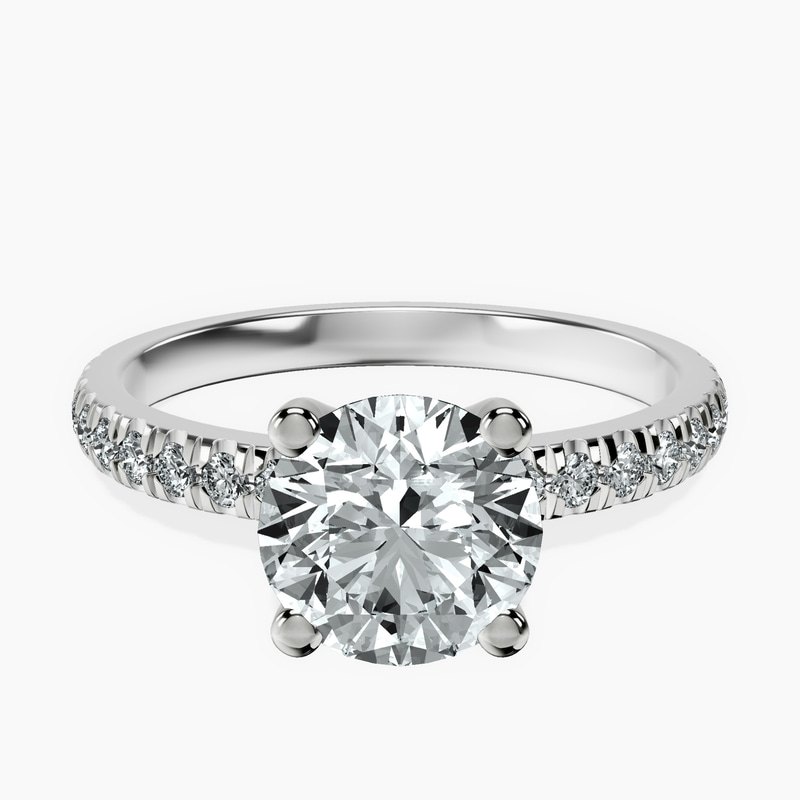
Pavé vs plain engagement ring bands
A pavé band is lined with small diamonds that add shimmer and lead the eye to the center stone; it’s harder to resize and benefits from occasional checks. A plain band is the most practical canvas, easy to resize and maintain, and lets the center diamond stand alone.
- They want continuous shimmer
- They’ll enjoy a matching pavé wedding band
- They want the easiest ring to resize and maintain
- They want the center stone alone to stand out
The bottom line: Pavé adds sparkle along the band but is harder to resize and needs occasional checks; a plain band is the most practical canvas.
How we compare
Labels describe how typical, well-made designs in each setting family compare with each other, based on how the setting holds and exposes the stone, how many small stones it adds and how it meets a wedding band. They are not measurements of any specific ring. “Design-dependent” means the answer changes with the exact head, gallery and band of the ring, so check the product’s photos and measurements.
Chapter 3
Read a ring like a jeweler
Settings aren’t fixed categories. Every ring is built from five decisions, and naming them is how you describe exactly what you want, or find it in a catalogue.
Style Edit tool · 1
Ring decoder
Pick a ring and see its five building blocks. Tap any block for what it means and what it changes.
A four-claw basket solitaire on a straight band.
Combinations are where personal rings come from: a cathedral solitaire with claw prongs, a hidden halo on a pavé band, an east-west bezel, a vintage three stone on a split shank. When you shop, filter by each block rather than by a single setting name, and you’ll find designs that a one-word category would miss.
Chapter 4
Flatter their hand
The same ring looks different on different hands. Finger length, finger width and overall hand size change which shapes, settings and band widths look most balanced.
Style Edit tool · 2
Hand fit
Describe their hand; we’ll suggest the shapes, setting, band width and profile that tend to look most balanced.
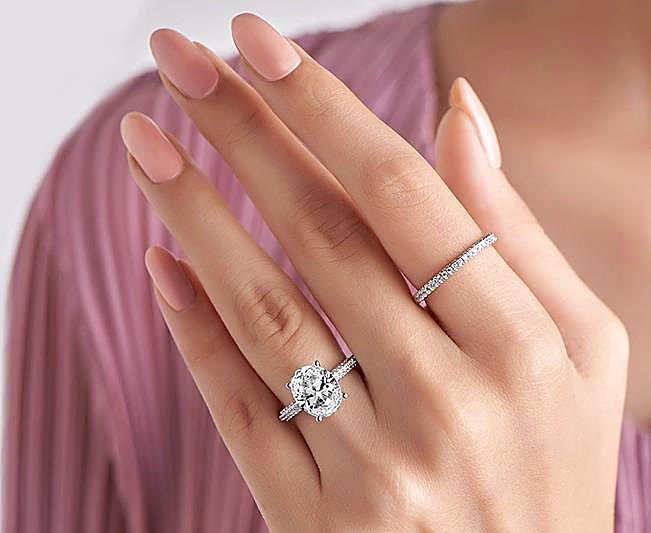
Most shapes balance well; elongated ones add a little length.
Most settings sit in proportion.
A classic width that suits most fingers.
Lower profiles are calmer for everyday wear and snag less; higher ones show more of the stone from the side and leave room for a band underneath. Choose for comfort and band fit, not finger size.
There’s no right carat for a hand. Compare face-up millimeters instead of carat weight: an oval or pear spreads wider than a round of the same weight. The Diamond Guide shows millimeters by shape.
Guidance, not rules: what they love always wins. Trying a similar ring on is the best test.
Chapter 5
Plan the stack before you buy
Stacks are where engagement rings live on social media, and where the wrong pairing shows. The engagement setting decides whether a wedding band can sit flush, leaves a gap or needs a curve.
Style Edit tool · 3
Stack check
Choose the engagement setting and the band you have in mind to see how they’ll sit together from the side.
May leave a small gap
The halo is wider than the band, so a straight band stops just short. Always confirm against the specific ring’s side view before ordering.
Typical behavior for each setting family; exact fit depends on the specific design, so check the product’s side view or ask us before ordering.
Chapter 6
Wear-tested for their week
Settings behave differently across comfort, snagging, stone protection and upkeep, and the exact design matters more than the category. Treat these as starting points to investigate, not rules.
The nurse or clinician
Gloves on, hands washed all day
- Comfort
- Low profile, smooth edges
- Snagging
- Avoid claw tips and high heads
- Protection
- Bezel or half bezel
- Upkeep
- Ring-safe cleaning; check prongs often
- Take it off
- For glove-heavy procedures
Look: bezel solitaire, clean minimal
The gym regular
Weights, climbing or classes
- Comfort
- Low, rounded profile
- Snagging
- Rounded prongs or bezel
- Protection
- Six prongs or bezel
- Upkeep
- Check after knocks
- Take it off
- For lifting, climbing and contact sport
Look: low basket or bezel, quiet luxury
The new parent
Bathtime, car seats, knitwear
- Comfort
- Low to medium
- Snagging
- Avoid claw tips on knits
- Protection
- Hidden halo or bezel
- Upkeep
- Weekly soak; lotions build up
- Take it off
- For bathtime and messy play
Look: hidden halo, romantic soft glam
The desk-based professional
Laptops, meetings, commutes
- Comfort
- Any profile
- Snagging
- Low risk
- Protection
- Any well-made setting
- Upkeep
- Prong check once a year
- Take it off
- Rarely
Look: cathedral or halo, city glam
The outdoors lover
Hikes, gardening, travel
- Comfort
- Low profile
- Snagging
- Bezel or rounded prongs
- Protection
- Bezel; avoid exposed points
- Upkeep
- Brush out grit after trips
- Take it off
- For gardening and climbing
Look: toi et moi on a low setting, nature & organic
The maker or creative
Clay, paint, tools
- Comfort
- Low and smooth
- Snagging
- Bezel or crest
- Protection
- Bezel
- Upkeep
- Clean residue promptly
- Take it off
- For clay, chemicals and tools
Look: east-west bezel, modern architectural
If a stone moves, a prong catches on everything or you hear a faint rattle when you tap the ring, take it off and have it checked before wearing it again.
Chapter 7
Find their setting
Bring it together. We’ll suggest three ring formulas, explain why each fits and flag any trade-offs in what you’ve chosen.
Style Edit tool · 4
Setting finder
Answers you’ve already saved in your ring notes are filled in for you.
Start with their aesthetic
Pick an aesthetic and the look they want; suggestions appear here.
Suggestions are setting formulas matched to your answers. In-stock rings for each appear under it when available.
Questions
Setting questions, answered
What is the most popular engagement ring setting?
The solitaire, because it suits every aesthetic and puts the focus on the diamond. Hidden halos, halos and bezels are popular for extra sparkle or a modern look.
What’s the difference between a solitaire and a halo?
A solitaire is a single diamond on a band. A halo surrounds the center with small diamonds, which adds sparkle and makes the center look larger, but adds small stones to check and often needs a curved wedding band.
Is a bezel setting more secure than prongs?
A well-made bezel protects the whole edge, so it’s usually the better choice for active hands. Well-made prongs are secure too; they just leave more of the edge exposed, so check them regularly.
Which engagement ring setting is easiest to maintain?
A plain-band solitaire or bezel. Fewer small stones and an open structure make cleaning and inspections simple.
Which settings let a wedding band sit flush?
Cathedral solitaires, many solitaires and most bezels sit flush with a straight band. Halos, three stone and toi et moi settings usually need a curved, notched or open band.
What is the difference between a hidden halo and a halo?
A halo frames the stone from the top; a hidden halo sits underneath and is seen from the side, keeping the top view classic.
Does a higher setting make a diamond look bigger?
Not really. Height changes presence from the side and lets a band tuck underneath; face-up size comes from the diamond’s spread, and sparkle comes mostly from its cut.
Which setting suits an active lifestyle?
A low-profile bezel, half bezel or rounded-prong setting is the easiest to live with. Whatever the setting, take the ring off for weights, climbing and heavy work.