Flat 50% OFF sitewide!
NOW & ON BLACK FRIDAY!





Jewellery Hallmarks UK: 375, 750, 950 and Assay Marks Explained
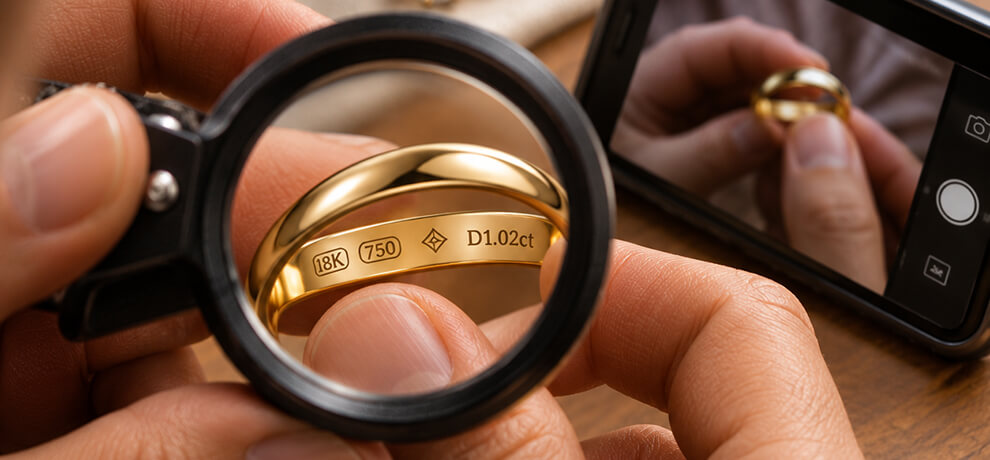
Jewellery buyers may often notice small numbers and symbols stamped inside the ring band or engraved near a necklace clasp. These markings are not decorative but serve a distinct purpose. They tell you what the metal is, how pure it is, and whether it has been independently verified.
Understanding jewellery hallmarks in the UK helps you tell a recognised purity standard apart from a simple manufacturer’s stamp. Whether you are choosing a diamond engagement ring or buying pre-owned gold, knowing how to read these marks puts you in a stronger position as a buyer.
Table of Content
- What Is a Jewellery Hallmark?
- When Is Hallmarking Legally Required in the UK?
- Understanding UK Gold Hallmark Numbers: 375, 585, 750 and 916
- The Different Types of UK Hallmark Symbols Explained
- How to Read a UK Jewellery Hallmark
- Where to Find Hallmarks on Different Types of Jewellery
- How to Check if a Jewellery Hallmark Is Genuine
- Why Jewellery Hallmarks Matter When Buying Gold or Platinum
- Conclusion
What Is a Jewellery Hallmark?
A hallmark is a combination of official marks that verifies the precious metal content of an item. An independent assay office tests the metal against recognised purity standards before applying the appropriate marks.
The UK hallmarking system covers four precious metals: gold, silver, platinum and palladium.
However, not every marking on jewellery constitutes a hallmark.
|
Type of marking |
What It Tells You |
|
Official hallmark |
Independently verified metal purity and identification details |
|
Carat or purity stamp |
The stated metal purity, without necessarily confirming independent testing |
|
Maker's mark |
The identity of a manufacturer or registered business, depending on the mark |
For example, a ring stamped with 750 indicates a gold purity of 75%. However, this number alone does not constitute a complete modern UK hallmark.
When Is Hallmarking Legally Required in the UK?
Under the Hallmarking Act 1973, businesses selling jewellery as precious metal must ensure it carries a legally recognised hallmark unless an exemption applies.
|
Precious metal |
Minimum Metal Weight Requiring Hallmarking* |
|
Gold |
1.00g |
|
Silver |
7.78g |
|
Platinum |
0.50g |
|
Palladium |
1.00g |
*Subject to statutory exemptions. These thresholds refer to the metal weight, not the combined weight of the metal and gemstones. For items containing both precious and base metals, the total metal weight is used to determine whether the item requires hallmarking.
The rules cover both physical retailers and online sellers serving UK customers. Some antique pieces and other exempt articles may be sold legally without hallmarks.
Understanding UK Gold Hallmark Numbers: 375, 585, 750 and 916
Gold purity is expressed in millesimal fineness (parts per thousand). A higher number means that the proportion of gold in the alloy is higher.
|
Gold Hallmark Number |
Gold Carat |
Gold Purity |
|
375 |
9ct |
37.5% |
|
585 |
14ct |
58.5% |
|
750 |
18ct |
75% |
|
916 |
22ct |
Approximately 91.7% |
|
999 |
24ct |
99.9% |
Gold purity affects three things that matter to buyers:
-
Colour: Higher-carat yellow gold generally displays a richer golden tone, although alloy composition also affects colour.
-
Durability: Lower-carat gold is often harder because it contains a greater proportion of alloying metals. However, its hardness and durability also depend on the specific alloy composition.
-
Price: An 18ct gold piece contains twice the gold of a 9ct piece of the same metal weight, so the material cost is naturally higher.
For engagement rings and other frequently worn jewellery, consider durability alongside your preferred gold colour and purity.
The Different Types of UK Hallmark Symbols Explained
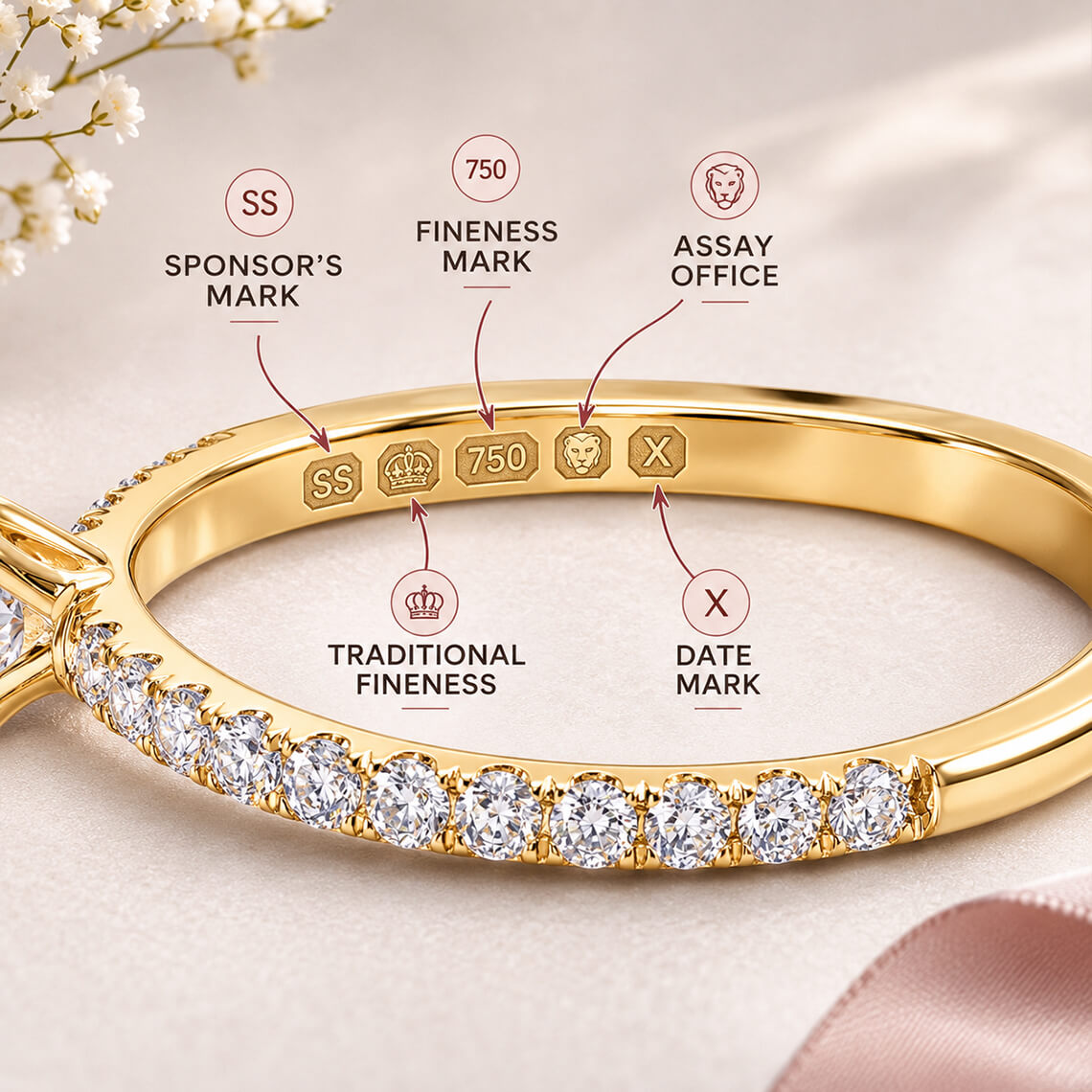
A modern UK hallmark contains three compulsory components. Additional symbols may provide more information about the jewellery.
a. Sponsor's Mark
Indicates the registered person or company who submitted the jewellery for hallmarking. This could be a manufacturer, retailer, or importer. It does not necessarily identify the original craftsman.
b. Fineness Mark
This shows the metal’s purity as a millesimal number. The shape surrounding the number identifies the type of precious metal.
c. Assay Office Mark
Identifies the assay office responsible for hallmarking the jewellery. It does not necessarily indicate where the piece was manufactured.
d. Date Letter
Indicates the year of hallmarking. Date letters became optional in 1999, so their absence does not invalidate a modern hallmark.
e. Traditional and Optional Marks
These include the crown for gold, the orb for platinum, and the lion passant commonly associated with sterling silver. The Edinburgh Assay Office uses a lion rampant instead. International Convention marks may also appear.
How to Read a UK Jewellery Hallmark
You do not need specialist knowledge to interpret the basic components of a hallmark. A 10x jewellery loupe can help you examine smaller markings more clearly.

When interpreting older assay office marks, remember that symbols and date-letter formats have changed over time. Examine the letter's typeface, case, and surrounding shape rather than relying on the letter alone.
Where to Find Hallmarks on Different Types of Jewellery
Jewellers generally position hallmarks discreetly to preserve the appearance of the piece.
|
Jewellery Type |
Common Hallmark Location |
|
Engagement and wedding rings |
Inside the band |
|
Necklaces and chains |
Near the clasp, end links, or identification tag |
|
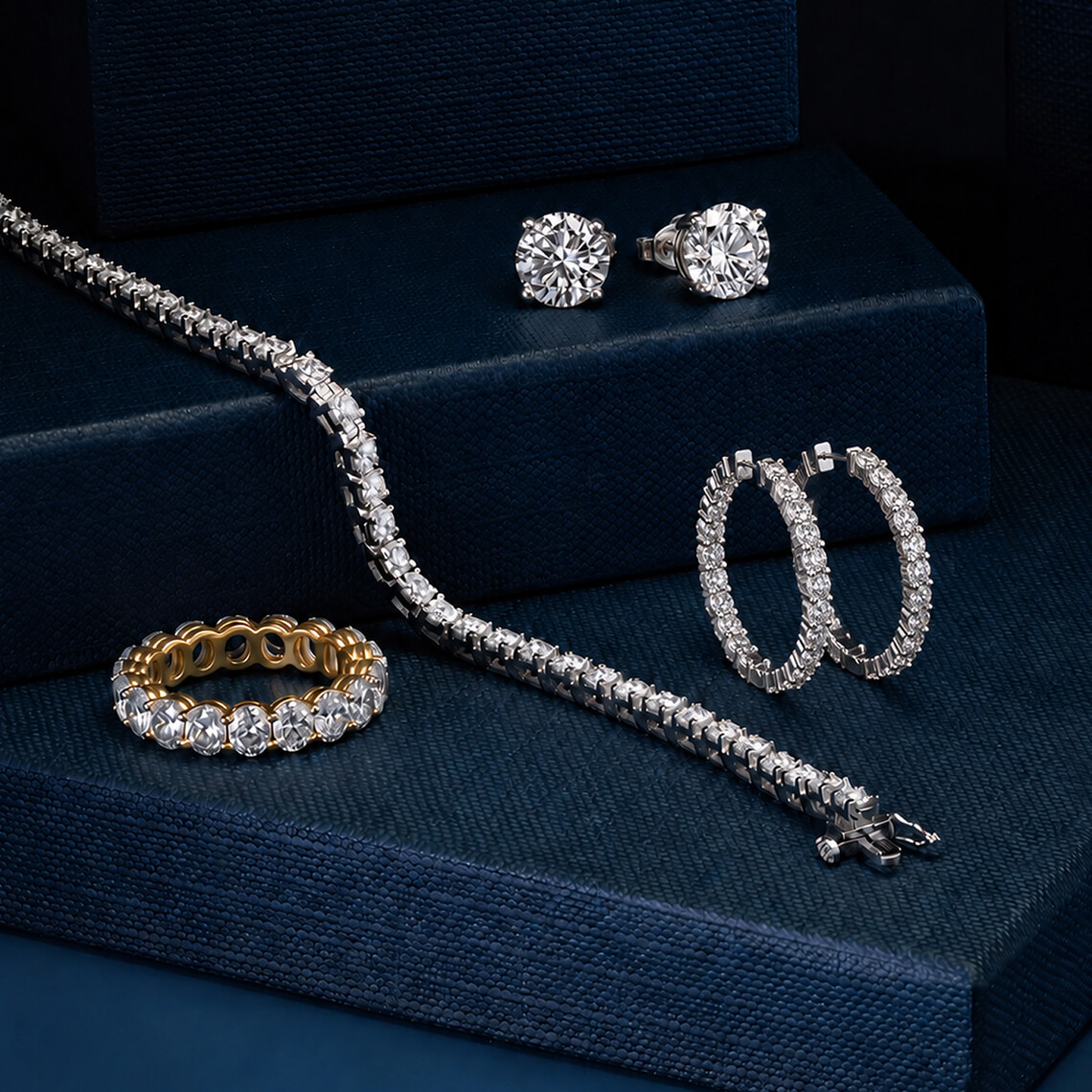
Tennis bracelets |
Clasp or underside of a metal component |
|
Bangles |
Inner surface |
|
Earrings |
Post, fitting or rear surface |
|
Pendants |
Reverse side or bail |
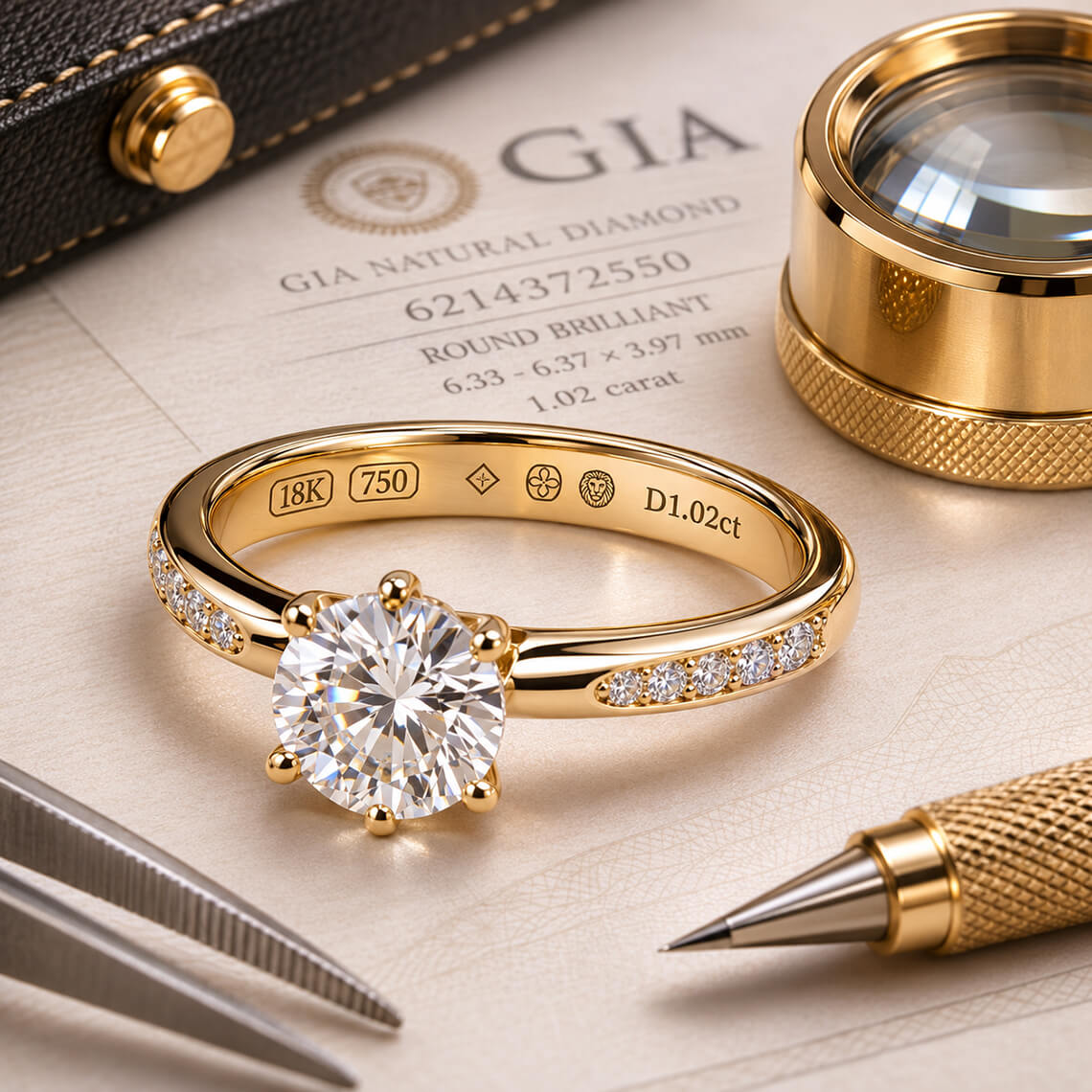
A diamond ring hallmark confirms the precious metal quality of the setting rather than the authenticity or quality of its diamond. Review the diamond's grading report separately.
Smaller pieces may carry finely detailed laser-applied hallmarks that require magnification.
How to Check if a Jewellery Hallmark Is Genuine
Take a few practical precautions before purchasing new or pre-owned jewellery.
-
Check for the three compulsory components of a modern UK hallmark or a recognised alternative hallmark.
-
Compare the symbols with the British Hallmarking Council guidance.
-
Check the sponsor’s initials and the shape of the cartouche surrounding them.
-
Request a magnified photograph of the hallmark when shopping online.
-
Check whether the retailer displays the statutory Dealer's Notice.
A purity number alone cannot establish authenticity. If marks appear inconsistent, worn, or difficult to identify, ask an assay office or qualified jeweller to examine the piece professionally.
Why Jewellery Hallmarks Matter When Buying Gold or Platinum
Hallmarks give you a consistent, independently verified basis for comparing pieces. This is particularly useful when two pieces look similar but have different prices.
Comparing 9ct and 18ct Gold
A 4g band made from 9ct gold contains approximately 1.5g of pure gold. An equally heavy 18ct band contains approximately 3g. This helps explain differences in material value, although craftsmanship and design also influence retail prices.
Understanding Platinum Purity
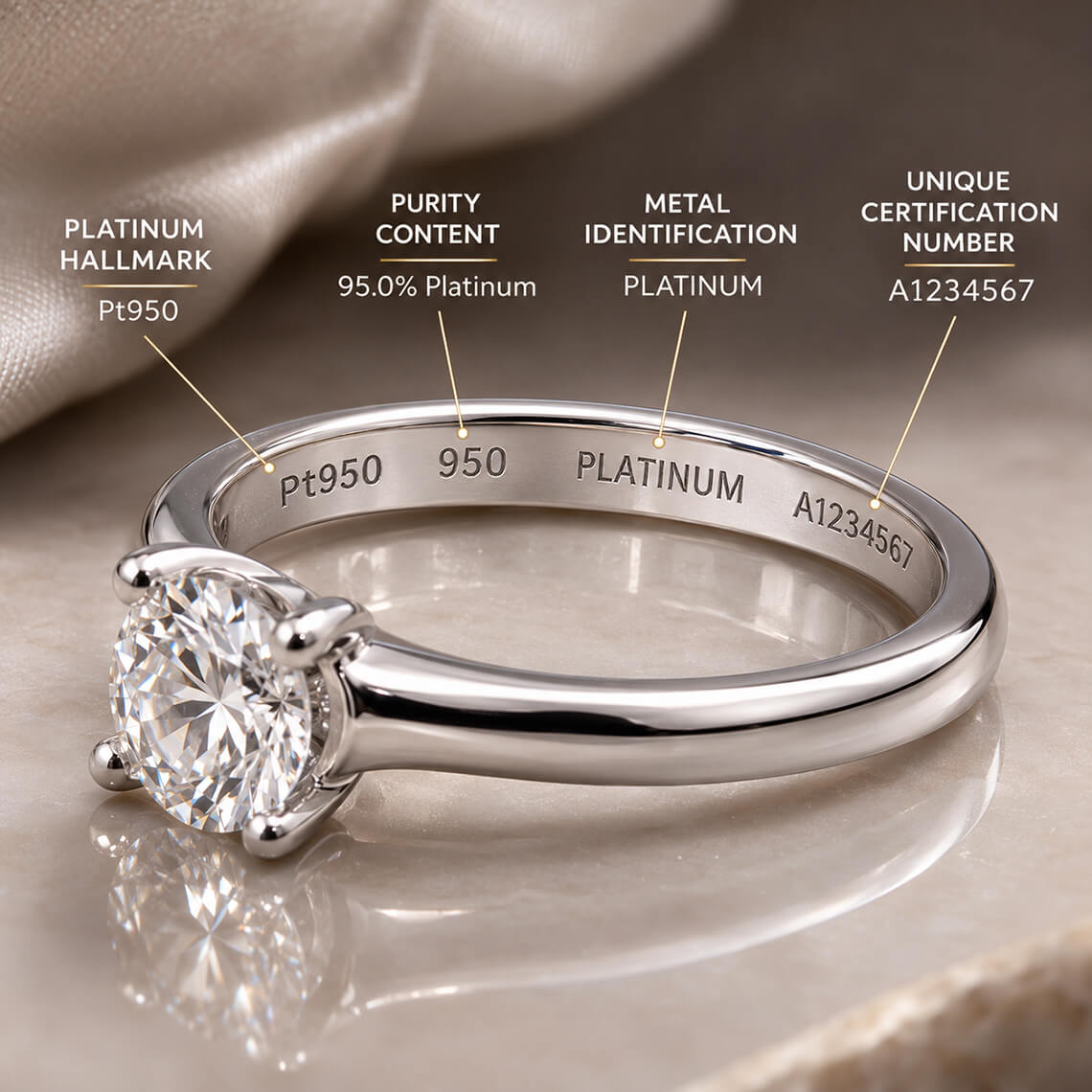
UK platinum hallmarking standards include 850, 900, 950 and 999. A platinum ring hallmarked 950 contains at least 95% platinum.
However, palladium also has a recognised 950 fineness standard. Check the shape surrounding the number to identify the correct metal.
Buying Pre-Owned Jewellery
Examine hallmarks alongside the condition of the piece. Look for worn claws, broken clasps, old repairs and thinning metal.
A genuine hallmark verifies metal purity but does not establish the jewellery's current condition, craftsmanship or resale value.
Conclusion
Knowing how to read jewellery hallmarks in the UK gives you a reliable way to assess precious metal quality before you buy. From gold fineness numbers to assay office symbols, each mark carries specific, useful information. Use this alongside an assessment of diamond quality, craftsmanship, and condition. This will help you make a confident jewellery purchase.
FAQs
What does 950 mean on jewellery?
What is the difference between a hallmark and a carat stamp?
Is all gold jewellery legally required to have a hallmark in the UK?
How can I check a UK hallmark online?