Flat 50% OFF sitewide!
NOW & ON BLACK FRIDAY!




Diamond Fluorescence: What UK Buyers Should Know
The look of a diamond is determined by various factors like cut, colour, clarity, and interaction with light. Diamond fluorescence is yet another property that buyers can come across in a diamond grading report. Some diamonds can glow in a blue colour when exposed to ultraviolet (UV) light, some may glow in other colours, and others might not have any fluorescence at all. Does it affect the look, quality, or price of a diamond? This guide explains why diamonds fluoresce, how it is graded by GIA and IGI, and what UK buyers should know about it.
Table of Content
- What Is Diamond Fluorescence?
- What Is the Diamond Fluorescence Scale?
- Does Fluorescence Affect How a Diamond Looks?
- Best Fluorescence and Colour Grade Combinations
- Do Lab-Grown Diamonds Have Fluorescence?
- How to Check a Diamond's Fluorescence
- Is Diamond Fluorescence Good or Bad?
What Is Diamond Fluorescence?
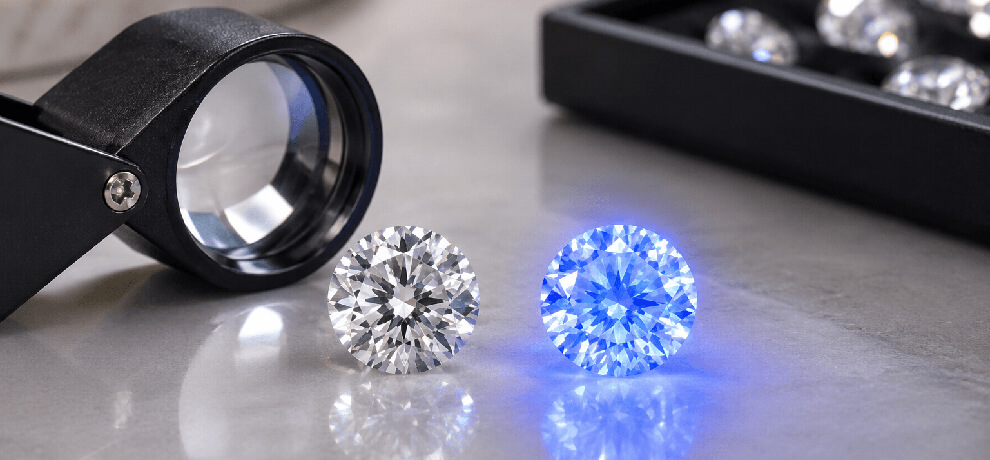
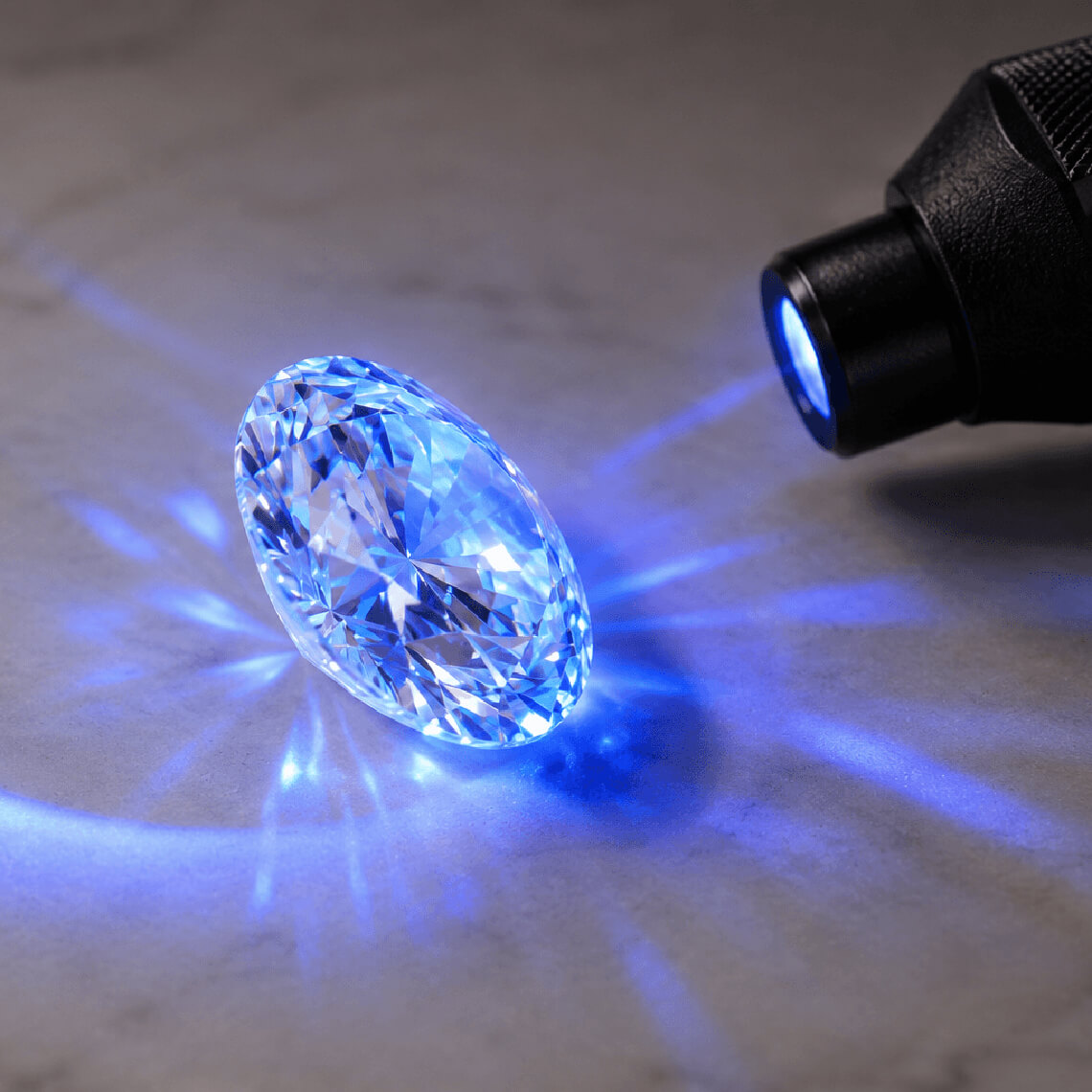
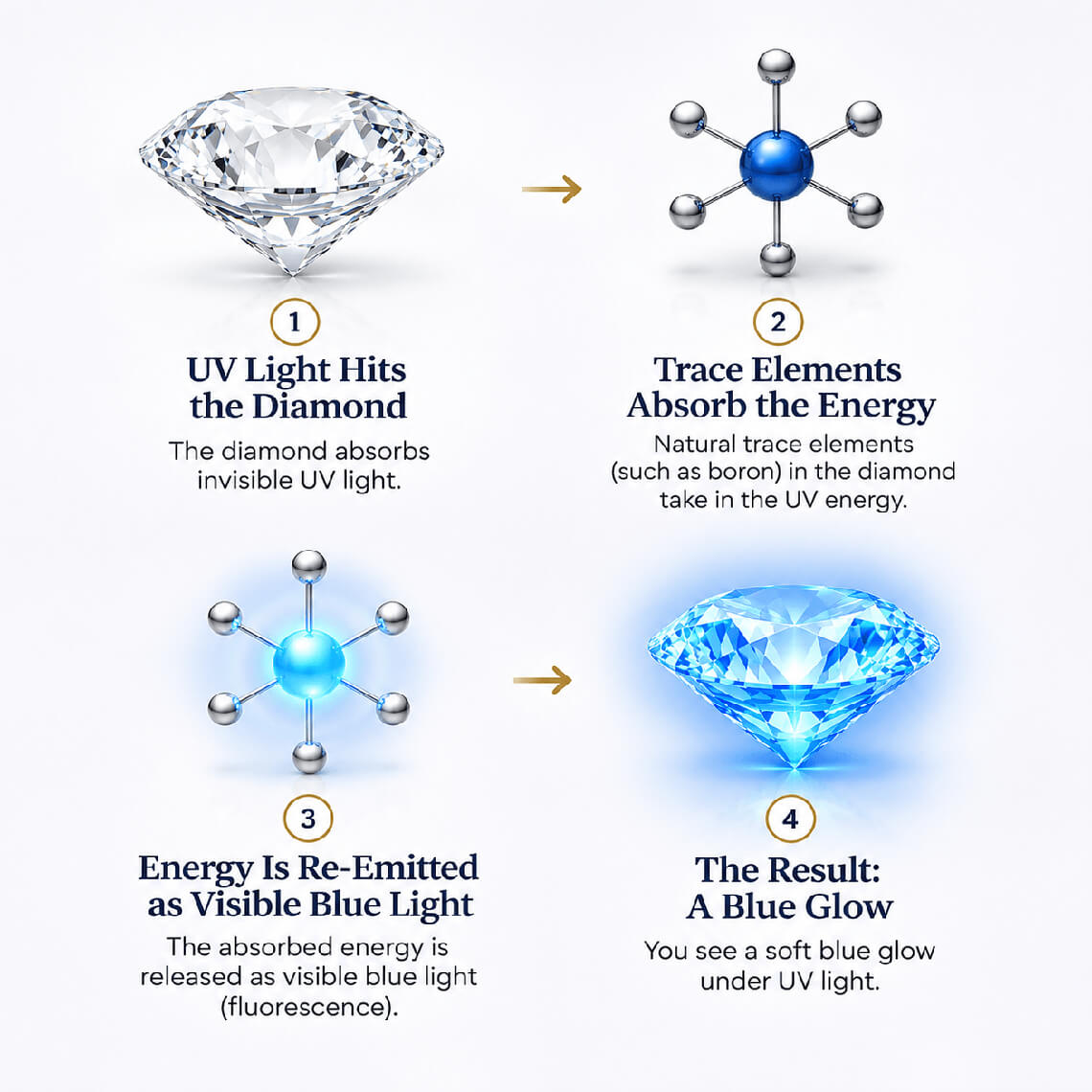
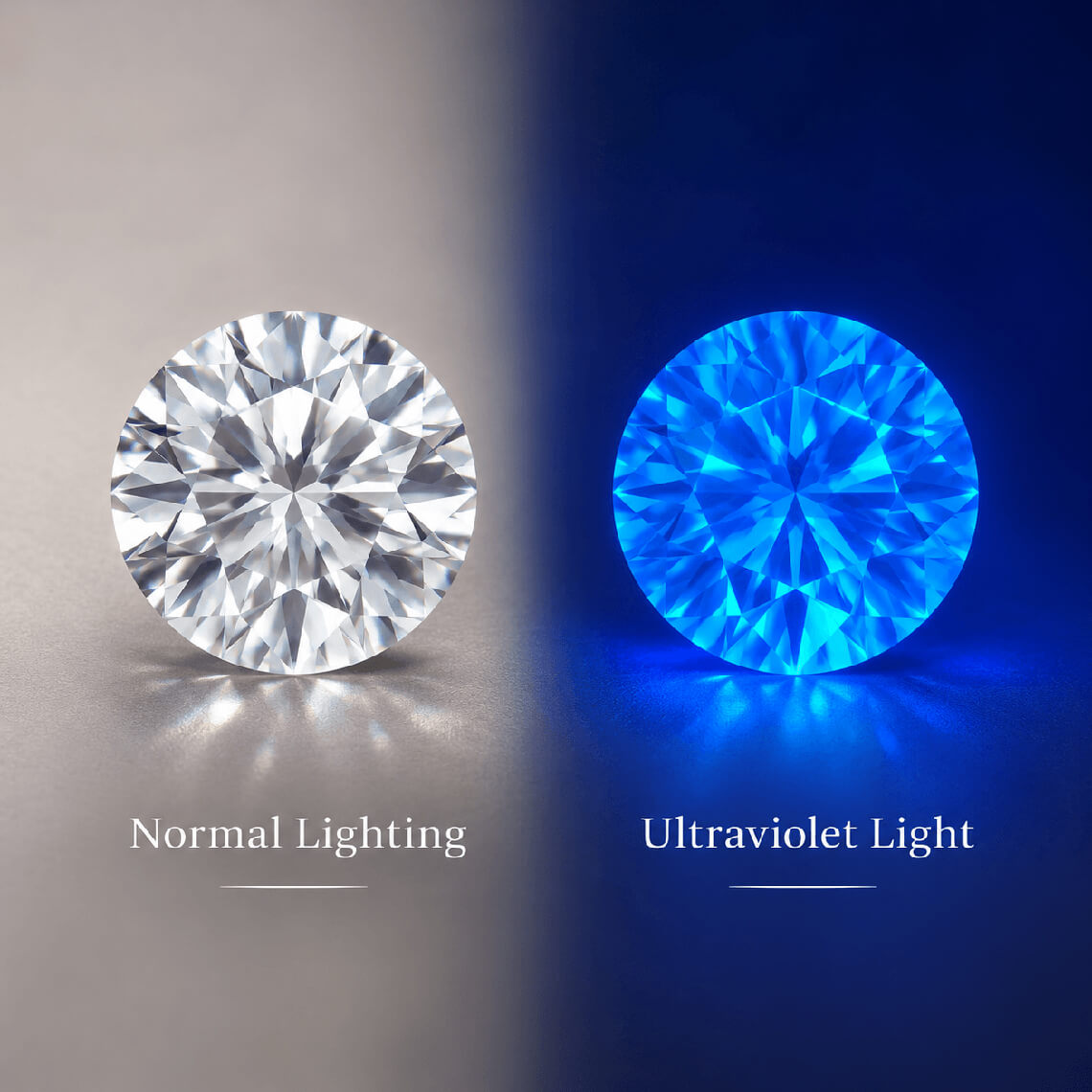
Diamond Fluorescence refers to the light that is emitted by a diamond when subjected to ultraviolet light. It is a natural phenomenon resulting from the process where UV light interacts with certain atomic structures in a diamond. Fluorescence usually causes a glow, and the most common colour is blue.
Unlike brilliance, which is a result of the interaction between light and facets of a diamond, fluorescence is an emission of light caused by the exposure to UV light. It does not affect the structure, durability, or hardness of the diamond.
How common is diamond fluorescence?
Diamond Fluorescence is quite common. As per the Gemological Institute of America (GIA), around 25–35% of all diamonds that have been submitted for grading show fluorescence. Over 95% of all fluorescent diamonds show a blue response.
Fluorescence is common and is not a flaw. It is simply a characteristic that can change how a diamond looks in certain lighting.
What colours can diamond fluorescence produce?
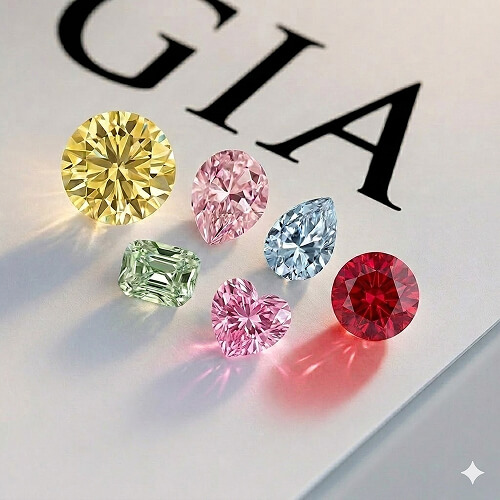
The colour that appears most commonly in natural diamonds when observing fluorescence is blue. Nonetheless, there are cases in which yellow, green, orange, white, or any other colours emerge.
These colours depend on the structure of atoms in the diamond and the defects existing in its structure. Nitrogen defects, for instance, are known to cause blue fluorescence.
The colour of the reaction and its intensity are independent factors. Diamonds with the same degree of fluorescence intensity might have different colours.
What Is the Diamond Fluorescence Scale?
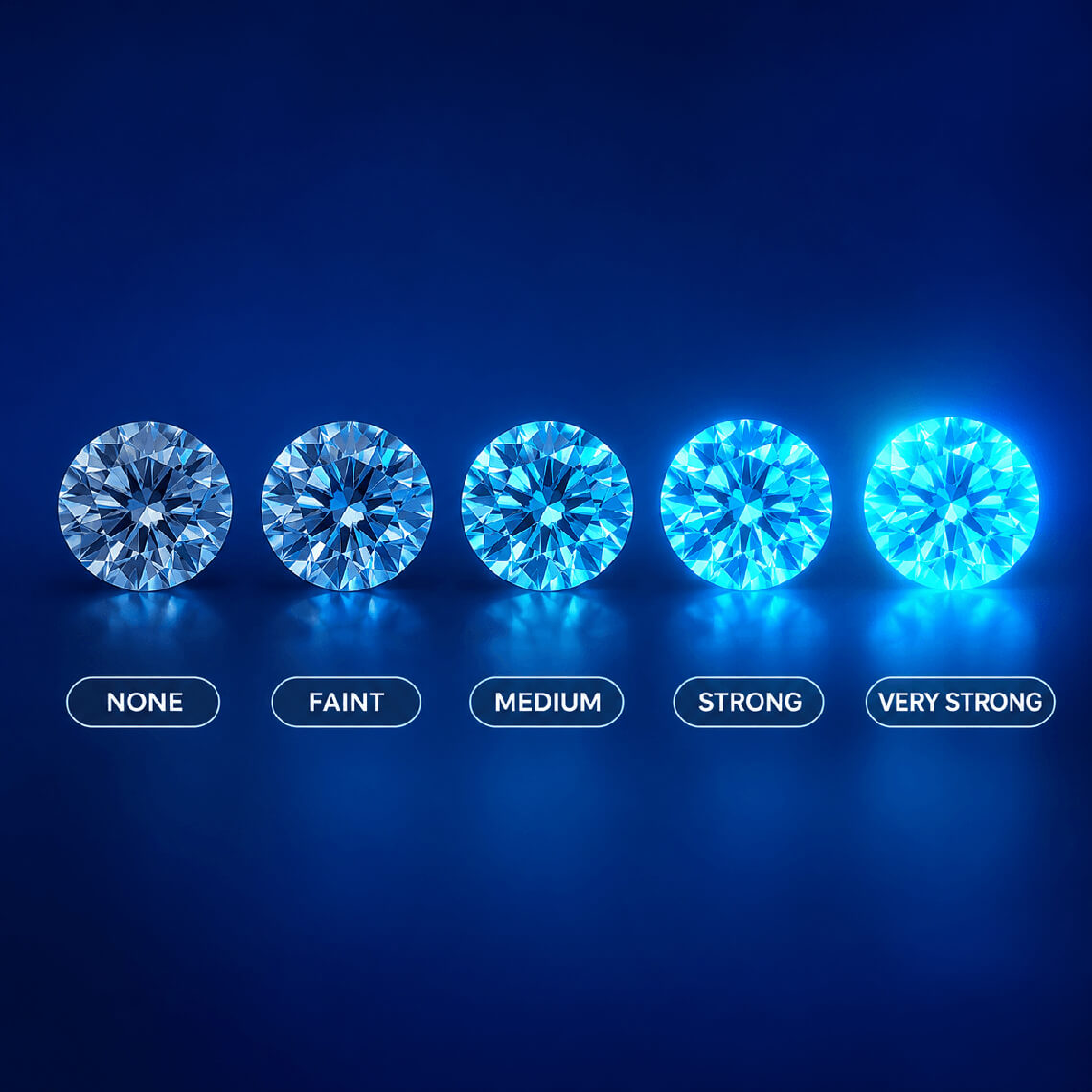
The diamond fluorescence scale is a description of the reaction of a diamond when it comes into contact with ultraviolet light. Different terms are used by GIA and IGI; hence, consumers should read the description that appears in their diamond's report and not make assumptions.
|
Fluorescence intensity |
GIA wording |
IGI wording |
What you may see |
|
None |
None |
None |
No noticeable reaction under the grading conditions |
|
Faint |
Faint |
Very Slight |
A weak glow that is generally difficult to notice |
|
Medium |
Medium |
Slight (not an exact equivalent) |
A more noticeable glow under UV exposure |
|
Strong |
Strong |
Strong |
A clearly visible glow under UV light |
|
Very strong |
Very Strong |
No direct equivalent in IGI's published consumer scale |
A particularly intense reaction under UV light |
Please note that this is just an analysis of terms. GIA and IGI have their own grading and evaluation system. The guidelines of IGI also contain the term Slight, which does not mean that Slight can be equated to GIA's Medium.
What is the difference between faint and no fluorescence?
When the diamond is rated None, there is no fluorescence detected by the laboratory above its reporting limit. The rating Faint indicates that the diamond exhibits some fluorescence. The distinction between the two is usually very hard to spot when the diamonds are worn on a daily basis. Both ratings can look virtually alike under normal indoor lighting conditions. If the diamonds are comparable in all other aspects, there is no real reason not to choose a diamond with the Faint rating.
Does Fluorescence Affect How a Diamond Looks?
Diamond Fluorescence affects its appearance, but that is based on the intensity, colour, and surrounding lighting of the stone. The reaction of the stone to UV light results in the emission of visible light. In some cases, blue fluorescence causes certain diamonds with warmer colours to look less yellow in UV light.
Can fluorescence make a diamond look cloudy or milky?
Strong and Very Strong fluorescence have been known to be accompanied by a hazy or oily look at times. However, fluorescence on its own is not responsible for causing this phenomenon.
According to GIA research from 2021, haziness is due to the scattering of light due to structural defects and micro-inclusions. The presence of strong fluorescence may lead to some reduction in contrast when exposed to UV light, together with any pre-existing transparency problems.
GIA's research found that fewer than 0.2% of fluorescent diamonds look hazy. Buyers should still evaluate the actual diamond and not just assume that all diamonds with strong or very strong fluorescence will appear hazy.
Does UK daylight make fluorescence visible?
Daylight contains some UV light, so fluorescence can show outdoors. This, however, depends on the UV composition of the light and the fluorescence level of the diamond.
For UK consumers, this means Strong fluorescence may show a faint blue tint in direct sunlight, while Faint and Medium rarely do. Factors such as clouds, window glazing, and lighting will affect the UV content of the light reaching the diamond.
With normal indoor LED lighting, the process of fluorescence will not be easily noticeable since most LED lights give off very little UV. This implies that diamonds with faint or medium fluorescence will not differ from normal diamonds.
Best Fluorescence and Colour Grade Combinations
Colour grading of the diamond can affect whether fluorescence is positive, neutral, or less favourable. Blue fluorescence is often regarded as positive for low-colour diamonds since it helps to mask the yellowness of the diamond under ultraviolet lighting conditions.
There is no combination that can guarantee a more attractive diamond. Appearance should always come first.
|
Diamond colour grade |
How blue fluorescence may affect appearance |
What buyers should consider |
|
D–F |
Strong fluorescence may be less preferred in this colourless range, particularly if it affects transparency or contrast. |
Compare the diamond under different lighting conditions, especially if it has Strong or Very Strong fluorescence. |
|
G–H |
The effect is generally subtle, although stronger fluorescence may influence its appearance in UV-rich light. |
Look for any noticeable change in brightness, contrast, or transparency. |
|
I–K |
Blue fluorescence may reduce the appearance of warm or yellow tones under UV-rich lighting. |
A fluorescent diamond in this range may offer good visual value if you like its appearance. |
Having a lower colour grade due to the presence of blue fluorescence does not necessarily mean that the colour grade is the same as the one that is higher. The colour grade stays the same, while the fluorescence can be considered an extra factor.
In other words, having a diamond with the I-colour grade does not mean that it becomes an H-colour diamond when it has Medium blue fluorescence.
Do Lab-Grown Diamonds Have Fluorescence?
Yes, lab-grown diamonds can fluoresce. Just like natural diamonds, lab-grown diamond fluorescence consists of crystalline carbon, and their response to ultraviolet light is dependent on their atomic flaws and impurities.
Nevertheless, the fluorescence characteristics of laboratory-grown diamonds can be different from those of natural diamonds. This is because there are two common processes used in the creation of lab-grown diamonds: Chemical Vapour Deposition (CVD) and High Pressure High Temperature (HPHT).
CVD Diamonds
CVD diamonds are also known to be fluorescent, albeit not always in a uniform way for all the crystals. Some of the early untreated CVD diamonds have been seen to be yellow, orange, or even orange-yellow fluorescent under UV radiation.
The modern CVD diamonds usually do not fluoresce significantly under the normal long-wave UV radiation. However, there are some treatments that can produce a different fluorescence, for example, green fluorescence in short-wave UV radiation.
HPHT Diamonds
There are some distinct patterns of fluorescence that HPHT diamonds will exhibit when they undergo specialised ultraviolet testing. They include green, yellow-green, yellow, orange, and red colours.
Some of the HPHT-produced diamonds have phosphorescence in addition to the fluorescence, where the glow persists even after removal of the UV source.
What is phosphorescence in lab-grown diamonds?
The phosphorescence differs from fluorescence because the glow lasts for some time even when the light source is switched off.
As an illustration, the phosphorescent glow in an HPHT-produced diamond can last for a few seconds after the diamond is exposed to ultraviolet light.
Nonetheless, this is not sufficient evidence that a diamond is synthetic since gemmological laboratories conduct other tests before confirming the source of the stone.
Does fluorescence matter for lab-grown diamonds?
Fluorescence is a characteristic to consider when choosing a lab-grown diamond, just as it is with a mined diamond. Being fluorescent doesn’t mean being defective; it won’t affect the authenticity or durability of the stone.
The buyer should be aware of how the diamond looks, especially regarding its sparkle, transparency, and colour. The grading certificate may give more information on its properties.
How to Check a Diamond's Fluorescence
One can determine whether a diamond fluoresces by examining the diamond grading report, using a UV torch, or visually comparing the diamond in various light settings.
1. Check the GIA or IGI grading report
The Grading Report is the easiest method to use. You should find the Fluorescence field, usually included in the additional information section. In some cases, laboratories use terms like:
-
None
-
Faint or Very Slight
-
Medium or Slight
-
Strong
-
Very Strong (GIA terms)
Sometimes, the fluorescence colour can be stated in the report as well. You should always check the terminology used by the grading laboratory since other terms might have different meanings.
When you are buying a certified lab-grown diamond, make sure the report matches your stone. Friendly Diamonds offers GIA and IGI grading for their lab-grown diamonds, providing the ability to check the independently graded diamond parameters.
2. Use a UV torch
The UV torch can be used to identify fluorescence that might not be noticeable under normal light. To observe the phenomenon:
-
Put the diamond in a darkened room.
-
Point a suitable long-wave UV torch towards the diamond.
-
Identify if it is glowing.
-
Record the colour and intensity of the reaction.
-
Turn off the torch and determine if the reaction stops.
Although a regular long-wave UV torch can demonstrate fluorescence, it does not give the same results as those obtained in a laboratory test. The wavelength, intensity, distance, and surrounding light may affect your observations. Do not look directly at any UV light source.
3. Compare videos and daylight appearance
Videos will assist you in knowing the appearance of a diamond, although conventional photography and videos fail to give a proper depiction of a diamond's fluorescence without mention of lighting.
A video under conventional indoor lighting may fail to show any reaction even when the diamond is described to have fluorescence on the grading report.
Try your best to examine the diamond using indoor lighting, natural daylight, and controlled UV lighting. This way, you will know how the diamond performs under the various settings.
Is Diamond Fluorescence Good or Bad?
Diamond fluorescence is neither good nor bad per se. It all depends on the specific stone, its colour grade, the strength and colour of the fluorescence, and its appearance in normal lighting.
-
For some buyers, blue fluorescence in an I-K colour diamond will look attractive, as it tends to diminish yellowness under UV lighting. On the other hand, others will prefer a diamond with None or Faint fluorescence, especially when purchasing a high-colour D-F stone.
-
Fluorescence can also impact diamond pricing. There are buyers who prefer non-fluorescent diamonds, making certain fluorescent diamonds relatively cheaper. It all depends on the market demand, the diamond specifications, and its appearance.
-
One should not dismiss a diamond just because it is stated in the report that it is fluorescent. Instead, one should evaluate its clarity, brightness, and appearance.
For UK buyers researching certified lab-grown diamonds, assessing the grading report of the diamond together with its visual appearance is a practical approach to evaluate this aspect of a diamond and determine whether diamond fluorescence is good or bad. The right selection will be the stone that meets your quality expectations and looks good in the lighting environment where you intend to wear it.
FAQs
Is a diamond with fluorescence good?
What causes fluorescence in diamonds?
Is faint fluorescence bad?
Is medium blue fluorescence good?
Do fake diamonds have fluorescence?
Does fluorescence affect resale value?
Does diamond fluorescence change over time?