Flat 50% OFF sitewide! BLACK FRIDAY sale live now! 
Flat 50% OFF sitewide! BLACK FRIDAY sale live now!
Flat 50% OFF sitewide! BLACK FRIDAY sale live now!


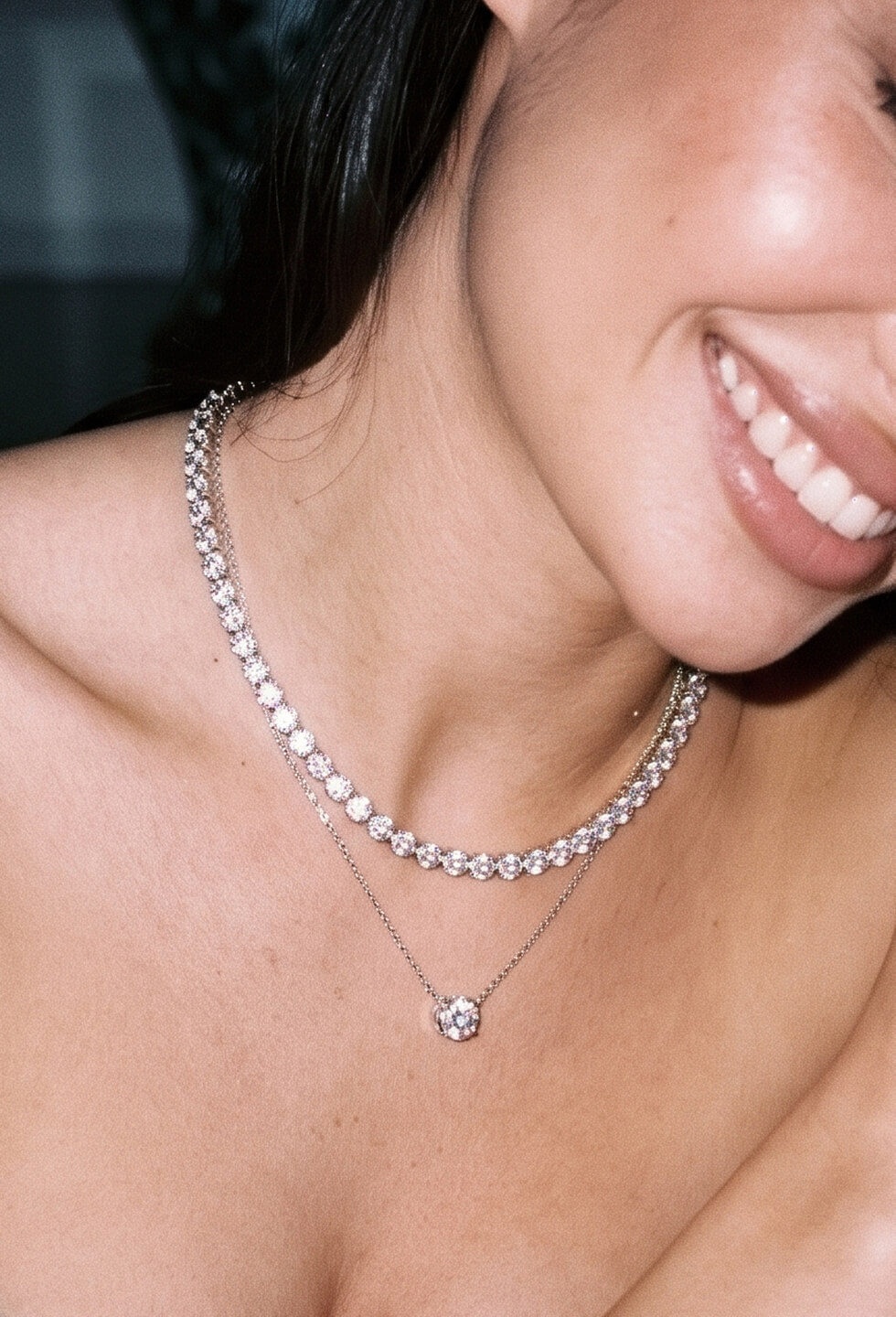


Necklace Chain Types And Lengths: How To Choose The Right One For Her
A beautiful necklace can complement her everyday attire or turn out to be an incredible gift for a special occasion. Many buyers often look for the pendant or the metal of the necklace. But there are two more crucial aspects to consider: the chain’s length and style.
The look and feel of a necklace will largely be impacted by the chain style, length, thickness, and construction. Knowing these details will help you pick a meaningful chain for her.
Table of Content
- Why Necklace Chain Type and Length are Crucial to Consider
- Different Types of Necklace Chains
- Necklace Chain Lengths
- How to Choose the Best Necklace Length for Her
- How to Choose the Right Chain Type for a Pendant
- Best Necklace Chain Types to Wear Daily
- How to Layer Necklace Chains of Varying Lengths
- What to Consider Before Purchasing a Necklace Chain
- How to Measure for the Right Necklace Chain Length
- Conclusion
Why Necklace Chain Type and Length are Crucial to Consider
Different chain designs on necklaces with the same metal can transform the look and feel of a necklace totally. A thin cable chain is more subtle, whereas a thicker cable chain or curb chain will stand out more.
The length of the chain also affects the way it pairs with clothing. A shorter chain makes the neckline more interesting, while a longer necklace extends towards the chest.
The right chain will offer a balance of looks, feel, weight, and durability.
Different Types of Necklace Chains
You might be surprised to know about the sheer variety of chain types available for necklaces. Once you know about them, you will find it much easier to select a pendant or standalone necklace.
1. Cable Chain
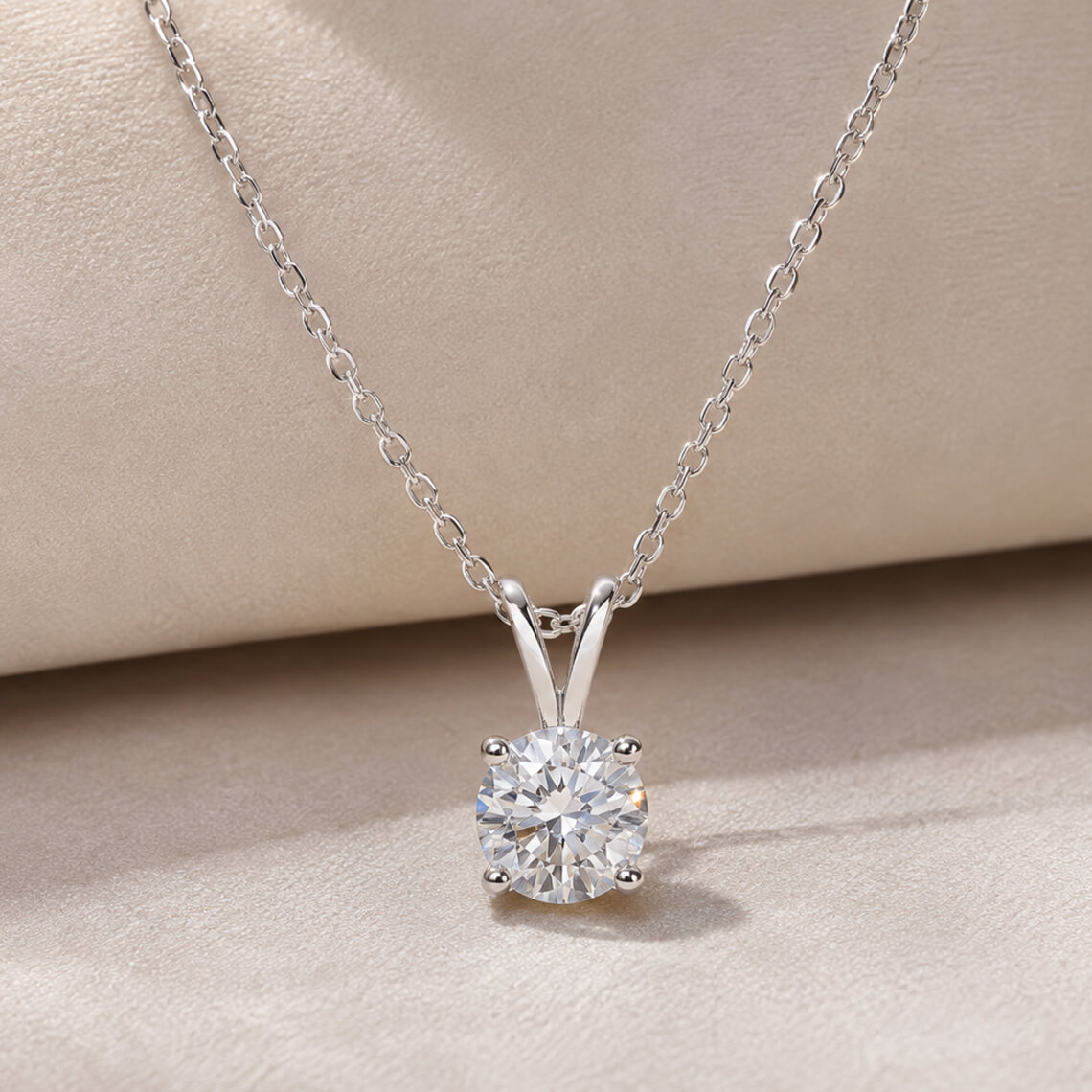
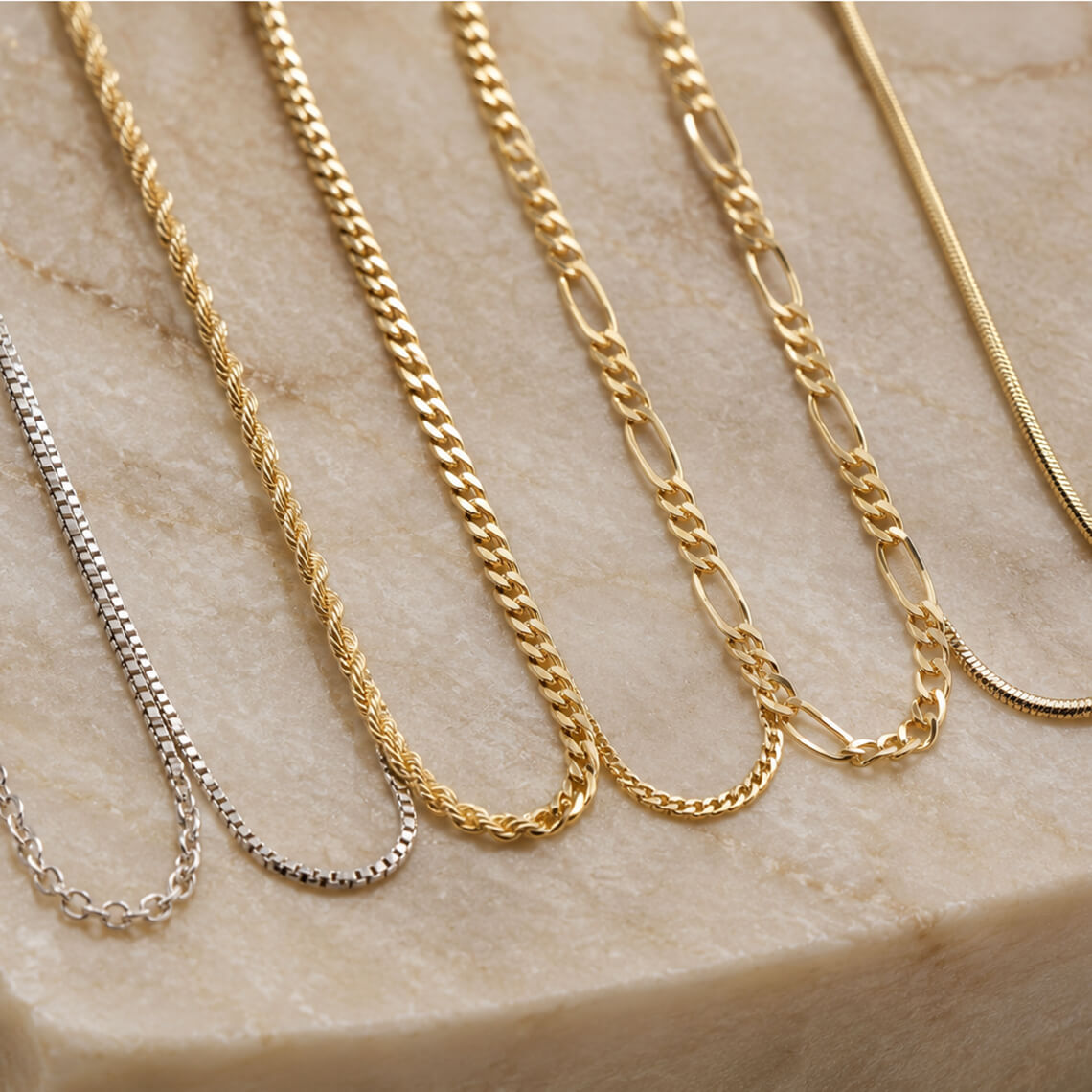
A cable chain is formed by interlocking circles or ovals. It is a simple piece that works well with solitaire diamond pendants, initial necklaces, and small charms. In the UK, it is also known as a trace chain.
Once you put it on, you will find that it works incredibly well as an everyday choice. But if you go for very thin varieties, you may need to handle them carefully.
2. Box Chain
Box chains are made from square links that are linked together to form a chain. Their sleek lines work well with modern diamond pendants and geometric jewellery.
When choosing a box chain, check that its construction is suitable for its thickness and intended use. A well-made chain can offer good durability, but damaged links may require professional repair.
3. Rope Chain
Rope chains involve twisted links that form a textured spiral pattern. They look beautiful even without a pendant, as they can reflect light.
Thicker rope chains can complement larger pendants, provided their construction and thickness are suitable for the pendant's weight. Fine rope chains may need extra care when handling to prevent damage.
4. Curb Chain
With a curb chain, the links are flattened and interlock with each other but are relatively flat to the skin. Wider pieces make for a dramatic statement, while smaller pieces go perfectly with simple pieces of jewellery.
Their relatively simple and comfortable profile makes them great for everyday wear.
5. Figaro Chain
It is a series of short links alternating with long links in a repeating pattern, typically with three short links for every one long link.
The unique look makes it a good option for a necklace. It can also be used in conjunction with a plain pendant, provided the design and weight remain proportional.
6. Snake Chain
It is linked together with the links tightly fitted so that the surface is smooth and continuous.
They look sleek and are ideal for modern-style pendants or less elaborate outfits. They do tend to kink, however, if bent sharply. Also, repairs may be more challenging when compared with traditional linked chains.
Necklace Chain Lengths
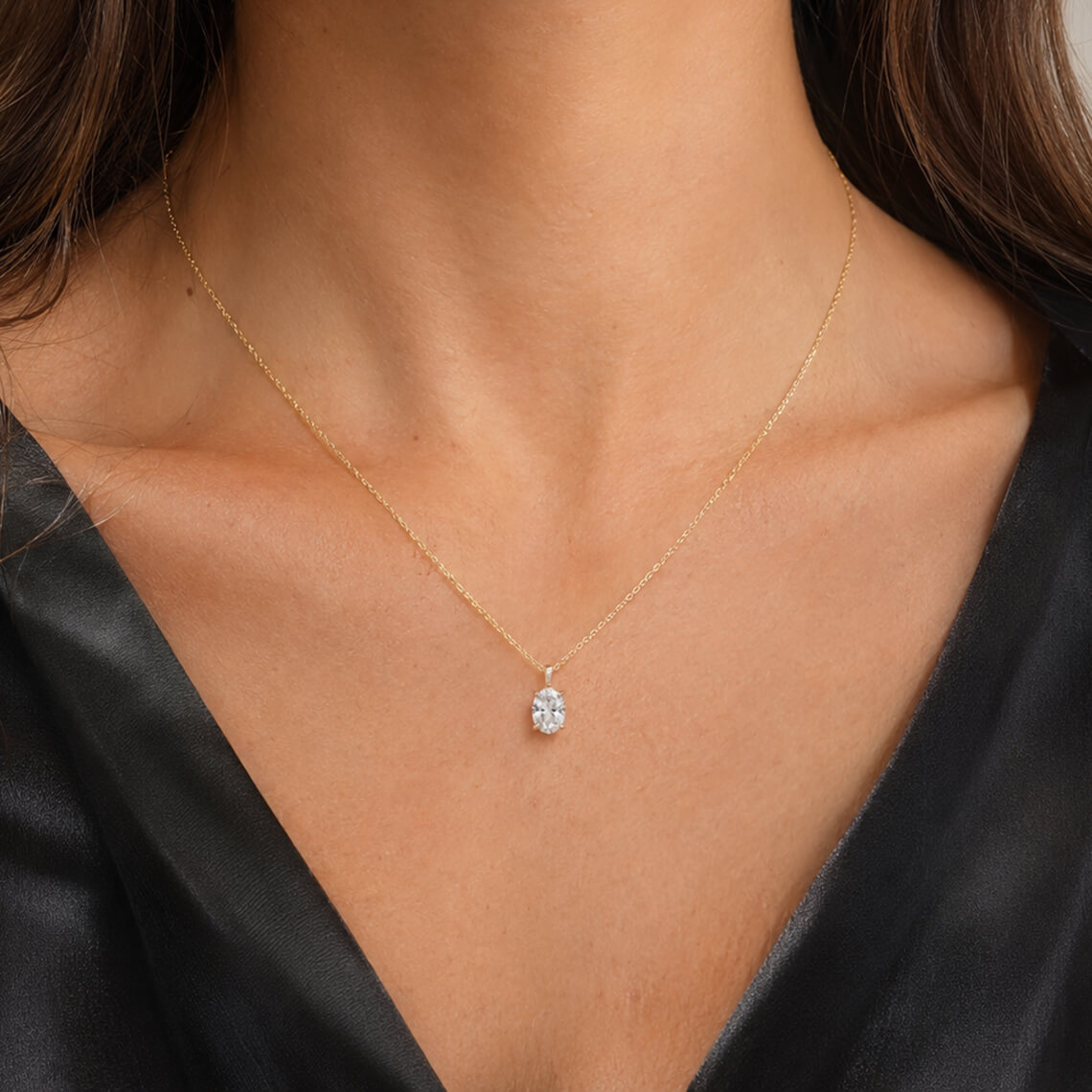
See how different necklace lengths fit and look in various outfits with our necklace length guide.
|
Necklace Style |
Length |
Approximate Position |
|
Collar |
12-13 inches (30-33 cm) |
Tightly wrapped around the neck |
|
Choker |
14-16 inches (36-41 cm) |
Around the neck, at the base of the neck |
|
Princess |
17-19 inches (43-48 cm) |
Around the collarbone |
|
Matinee |
20-24 inches (51-61 cm) |
Upper chest |
|
Opera |
28-36 inches (71-91 cm) |
Lower chest |
|
Rope |
Over 36 inches (91 cm+) |
Below the chest |
These are approximate categories. The actual size will vary based on neck circumference, body proportions, and necklace construction.
1. Collar and Choker Lengths
A collar necklace is worn around the neck, and chokers are worn at the bottom of the neck. They can both be paired with open necklines or used to create contrast with high-neck tops.
You should not feel pressure with a tight-fitting necklace. Hence, it is essential to check the exact length carefully.
2. Princess Length
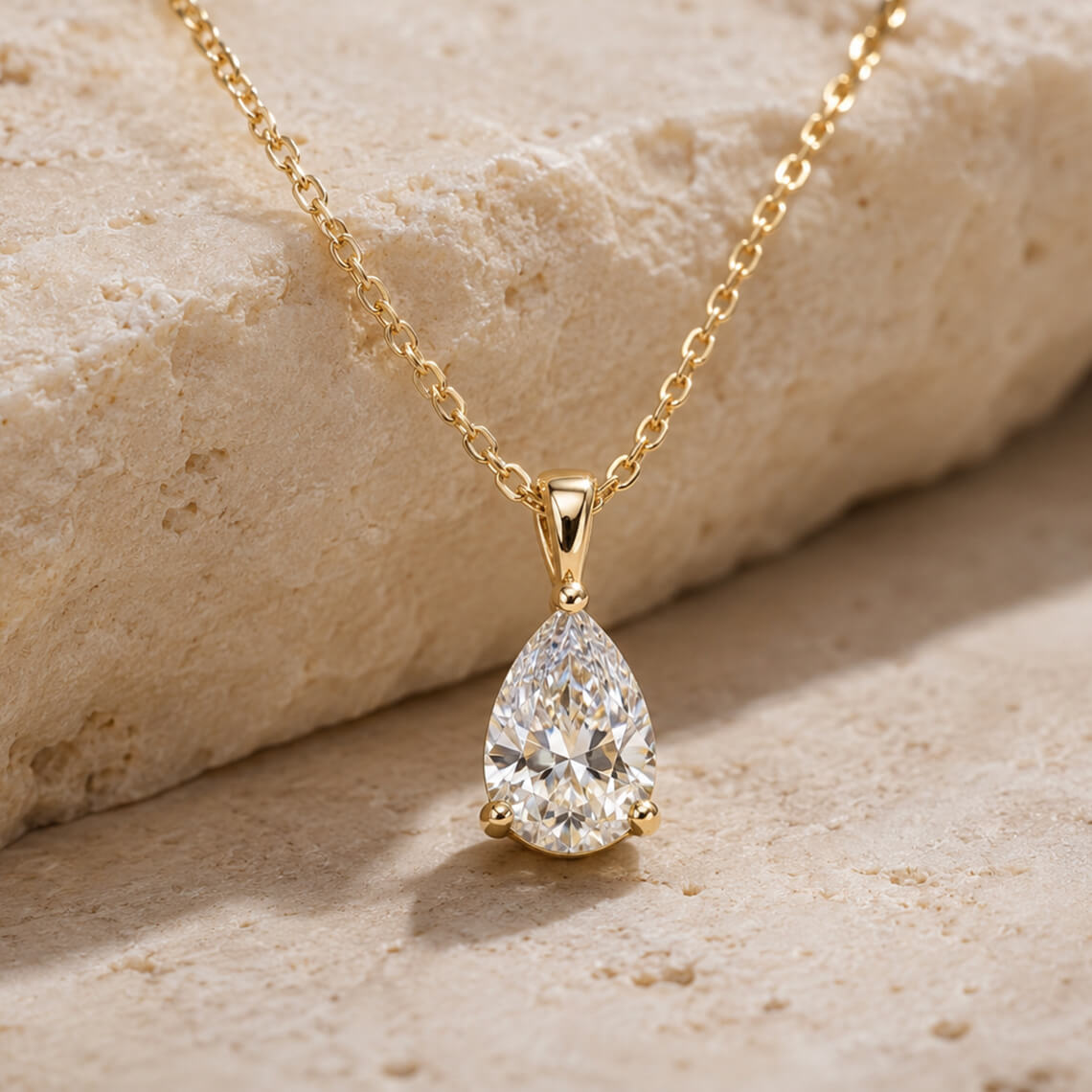
This type of necklace’s length is between 17-19 inches. Many buyers want to start with an 18-inch chain. It would be perfect for solitaire diamond pendants, small charms, and regular jewellery.
3. Matinee Length
These necklaces fall below the collarbone towards the upper chest. They come in handy with higher necklines and provide more room for larger pendants.
They also look good when layered with shorter chains.
4. Opera and Rope Lengths
Opera necklaces give a longer look and can be matched up with dresses, knitwear, and formal wear.
Rope length necklaces offer even more styling options. Depending on their construction, they can be doubled, layered, or worn as a single long strand.
How to Choose the Best Necklace Length for Her
You may begin by reviewing what she already wears. Does she like to wear a light necklace around her neck, or does she like long, heavy necklaces that sit over clothing?
As a guideline:
-
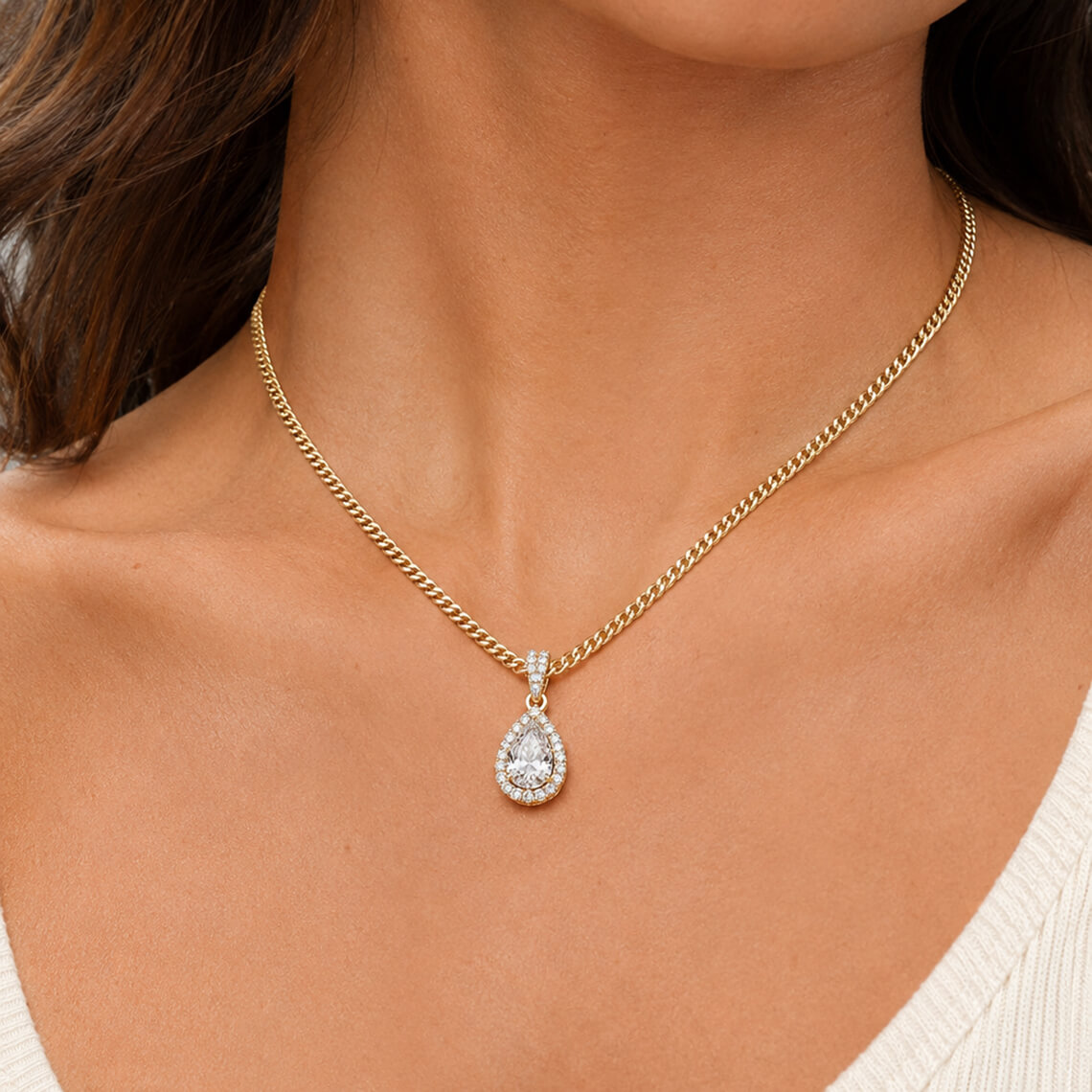
V-neck: A pendant chain that runs along the neckline without crossing the edges.
-
Crew neck: 18-24 inches in length, sitting above or below the fabric.
-
Boat neck: A longer matinee or opera necklace can offset the wider neckline.
-
Open neckline: A shorter chain can produce a more elegant focal point.
The length of a chain can be affected by height and body proportions. However, the length should be decided based on personal preference.
How to Choose the Right Chain Type for a Pendant
A pendant needs a chain that can match the design and hold up its weight. Cable and box chains are usually right for lightweight diamond pendants. A delicate chain measuring around 1–1.5 mm may suit a lightweight pendant, but thickness alone does not determine strength. The jeweller should confirm that the chain's construction can support the pendant's weight safely.
A thicker cable, box, curb, or rope chain will be needed for larger pendants. When buying a pendant, inspect the loop where the chain goes through it (the bail). The opening should be large enough to allow the chain to pass through with end fittings.
Take into account visual balance as well. An oversized pendant can overwhelm a very fine chain and vice versa.
Best Necklace Chain Types to Wear Daily
Box, curb and cable chains are good options to begin with for everyday jewellery. They are flexible when they are joined together, but need to be thick enough and made from the right metal.
For regular wear, be careful not to use too fine a chain with a large pendant.
Also, take into account the ease of clean-up, fastening and repair of the chain. Daily wear jewellery will benefit from smooth and comfortable links.
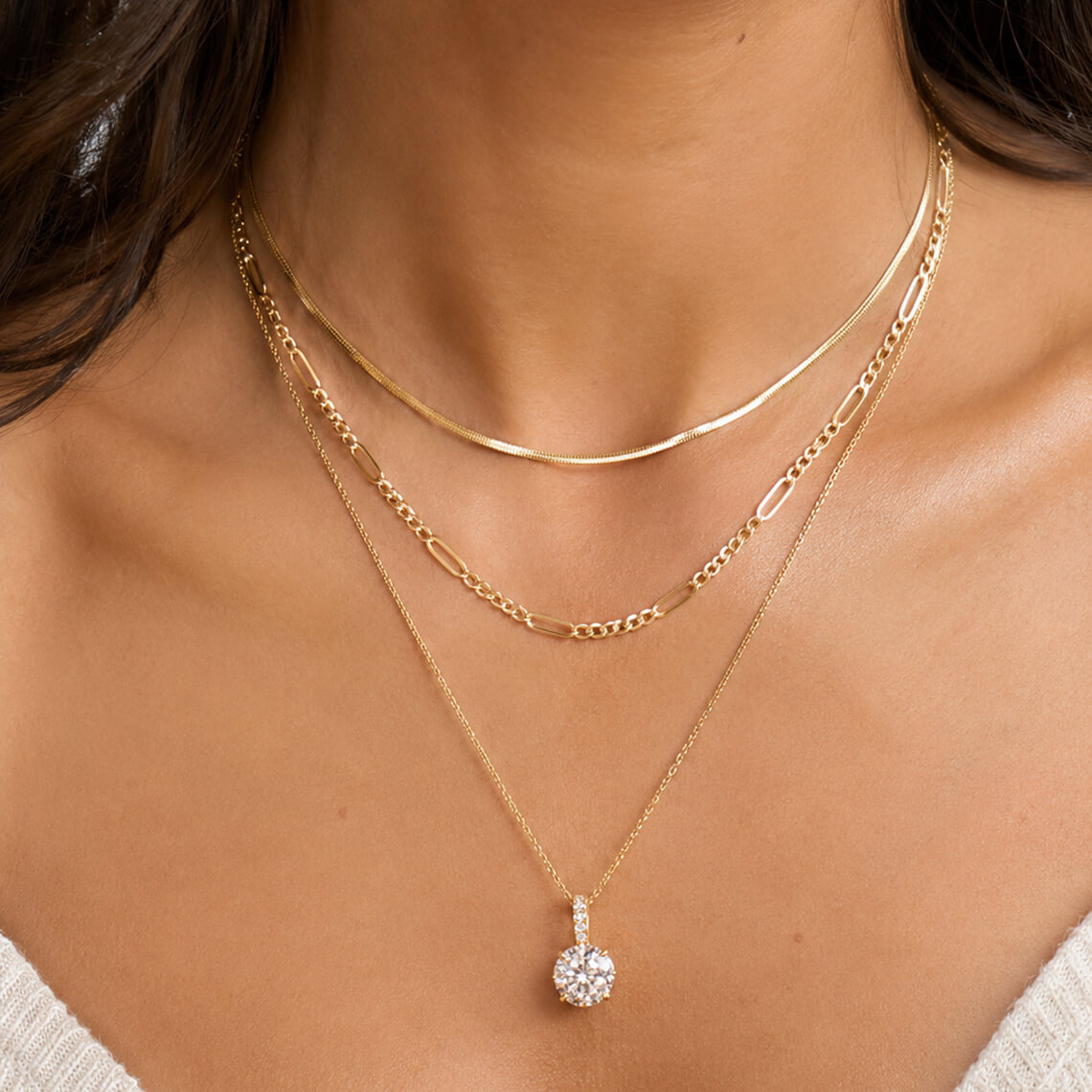
How to Layer Necklace Chains of Varying Lengths
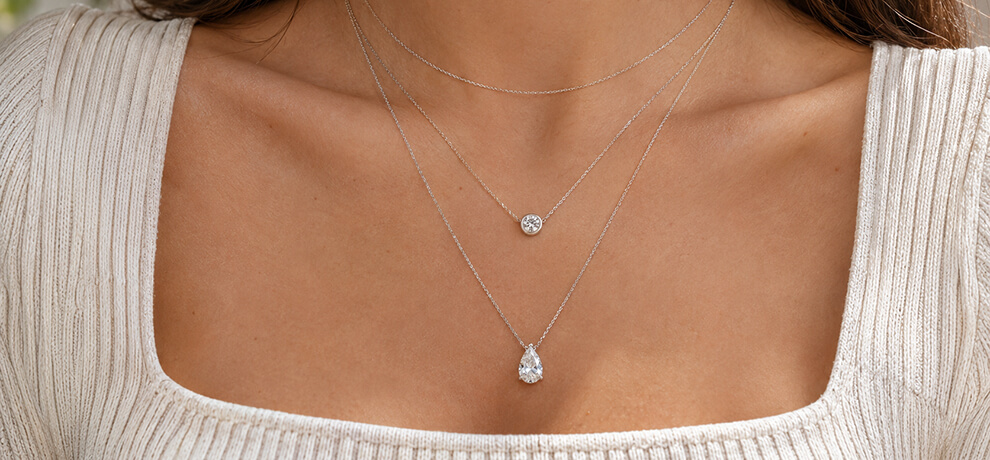
To add visual interest, you may think about layering necklaces of varying lengths and textures.
For example, some women may prefer this type of arrangement.
-
A 16-inch delicate chain.
-
An 18-inch solitaire pendant necklace.
-
A 22-inch chain, with a slightly larger pendant.
The difference in length of the necklace should be about 2-4 inches, depending on the size of the pendant and the neckline.
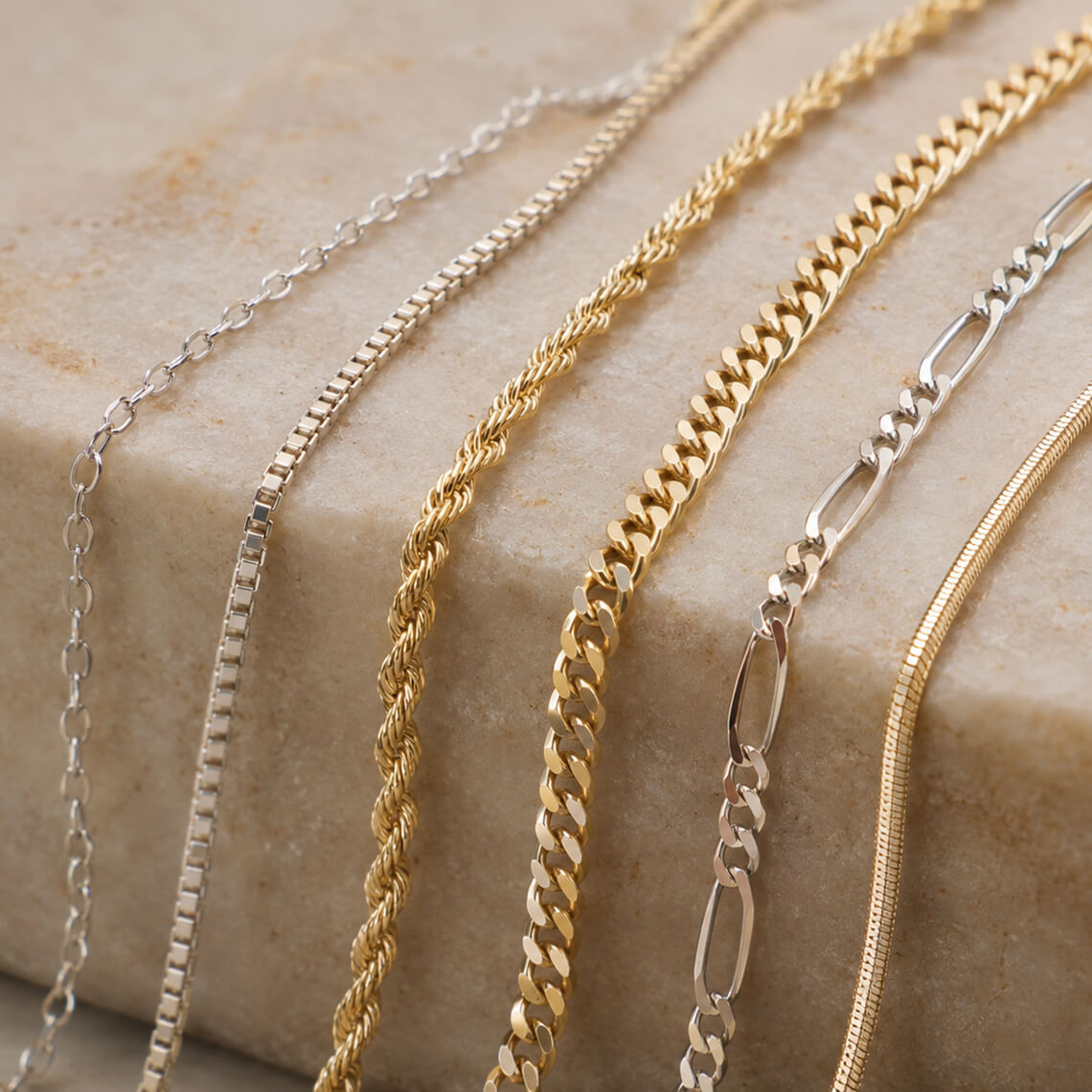
A simple cable chain combined with a textured rope or Figaro design can create contrast without too much detail.
A Pro Tip - Don't stack multiple chains of similar length and diameter together, as they may tend to tangle.
What to Consider Before Purchasing a Necklace Chain
Take these specifications into account when deciding which to choose.
-
Metal - Pick yellow, white, or rose gold, platinum, or sterling silver based on preference and budget
-
Gold Purity - The difference between 9ct and 18ct gold is in terms of gold content and alloy properties.
-
Thickness - Ensure the chain will support the pendant it will carry.
-
Clasp - A lobster clasp is useful; a spring-ring clasp is suitable for many delicate chains.
-
Construction - Verify the strength of the link and whether the chain is solid or hollow.
-
Maintenance - Check instructions for jewellery cleaning, options for repair, and warranty coverage
White gold will need professional replating over time to maintain its white finish. Platinum has a natural white appearance and does not need replating. UK buyers should check whether their jewellery needs a hallmark and whether it has been appropriately marked. Hallmarking requirements depend on the metal, the item's weight, and applicable exemptions. Check the seller's product specifications before purchasing.
How to Measure for the Right Necklace Chain Length
Measure around the base of the neck with a flexible measuring tape. Alternatively, measure an existing necklace that fits comfortably. Place it on the table horizontally, gently pull the chain straight, and make sure to measure the total length of the chain, including the length of the clasp.
Another method is to recreate various lengths with a piece of string with different necklines.
When buying a gift, check her existing jewellery. This is more reliable than estimating based on height or clothing size.
Conclusion
The perfect chain should have a comfortable fit, complement her style, and be well made to last for years. Cable and box chains are versatile enough for understated looks, while rope, curb, and Figaro designs add to the texture. Take into account her regular clothing, favourite pendants, and current jewellery before making your selection.
FAQs
What is the most popular necklace chain type?
Which necklace chain is strongest?
What is the most versatile necklace chain length?
What necklace length looks best with a V-neck?
What is the difference between choker and princess-length necklaces?
Which chain is best for a diamond pendant?