
 Flat 50% OFF sitewide!




How to buy an engagement ring
Most people make six decisions, in roughly this order:
- Learn their style. Notice the jewelry they already wear and how they use their hands. Chapter 1
- Set a comfortable budget for the whole ring, not just the diamond. Chapter 2
- Choose the setting, the part that holds the stone and gives the ring its personality. Chapter 3
- Choose the diamond: shape first, then cut, color, clarity and carat. Chapter 4
- Choose the metal for its color, care and feel. Chapter 5
- Get the size right, then personalize and protect the ring. Chapters 6–7
+As you read, tap “Save to my notes” on anything you like. Your shortlist builds quietly in the corner, ready to use when you shop.
Chapter 1
Start with their style
The right ring fits the person as well as the finger. Before you look at a single diamond, spend a week or two quietly noticing what they wear and how they live, because those clues answer most of the questions that follow.
Clues hiding in plain sight
- The metal they reach for. Do they wear mostly silver-toned, gold or rose jewelry? That’s a strong hint for white gold or platinum, yellow gold or rose gold.
- Delicate or bold. Fine chains and small studs suggest a slim band and a solitaire is a versatile starting point (though not right for everyone); statement pieces suggest a halo, three-stone or larger center stone.
- Era and mood. Vintage finds and heirlooms point to milgrain and filigree; minimal wardrobes point to clean lines, bezels and east-west settings.
- What they’ve saved. Saved posts, mood boards and comments on friends’ rings are often the most honest brief you’ll get.
How they live with their hands
Someone who climbs, cooks professionally, works in healthcare or handles tools all day needs a ring that sits low and protects the stone. Someone with a desk job can wear a higher, more open setting without a second thought. Sensitive skin is worth knowing about too, as it affects which metal will be most comfortable.
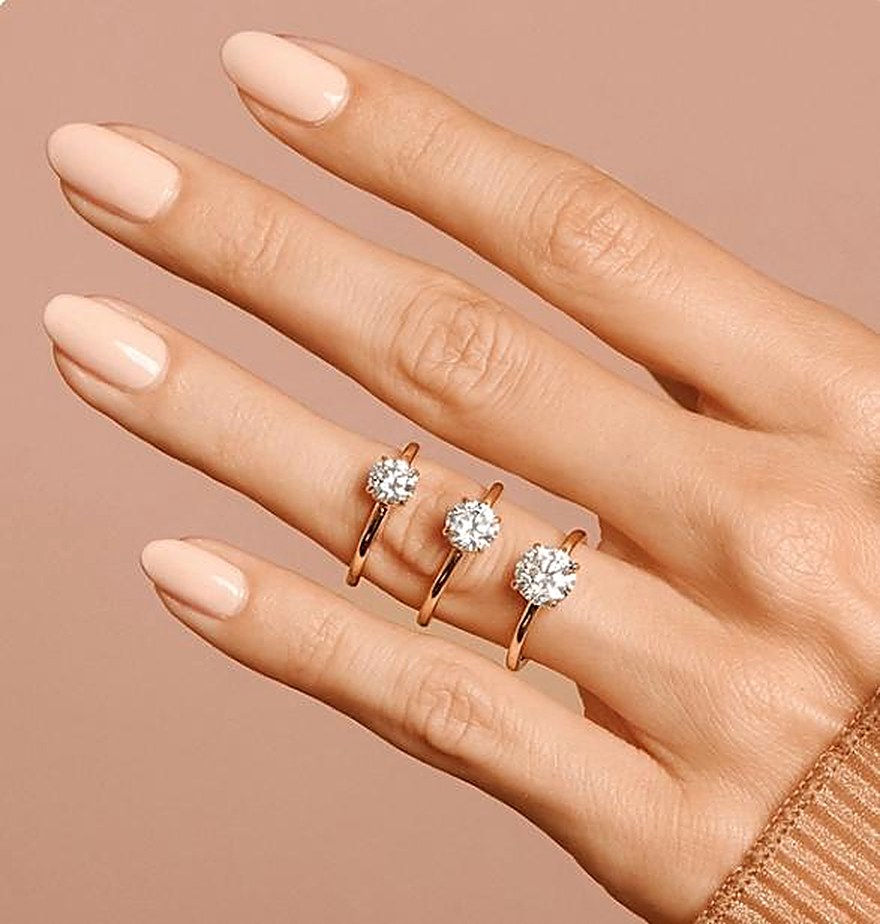
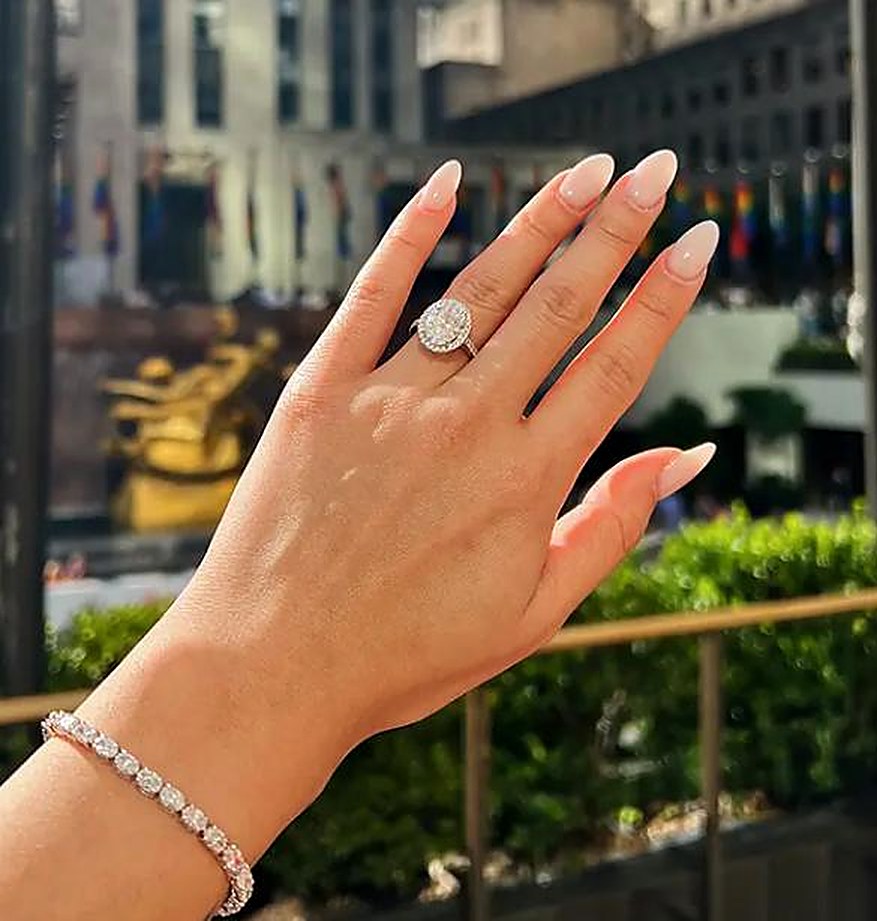
Which direction feels most like them?
Unsure? Many couples now shop together, and there’s no rule against asking. If you’d rather keep it a surprise, a solitaire is a versatile starting point that pairs with most wedding bands, though it isn’t right for everyone.
Chapter 2
Set a comfortable budget
There is no right amount to spend on an engagement ring. The “two months’ salary” rule came from De Beers advertising (one month in the 1930s, two months in the 1980s), not financial advice. Start with a number you’re comfortable with, then decide where that money will make the biggest difference.
What you’re actually paying for
Four things set the price of a finished ring:
- The center diamond. Usually the largest share. Carat weight matters most, followed by cut, color and clarity.
- The setting’s accent diamonds. Halos, pavé bands and side stones add sparkle and add to the price.
- The metal. Platinum and higher-karat gold cost more than 14K gold.
- Customization. Bespoke details and design changes take more craftsmanship.
Where to spend, and where to save
Spend on cut. It controls how much light a diamond returns, which is what people notice from across a room. Save on color and clarity by choosing grades that look white and clean to the naked eye rather than chasing the top of the scale. Consider weights just under round numbers, such as 0.90 ct instead of 1.00 ct: the visible difference is small.
Try itHow much bigger does a carat look?
Carat measures weight, not width. Compare two round diamonds of the same proportions.
Illustrative: assumes identical proportions, where width grows with the cube root of weight. Each stone’s grading report lists its real measurements, and prices vary stone by stone.
Lab-grown diamonds change the math
Lab-grown diamonds are real diamonds, with the same chemistry, hardness and sparkle as mined ones. They typically cost less than mined diamonds of similar size and quality, so the same budget can buy a larger stone, a better cut or a more detailed setting. Friendly Diamonds specializes in lab-grown diamonds for exactly that reason.
If you’d like to spread the cost, look at the payment options offered at checkout before you decide on a final number.
Where is your budget landing?
Prices on this page are in US dollars for our US site; UK and India customers see local prices on their own site.
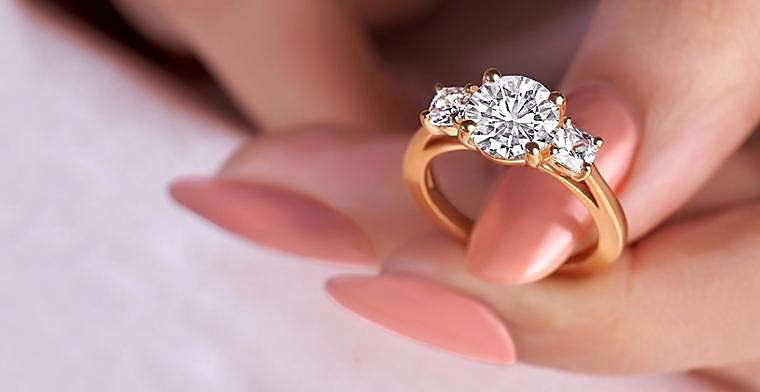
The Friendly Diamonds Engagement Ring Cost Guide
See price ranges by carat, estimate the ring you have in mind and find out what your budget can buy, with smart swaps that keep the look and lower the price.
Explore the Cost GuideChapter 3
Choose the setting
The setting is the metal framework that holds the diamond, and it does more to shape the ring’s personality than any other choice. It also decides how well the stone is protected and whether a wedding band will sit neatly beside it.
The anatomy of an engagement ring
A few terms make every product page easier to read. Tap a number on this real Friendly Diamonds solitaire, or a term in the list, and switch metals to see the same ring in each.
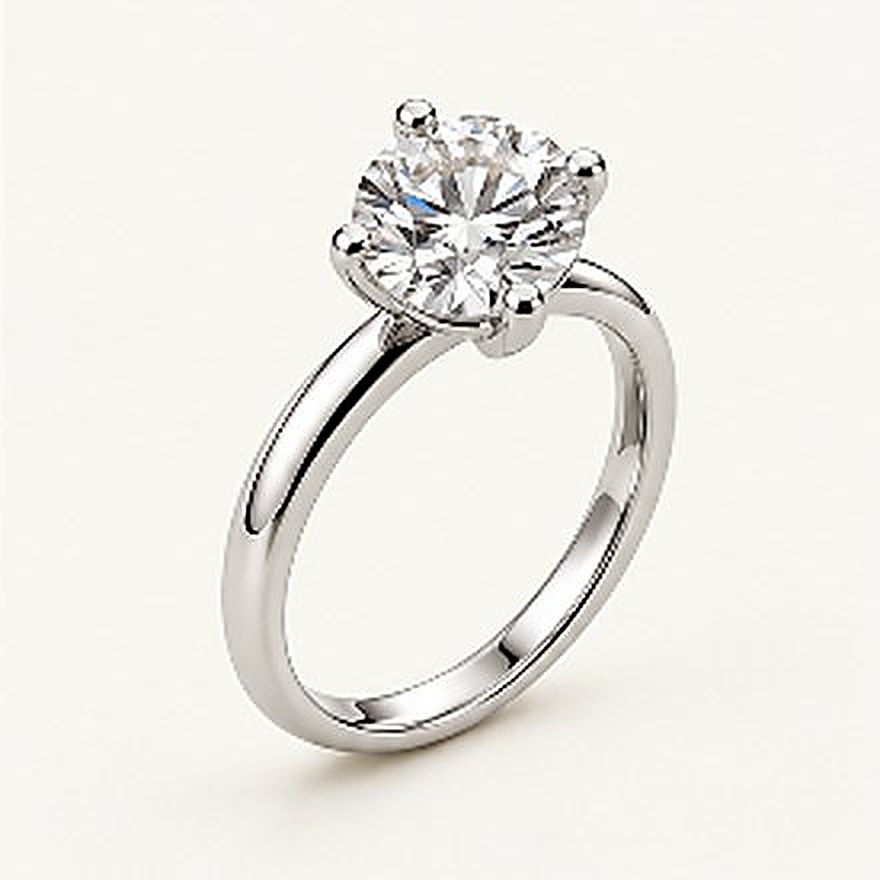
- 1Center stone. The main diamond and the ring’s focal point.
- 2Prongs. Small metal claws that grip the stone. Four show more diamond; six add security.
- 3Head and gallery. The structure beneath the stone. Its height sets how high the ring sits.
- 4Shoulders. Where the band meets the head; often set with pavé or shaped as arches.
- 5Band (shank). The circle around the finger. Width and profile affect comfort.
Style, setting and profile are three different things
Style is the overall look: classic, vintage, modern or romantic. Setting is how the diamond is held: prongs, a bezel, a halo and so on. Profile is how high the stone sits above the finger, from low and snag-free to high and light-catching. A vintage-style ring can use prongs or a bezel; a modern ring can be a solitaire or a toi et moi. Choose the look first, then the setting that suits the wearer’s lifestyle.
The settings worth knowing
Filter by what matters most to you, and save any you like.
Compare all eleven settings side by side
Three details that make a big difference
Prong style. Pointed shapes such as pear, marquise and princess are best protected by V-shaped prongs at their tips. Profile. A high-set stone catches more light and more sweater sleeves; a low profile is calmer for active hands. Band fit. Halos, three-stone rings and toi et moi designs often need a curved or contour wedding band, while most solitaires sit flush with a straight band.
Look at the ring from the side as well as from above. Hidden halos, cathedral arches and gallery details are often where a design’s character lives.
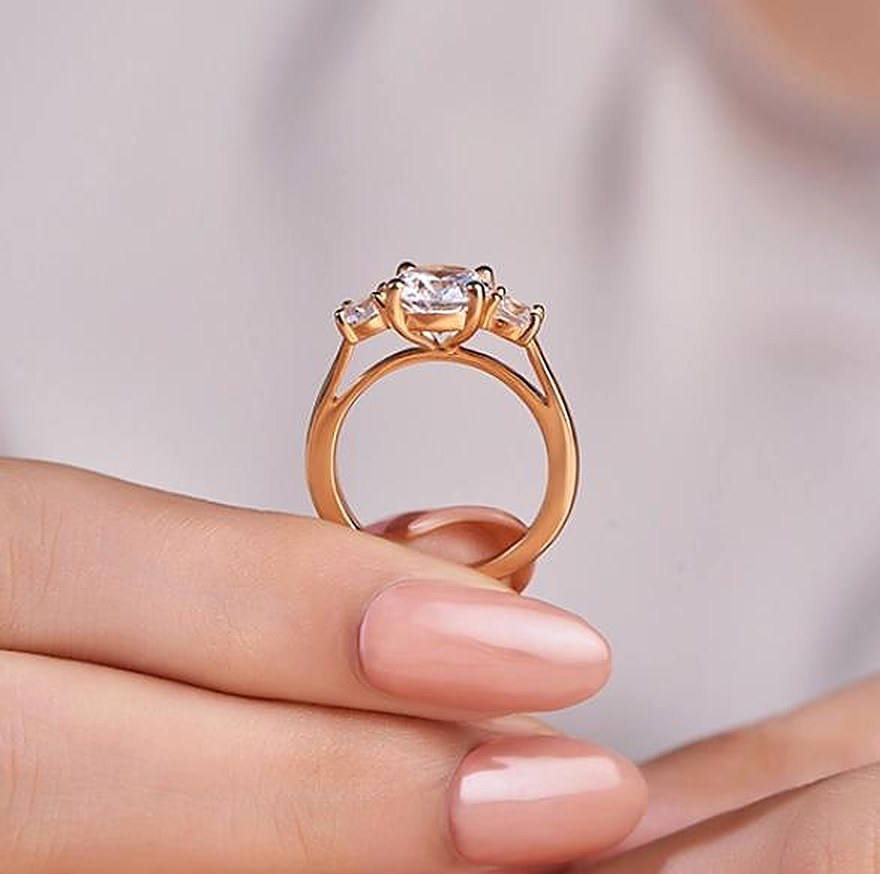
The Friendly Diamonds Styles & Settings Guide
Every setting, prong and band style explained, a shape-and-setting pairing map, a side-profile viewer and a setting finder that suggests three settings for their style and lifestyle.
Explore the Styles & Settings GuideChapter 4
Choose the diamond
Start with the shape you love, because it defines the look of the ring more than any grade on a certificate. Then use the 4Cs to find the best diamond in that shape for your budget.
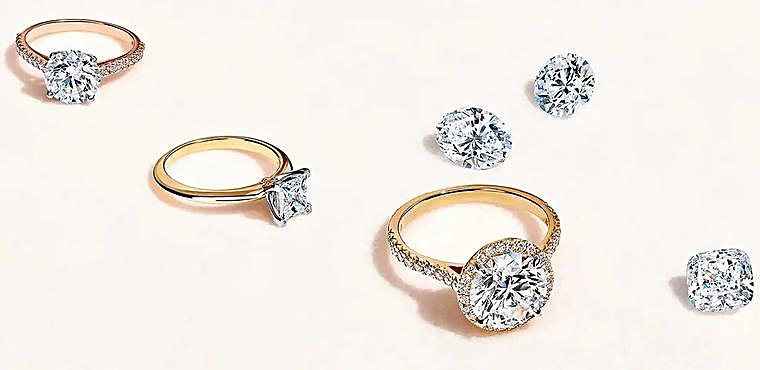
Lab-grown or mined?
Both are real diamonds. A lab-grown diamond is grown from carbon under conditions that recreate the way diamonds form in the earth, and it has the same chemical, physical and optical properties as a mined diamond. Lab-grown and mined diamonds share the same 4Cs, but labs now report them differently. IGI grades lab-grown diamonds on the full 4Cs, while GIA (since October 2025) describes them as Premium or Standard instead of giving individual grades. The main differences are origin and price.
Shape first
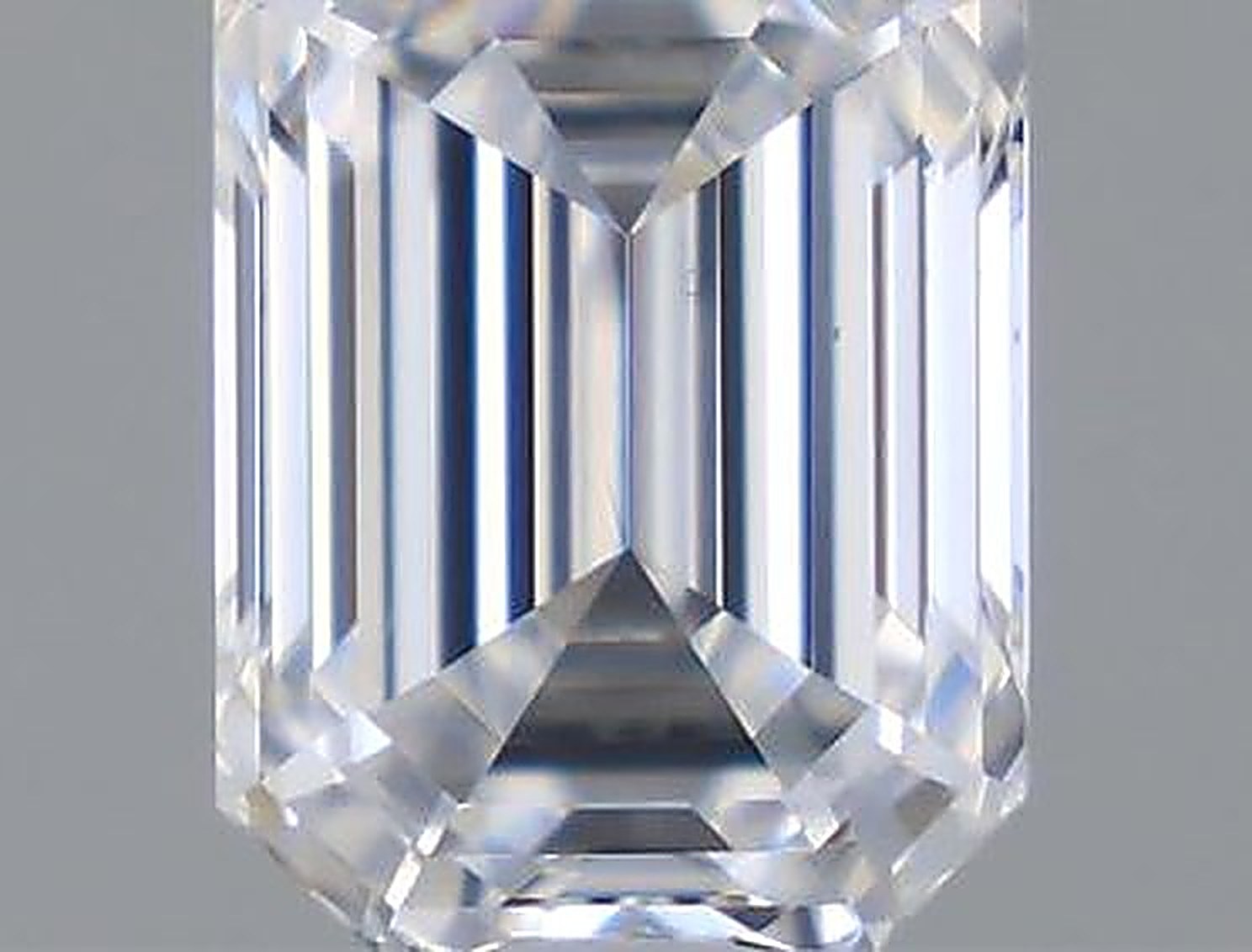
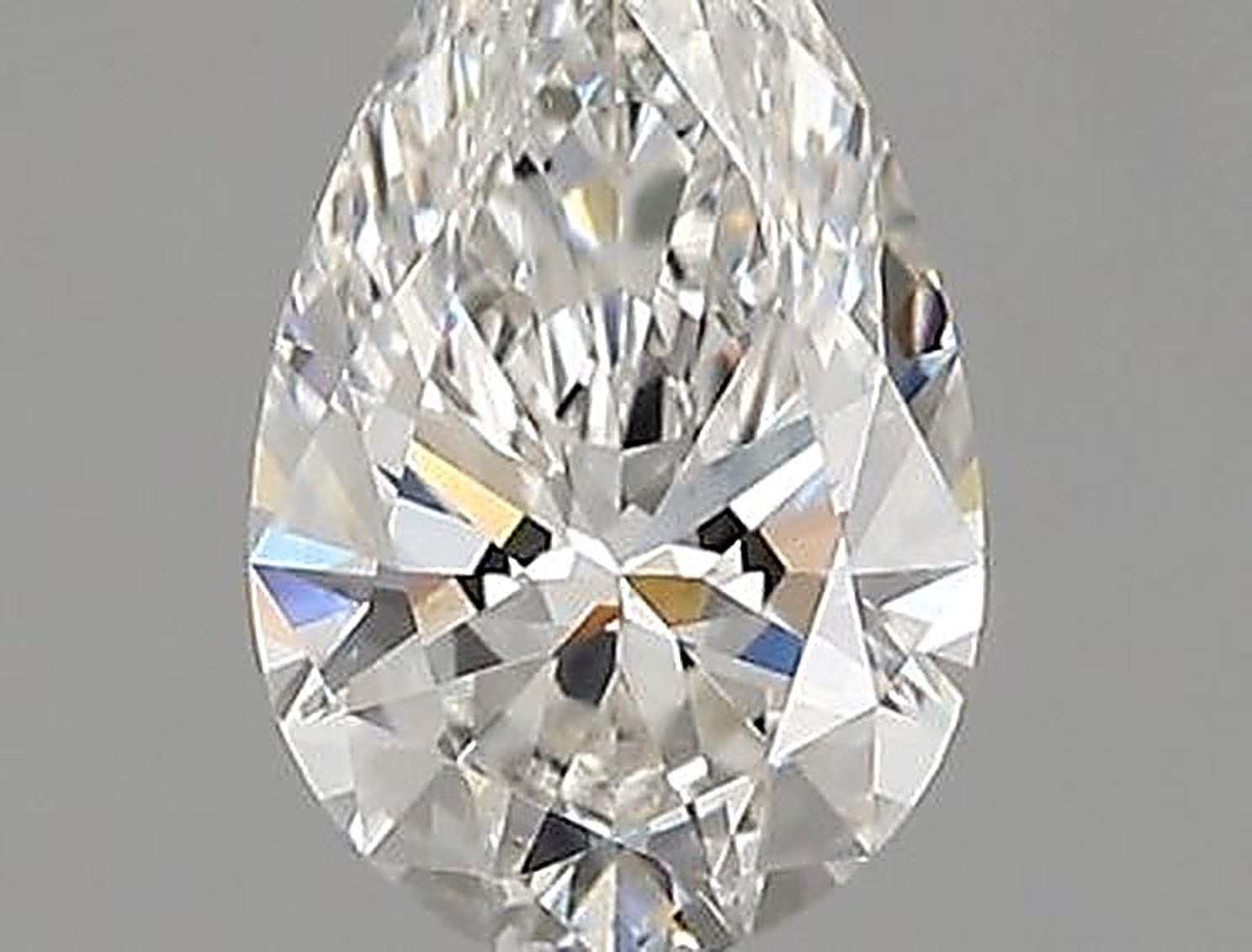
Elongated shapes such as oval, pear, marquise and emerald spread longer across the finger, so they tend to look larger than a round diamond of the same weight and can make fingers look slimmer. Round diamonds are cut for maximum brilliance; step cuts like emerald and asscher show broad, mirror-like flashes instead of sparkle.
The 4Cs, in the order you’ll notice them
Cut comes first because it decides how much light a diamond returns. The light test shows why.
Friendly Diamonds Studio · 1
The light test
A diamond’s sparkle is light that enters the top, bounces off the angled facets underneath and comes back to your eye. Change the depth of the bottom half and watch where the light goes.
simplified model
Illustrative only, not a measurement of any real diamond. A simplified two-dimensional model using diamond’s real refractive index (2.42), with the angle range exaggerated so the effect is easy to see. Real diamonds are three-dimensional, and light performance depends on all their proportions, which is what a cut grade summarizes.
Cut
How well the facets are proportioned and polished to return light. It controls sparkle more than any other C.
Our guidance: choose Excellent or Ideal for round diamonds and look for good light return in fancy shapes.
Color
Graded from D (colorless) toward Z. The differences between neighboring grades are very subtle.
Our guidance: near-colorless grades look white in most settings; yellow and rose gold are forgiving of warmer grades.
Clarity
Tiny inclusions and blemishes, graded from Included (I) to Flawless (FL), most visible only under magnification.
Our guidance: aim for “eye-clean”, which many VS and some SI diamonds are; step cuts show more, so go higher there.
Carat
Weight, not size: one carat is 0.2 grams. Shape and cut change how large a given weight looks.
Our guidance: decide on the look you want on the hand, then find the weight that delivers it.
Friendly Diamonds Studio · 2
Build a diamond
Change each of the 4Cs and see what your eye would notice face-up, what only shows under a jeweler’s loupe, and where your budget is working hardest.
Real photos of a Friendly Diamonds round diamond in its setting, one per metal. Grades are simulated: tint, sparkle and inclusions are layered on, and the face-down strip exaggerates color so neighboring grades are visible on screen; always judge real diamonds in person or from high-resolution video. Higher grades generally cost more; actual prices vary by stone.
Read the grading report
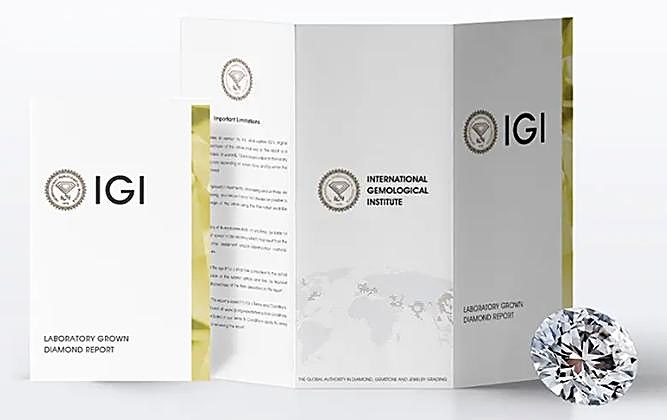
An independent grading report, from a lab such as IGI or GIA, is the diamond’s passport. It lists the shape and exact measurements, carat weight, color and clarity grades, and a cut grade for round diamonds. Many diamonds also carry a microscopic laser inscription on the girdle that matches the report number, which you can check on the lab’s website.
Ask for the report before you buy and keep a copy with your insurance documents.
Compare diamonds with the same shape and similar measurements side by side. Two stones with identical grades can look different, and the one that looks livelier to you is the right one.
Why two diamonds with the same grades can look different
Grades are ranges. Two stones with identical reports can differ in measurements, proportions, light return and where their inclusions sit. Fancy shapes such as oval and pear usually have no cut grade at all, so their proportions, polish, symmetry and video matter more. Always compare the millimeter size and the clarity plot on the report, not just the letters.
The Friendly Diamonds Diamond Guide
Go beyond the 4Cs: how lab-grown diamonds are grown, what a loupe reveals, why two diamonds with the same grades can look different and how to verify an IGI or GIA report.
Explore the Diamond GuideChapter 5
Choose the metal
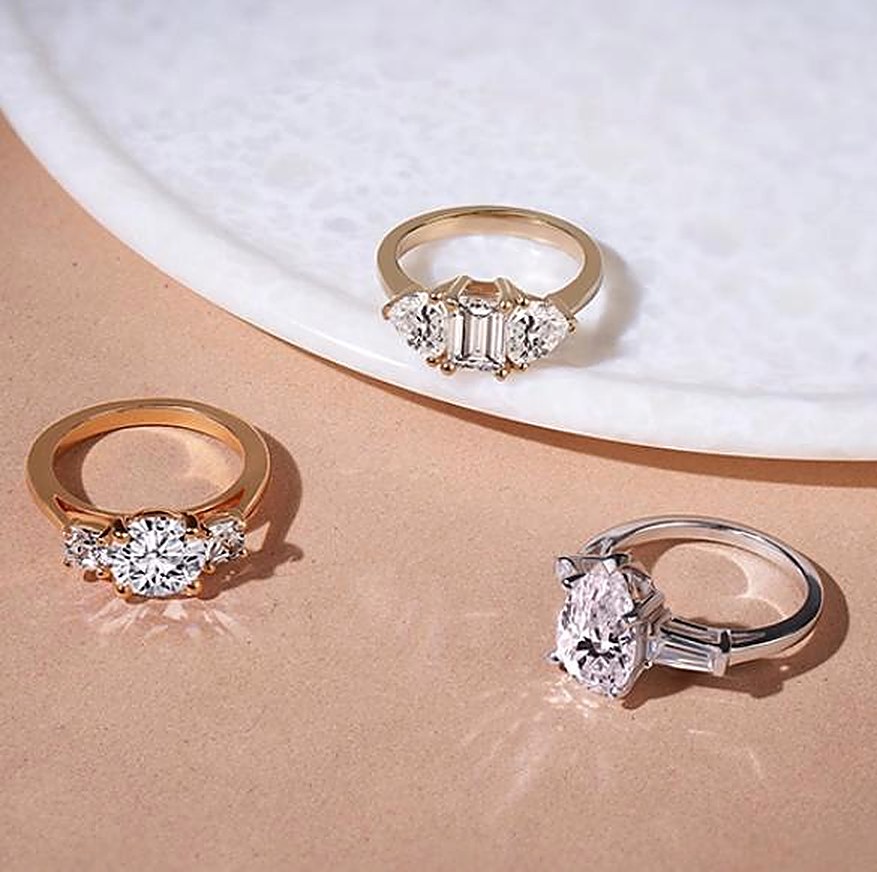
Metal sets the ring’s color, how it feels on the hand and how much care it needs over the years. Gold comes in white, yellow and rose; platinum is a different metal altogether.
White gold, plating and allergies
White gold is gold alloyed with white metals and usually plated with rhodium for a bright white finish. The plating wears with time, so most white gold rings are re-plated every one to three years. Some white gold alloys contain nickel, which can irritate sensitive skin; if that’s a concern, ask for nickel-free (palladium) white gold or choose platinum, which is naturally white and needs no plating.
Karat in one sentence
Karat measures how much of the gold is pure: 14K is 58.3% gold and 18K is 75%. Lower karats are harder and more affordable; higher karats have a richer color. Two rings of the same karat contain the same amount of gold, whatever their color.
The Friendly Diamonds Metal Guide
Compare metals side by side, see how each one ages over ten years, and check what the gold or platinum in a ring is worth at today’s prices.
Explore the Metal GuideBring it all together
You’ve now seen every decision on its own. Put them together to see how they work as one ring, and whether it suits the hands that will wear it.
Friendly Diamonds Studio · 3
Design your ring
Bring the chapters together. Choose a setting, shape, carat and metal and see the ring on a finger at true relative scale, then check it against how you live.
Proportions are estimates for typical stones; accent stones and metal widths are representative. Product pages show each design’s actual measurements.
Chapter 6
Get the size right
A well-fitting ring slides over the knuckle with a little resistance and stays put without pinching. Getting close the first time saves a resize, which some designs, such as full eternity bands, can’t easily accommodate.
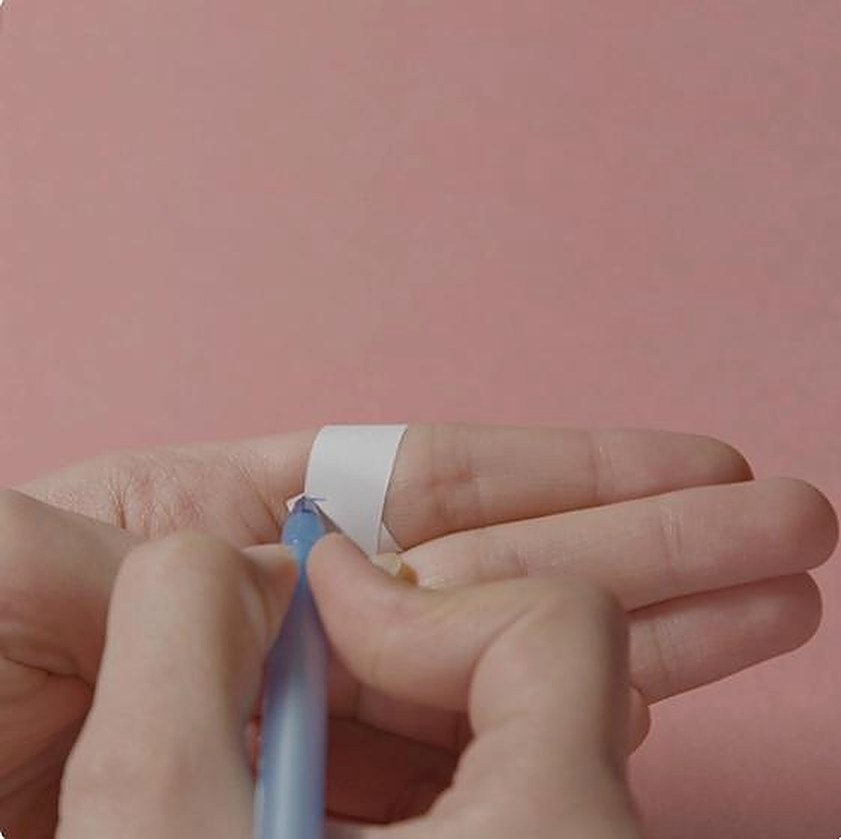
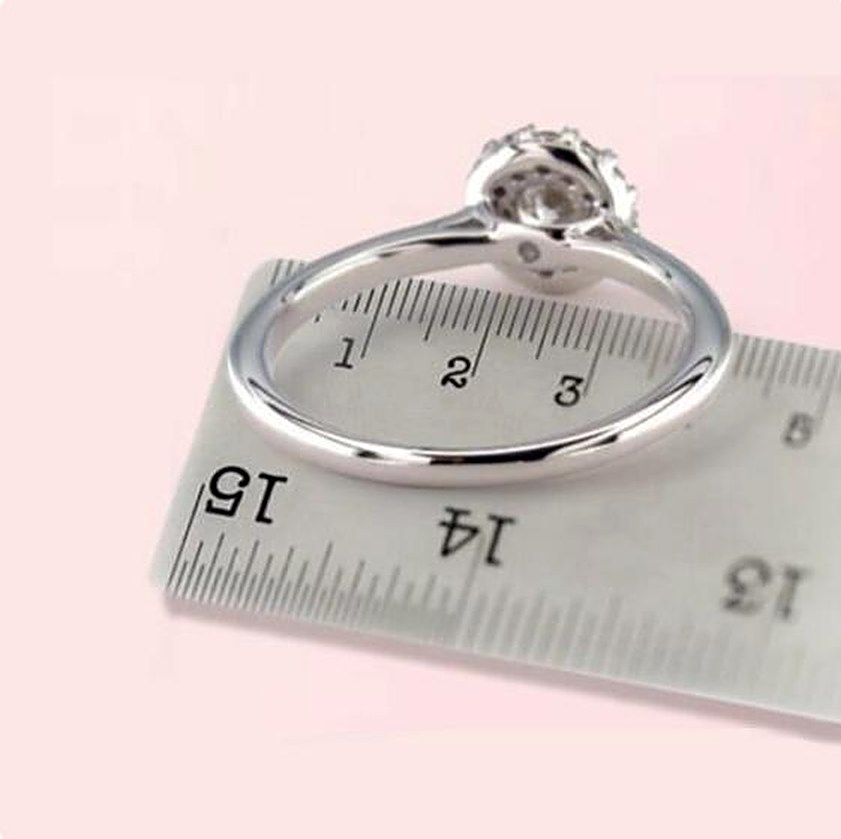
Tips for an accurate measurement
- Measure at the end of the day, when fingers are at their largest, and measure more than once.
- If the knuckle is wider than the base of the finger, choose a size between the two.
- Wide bands fit more snugly, so consider going up a quarter to half size.
- Keeping it a surprise? Borrow a ring they wear on the same finger, or ask a close friend.
Try itEstimate a ring size
The estimator gives approximate conversions, not a guaranteed fit. If you can, confirm the size with a jeweler or a ring sizer, and check our resizing policy for the design you choose.
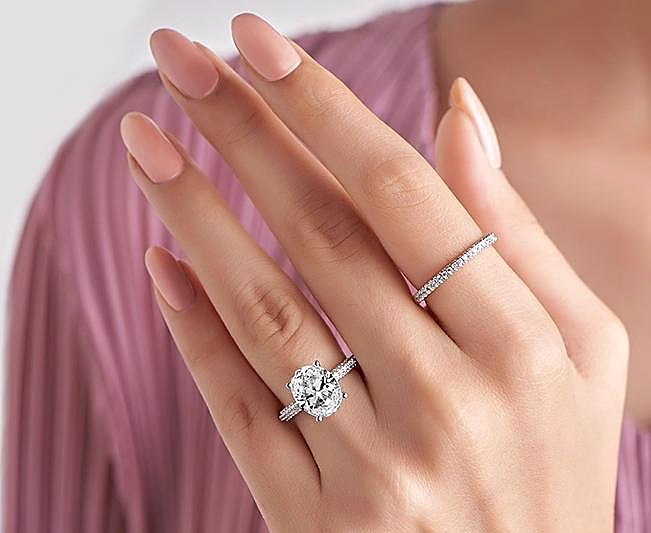
The Friendly Diamonds Ring Size Guide
Measure a ring on your screen or on paper, convert between US, UK, India and EU sizes, adjust for wide or comfort-fit bands, and check what our free resize covers.
Explore the Ring Size GuideChapter 7
Personalize and protect it
The finishing touches are what make a ring unmistakably yours, and the practical steps are what keep it that way.
An engraving only you two know about
Dates, initials, coordinates and a few words in a shared language all fit well inside a band. Keep it short: our current guide allows up to 20 characters, and some designs have less space.
Try itPreview an engraving
Choosing a wedding band
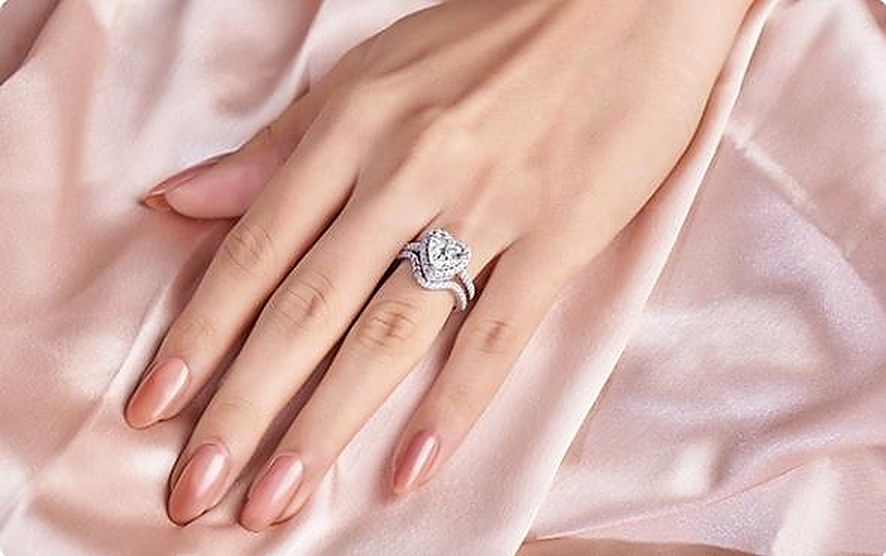
Decide whether you want the two rings to match or contrast. A band that sits flush against the engagement ring looks seamless; halos, three-stone and toi et moi designs often need a curved or contour band. Buying both together makes the fit easier to judge, though many couples choose the band later.
Protect it from day one
- Insure it as soon as it arrives. An independent appraisal records its value for your insurer.
- Keep the paperwork: the grading report, receipt and appraisal together.
- Clean it gently with warm water, mild soap and a soft brush; lotions and everyday life dull any diamond.
- Have the prongs checked every 6 to 12 months, or every 3 to 6 months for pavé and eternity bands worn daily, and take it off for the gym, gardening and swimming.
Appraisals and resizing, in brief
An insurance appraisal estimates replacement cost, what it would cost to buy a similar ring new; it isn’t what the ring would sell for. Most solitaires and simple bands can be resized by a size or two, but full eternity bands, channel-set and some pavé designs can be difficult or impossible to resize, so get the size right for those first time.
The Friendly Diamonds Wedding Band Guide
Every band style, how each sits beside the engagement ring, matching or complementary sets, a men’s band selector, engraving and care.
Explore the Wedding Band GuideChapter 8
Plan the proposal
You have the ring. Now for the moment itself, which doesn’t need to be elaborate to be unforgettable. It just needs to feel like the two of you.

Find your perfect proposal
Answer a few questions about where you are, when, and what you both love, and get proposal ideas made for you.
Find proposal ideasExplore engagement ringsThe checklist
Before you buy
Tick these off before you check out. Your progress is saved only in this browser.
Shopping with Friendly Diamonds
Your shortlist
Your ring notes
What you’ve saved
Everything you saved while reading, in one place. It stays in this browser only.
Questions
Engagement ring questions, answered
Keep exploring