Flat 50% OFF sitewide!
NOW & ON BLACK FRIDAY!
UNLOCK FREE LAB DIAMOND JEWELRY ON PURCHASES OVER $1000 


Comparing 4-Prong vs 6-Prong Settings for Your Diamond Ring
In this blog:
A 4-prong setting shows more of the diamond and gives a clean, modern look. 6-prong setting gives added security to the jewelry while giving it a more traditional feel. In this blog, we dive into practical differences such as appearance, security, maintenance, and the right choice for you.
Many times, buyers focus only on the diamond when buying a ring. Their attention is mostly on the 4C’s (cut, clarity, color, and carat). However, there is one more crucial factor, i.e., the setting. This component is responsible for keeping the stone securely in place and also dictating how comfortable you are wearing it on a daily basis.
Here, the 4-prong vs 6-prong setting debate comes to the fore. For many diamond ring buyers, both settings hardly present any difference. But look carefully, and you will be surprised at the variations between the two setting types.
Which of the two settings is better? The short answer is that it depends on the stone size and wearer preference.
Table of Content
- What Are Prongs?
- Key Difference Between 4-Prong and 6-Prong Diamond Ring Setting
- Prong Setting Based on Diamond Shape and Weight
- What Are the Advantages and Disadvantages of 4-Prong vs. 6-Prong?
- For Everyday Wear, Which Setting is Better?
- Which is the Right Prong Setting for Your Jewelry?
- Conclusion
What Are Prongs?
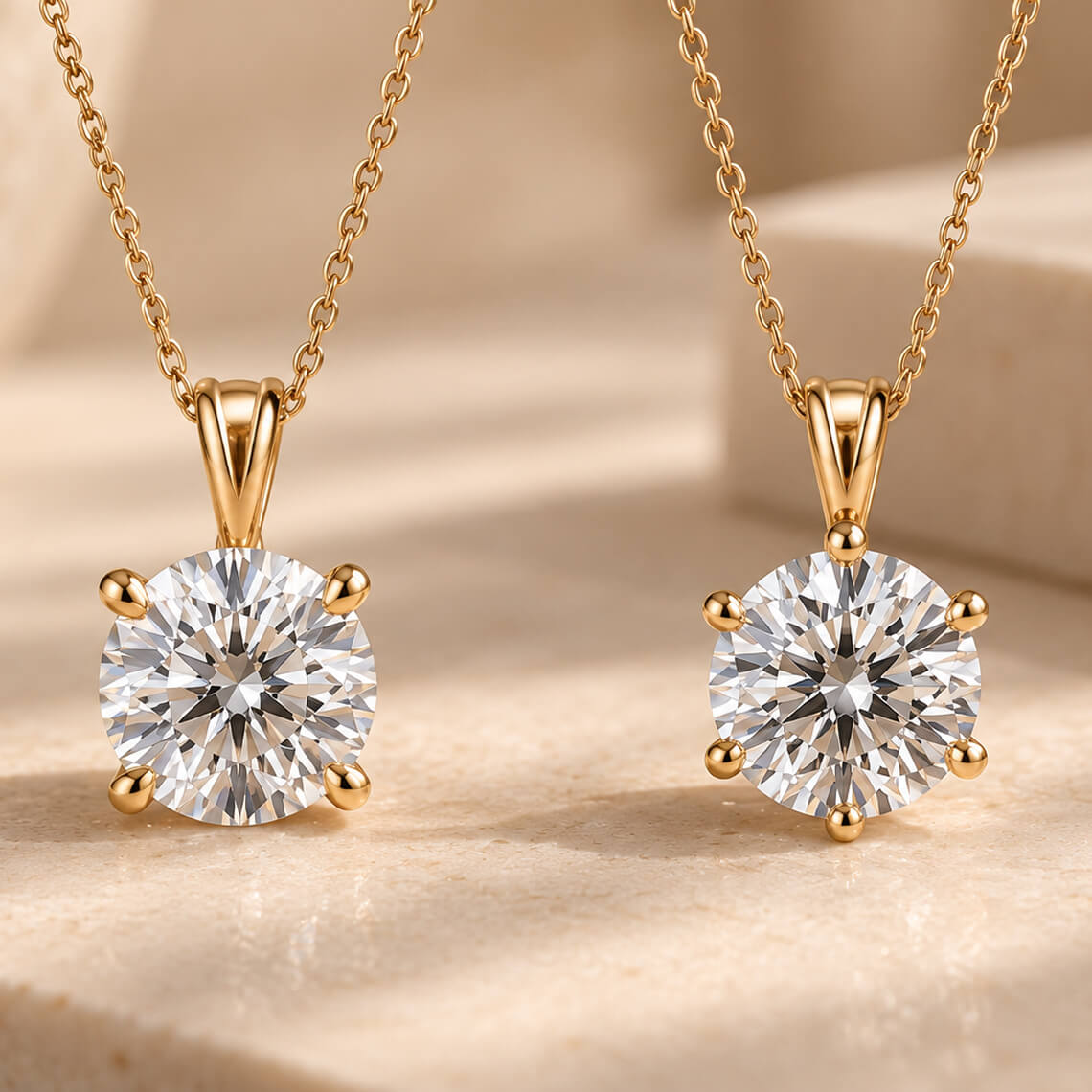
On several rings, small metal claws securely keep a diamond in its place. These are called prongs. With these contact points, you need not worry about the diamond coming off the ring. The size and shape of the prong will also dictate how much of a surface area the diamond can cover. You can choose four contact points for a 4-prong ring and 6 points for a 6-prong ring. The choice of prong determines the amount of light that will interact with the stone.
Key Difference Between 4-Prong and 6-Prong Diamond Ring Setting
|
Feature |
4-Prong Setting |
6-Prong Setting |
|
Security |
Strong for most diamonds |
Better degree of protection |
|
No. of claws |
4 |
6 |
|
Appearance |
Open |
Slightly fuller appearance |
|
Extent of diamond visibility |
More of the stone is visible |
Less of the stone is visible |
|
Shape definition |
Often shows diamond contours |
Creates a rounder look overall |
|
Maintenance |
Easier than a 6-prong setting |
Needs more care |
Now let us check a few more aspects when comparing a 4-prong vs 6-prong setting.
a. Security
A 6-prong setting would have more claws to better protect the diamond. However, 4-prong settings also work well to secure the stone. The type of stone on the ring will govern the prong setting. If the diamond is large or has a bigger weight, then a 6-prong setting might be needed to ensure a firm placement.
b. Appearance
Both settings create different aesthetics.
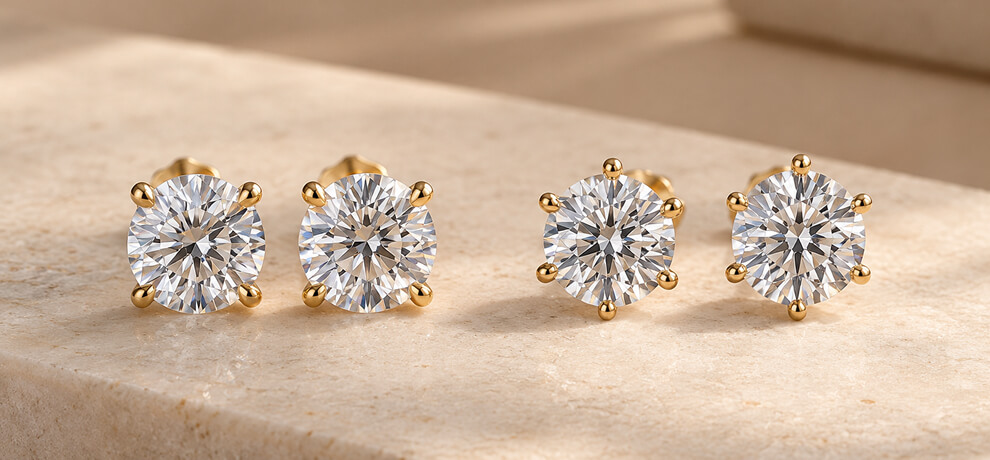
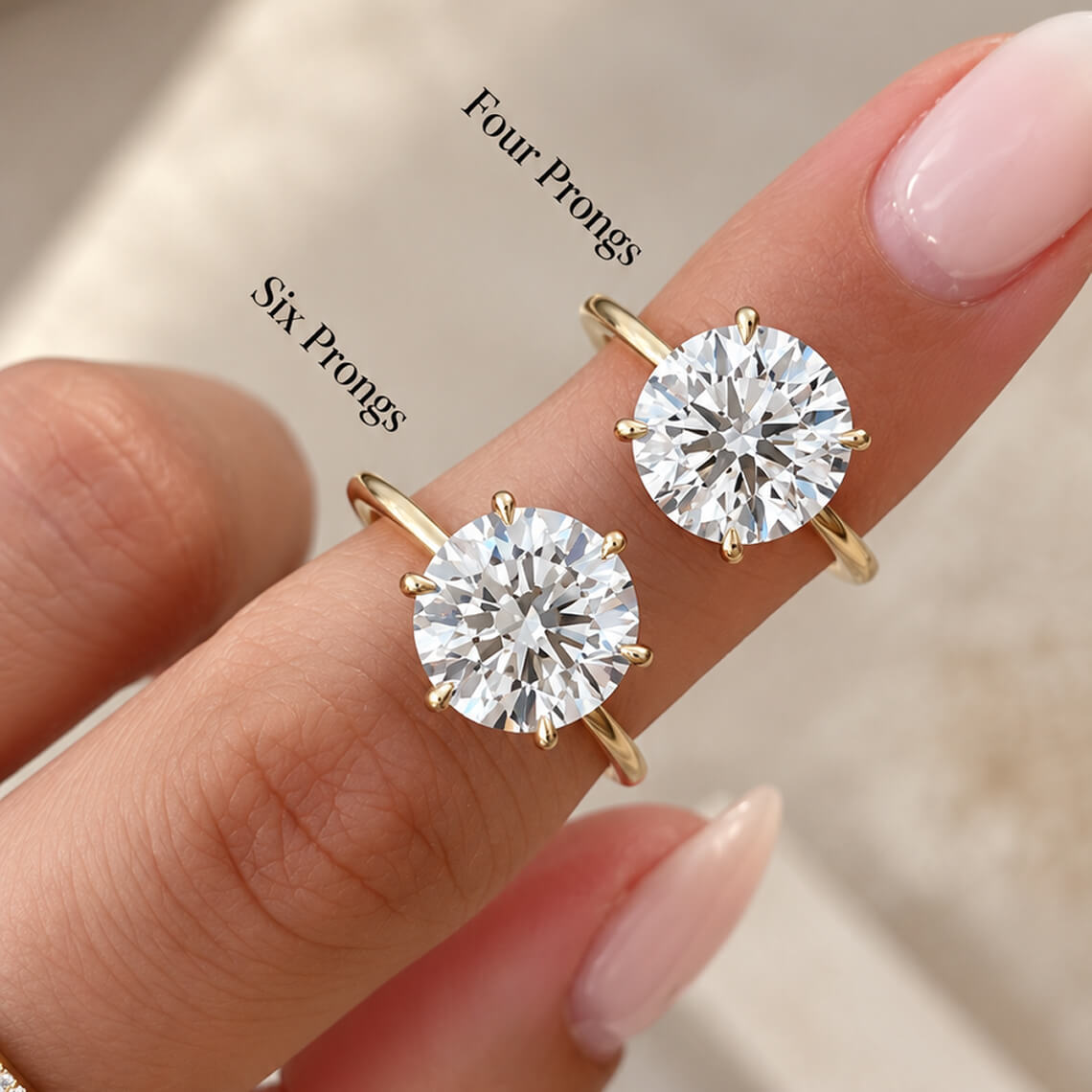
4-Prongs: The 4-prong engagement ring has less metal around the diamond. So, it will look cleaner and more open. It is more suited to oval, emerald, cushion, and princess cuts.
6-Prongs: 6-prongs may work well for round diamonds. The additional points of contact will help create a smoother look overall. No wonder many bigger solitaire engagement rings feature this setting.
c. Light Performance
This is another interesting area to look at when comparing 4-prong vs. 6-prong settings. First, let’s talk about 4-prongs. It exposes more of the diamond’s perimeter. But what it does not do is bring out the stone’s underlying brilliance. This job is done by the stone’s cut quality. So more than the prongs, the facet precision and proportions will influence visual performance. A beautifully cut diamond will still be visually amazing irrespective of the number of prongs.
Prong Setting Based on Diamond Shape and Weight
Now let’s see how different shapes play out vis-à-vis the number of prongs.
-
Round diamonds go well with both 4 and 6 prongs. If the stone is larger, six prongs would be a secure option.
-
Oval diamonds look great in 4 prongs because more of their graceful outline is visible.
-
Coming to pear-shaped and marquise diamonds, they benefit more from properly placed prongs to shield their sharp ends.
It is time to discuss carat weight too. A common yardstick is to have more prongs as carat weight increases to keep the stone securely in place. Take, for instance, a 5-carat stone. A 4-prong setting works well here. But jewelers prefer housing it within 6 prongs. Doing so enables added security.
What Are the Advantages and Disadvantages of 4-Prong vs 6-Prong?
4-Prong Setting
Pros
-
Greater visibility of the diamond
-
Clean, modern look
-
Suits most fancy shapes
-
Comparatively less likely to snag on clothing
Cons
-
Diamond can become loose if one of the prongs is damaged
-
Can make round-shaped diamonds more angular
-
Comparatively less secure than 6-prong setting
6-Prong Setting
Pros
-
Added security for the center diamond
-
Classic, timeless look
-
Better suited to larger stones and active lifestyles
Cons
-
Slightly more metal covering the edge of the stone
-
Additional prongs can get caught in hair or snag on clothes
For Everyday Wear, Which Setting is Better?
This factor clearly brings out the difference between 4- vs 6-prong settings.
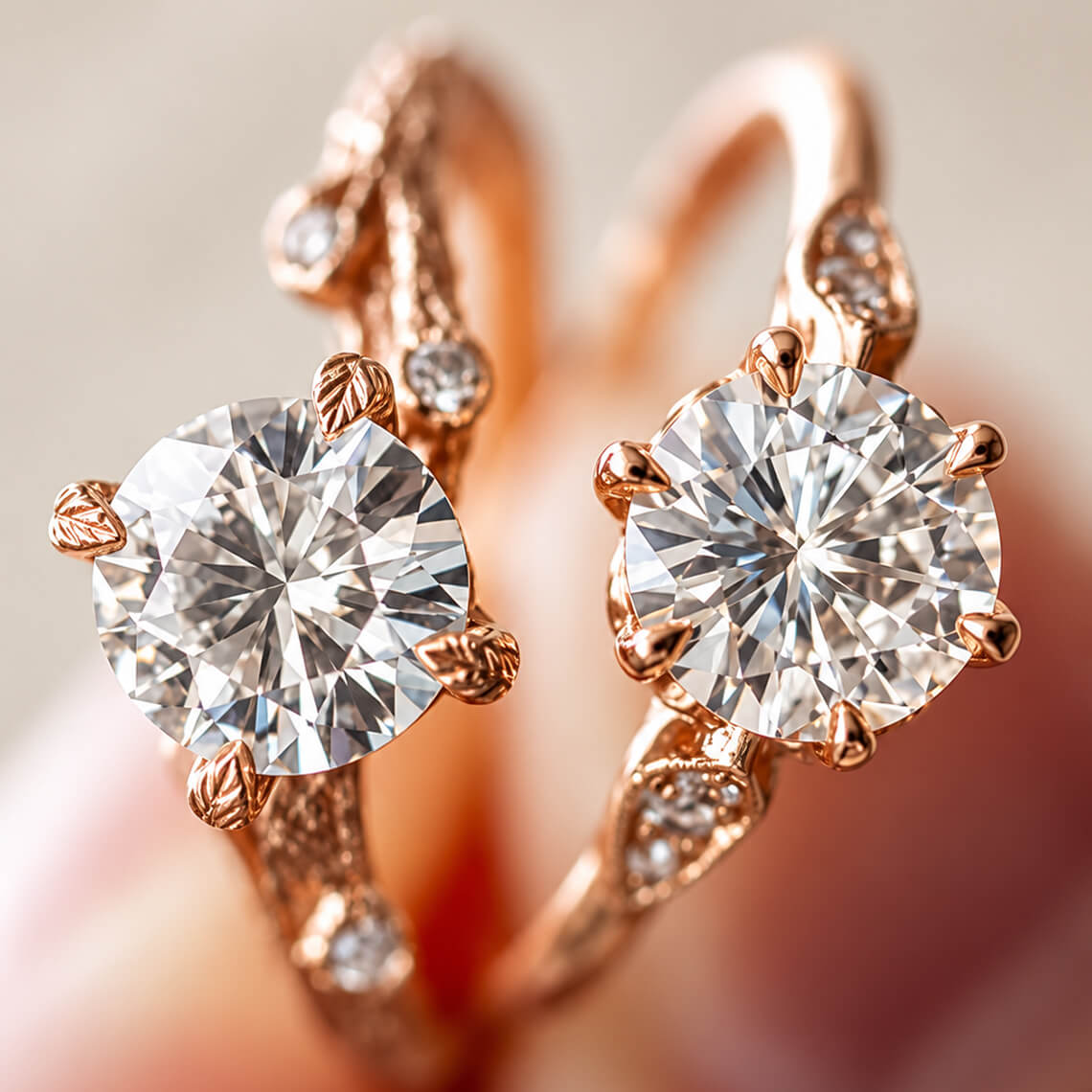
If the everyday activity doesn't cause a lot of stress on the jewelry, then you can go for 4 prongs. It is a different story altogether if the ring is getting a lot of knocks, outdoor activities, and hard work involving the hands. If this is the case, then it would be best to have more claws in the prong setting.
Coming to maintenance, both types of prongs can wear over time. A regular checkup with the jeweler is a good idea. They will determine if there are loose settings and correct them before they get worse. Regular cleaning at home helps avoid dirt collecting on the ring. This can maintain the diamond's sparkle over time.
Which is the Right Prong Setting for Your Jewelry?
Choose a 4-prong setting if:
-
You want to see as much diamond as possible
-
Prefer a modern look
-
Have an oval, cushion, radiant, or emerald diamond
-
Your round diamond is under about 1.5 carats.
Choose a 6-prong setting if:
-
You have a round diamond of 1.5 carats or more
-
Prefer a classic look
-
You have an active lifestyle and need added security for your diamond
Conclusion
By now, you’ll be able to tell the difference between the two diamond settings and how something as simple as the number of prongs can affect the appearance of your diamond jewelry. So the next time you are buying diamond jewelry, you know which setting is the right choice for you.
Still unsure? Finding the right jewelry, with the right setting, and the perfect diamond can feel overwhelming, especially if you are not a regular diamond jewelry buyer. This guide is meant to help you understand the difference, but if you still have questions, we are here. You can talk to an expert at Friendly Diamonds, and we will be happy to help you.
FAQs
Is a 6-prong setting safer than a 4-prong setting?
Do 6 prongs make a diamond look smaller?
Which setting will make an oval or pear-shaped diamond look more attractive?
Do 4-prong settings mean better brilliance?
Which diamond setting is best for a 5-carat diamond?