Flat 50% OFF sitewide!
NOW & ON BLACK FRIDAY!
UNLOCK FREE LAB DIAMOND JEWELRY ON PURCHASES OVER $1000 




Understanding Lab-Grown Diamond Price Trends and How to Compare
The lab diamond prices have reduced due to an increase in their production and advancements in manufacturing technology. Nevertheless, there is a difference in the prices of diamonds from one retailer to another and even from one diamond to another. It is important for US consumers to be aware of the lab-grown diamond price trends to make informed decisions.
Table of Content
- How Have Lab-Grown Diamond Prices Changed Over Time?
- What Are Lab Diamond Prices and Cost per Carat?
- Why Do Lab-Grown Diamond Prices Change?
- What Affects the Price of a Lab-Grown Diamond?
- How Can You Compare Lab-Grown Diamond Values?
- Will Lab-Grown Diamond Prices Keep Falling?
- Do Lab-Grown Diamonds Hold Their Value?
How Have Lab-Grown Diamond Prices Changed Over Time?
Lab diamond prices have decreased significantly during the last few years. According to BriteCo appraisal data and median estimated sales prices per carat on engagement rings, there was a 55% reduction in median lab-grown diamond price per carat from 2019 to 2025.
What Were Lab-Grown Diamond Prices by Year?
The following table displays the median price per carat of lab-grown diamonds sold in engagement rings in the United States.
|
Year |
Median price per carat |
|
2019 |
$4,622 |
|
2020 |
$4,321 |
|
2021 |
$4,194 |
|
2022 |
$3,895 |
|
2023 |
$3,130 |
|
2024 |
$2,630 |
|
2025 |
$2,057 |
|
January–June 2026 |
$2,015 |
How Has the Price Gap Between Lab-Grown and Natural Diamonds Changed?
This disparity has become huge. For instance, in 2019, prices for lab-grown diamonds stood at $4,622 and those for natural diamonds at $6,237 per carat. However, in 2025, these prices changed to $2,057 and $8,428, respectively. The disparity is a result of changes in supply, production costs, and demand, but not in the chemical composition of diamonds.
What Are Lab Diamond Prices and Cost per Carat?
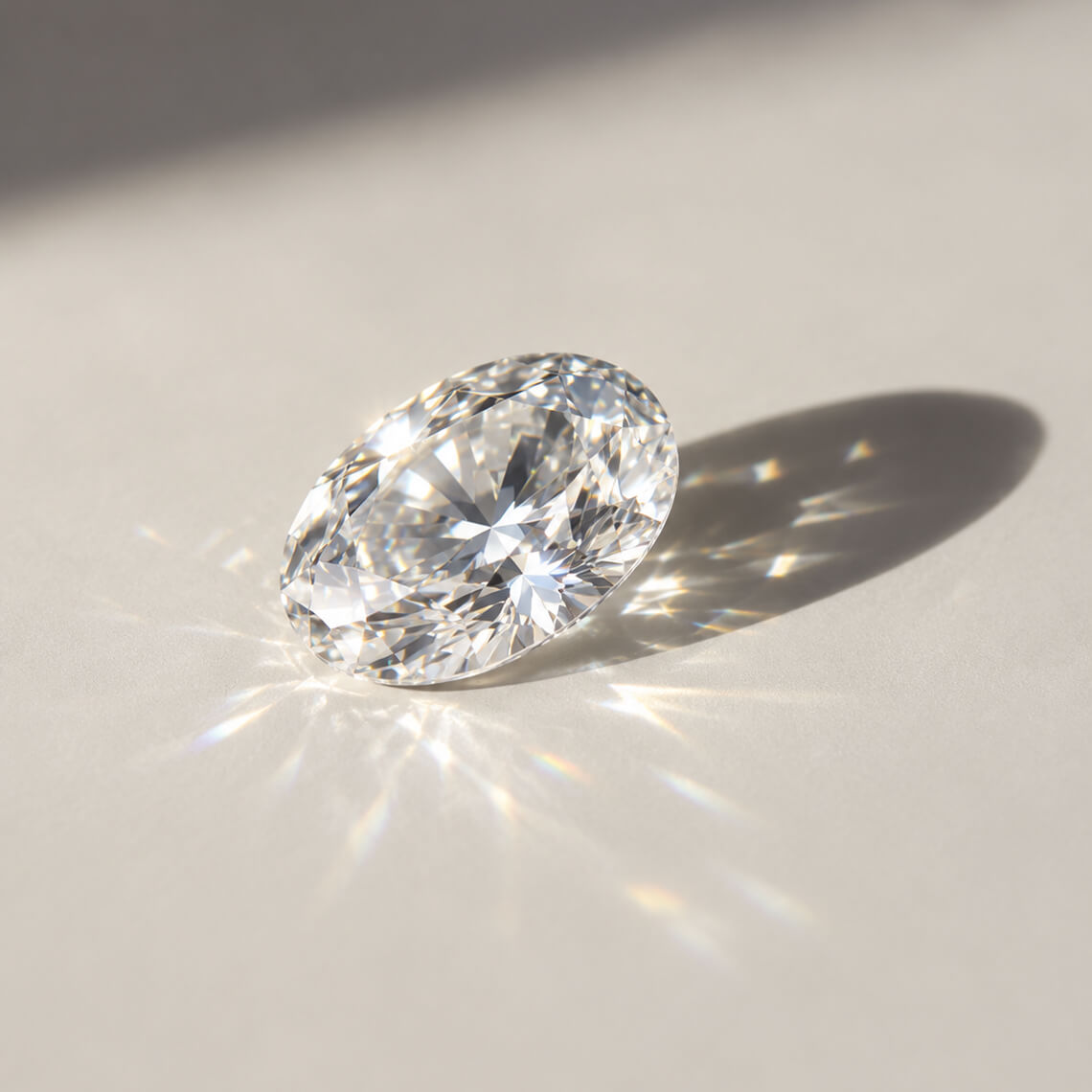
While historical data shows the trend in the market, buyers also have to be aware of the prices of individual stones. The lab diamond price per carat is an important factor for comparison, although the carat itself doesn’t determine the price of a diamond. The price is influenced by other factors as well, including the clarity, cut, color, and certification.
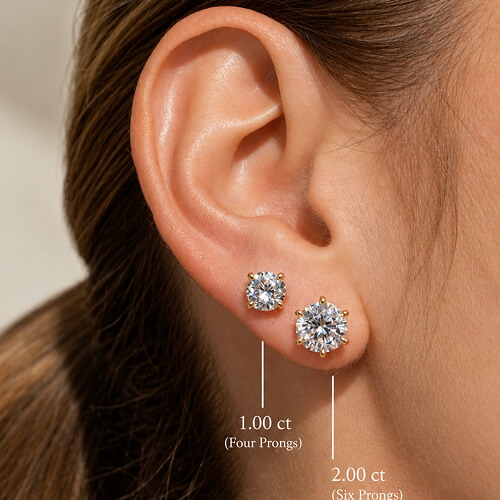
What Is the Cost Per Carat Based on the Carat Weight?
Below are some examples of discounted round lab-grown diamonds available for purchase from the Friendly Diamonds website.
|
Carat Weight |
Price |
Approx. Price Per Carat |
|
1.00 ct |
$441 |
$441 |
|
2.00 ct |
$840 |
$420 |
|
3.00 ct |
$1,186 |
$395.33 |
Why Does Price per Carat Rise With Size?
Bigger diamonds tend to be more expensive in general since there are fewer diamonds that have a specific combination of weight and quality. But the lab diamond cost per carat does not necessarily increase with size. As seen from the examples above, it is better for buyers to look at the specifics of the diamonds available.
Why Do Lab-Grown Diamond Prices Change?
These distinctions between prices are also impacted by fluctuations throughout the supply chain process of diamonds. The ability to manufacture, the cost of production, consumer demand, and competition among the retailers are all the elements that decide the lab-grown diamond price trends, but not simultaneously for all retailers.
How Do Production Technology and Supply Affect Prices?
The CVD and HPHT are the two processes utilized for growing diamonds under laboratory conditions. Increased production capacity has led to increased supply of lab-grown diamonds. As mentioned in De Beers’ Diamond report, there was a 93% drop in wholesale prices since 2020, with an average wholesale price of $100 per carat.
How Do Wholesale and Retail Prices Differ?
While wholesale prices are used in supply chain transactions, retail prices include costs of doing business and margins. According to De Beers, retail prices move slower than wholesale prices. It is the reason why declining cost of production and wholesale prices do not always lead to the same decline in jewelry stores.
How Do Consumer Demand and Retail Competition Influence Prices?
The share of lab-created diamonds among engagement rings has increased. As per reports, in January-June 2026, lab-created diamonds made up 51% of the newly appraised engagement rings in the US, as opposed to 5.9% in 2019. More retailers selling similar diamonds make price comparison easier for customers.
What Affects the Price of a Lab-Grown Diamond?
The market situation causes the general price fall, yet the price of the stone itself depends on a number of specific factors. Among them are carat weight, cut, color, clarity, shape, certificate, and even the setting of the stone itself.
Carat Weight of Diamonds
This factor determines the weight of the diamond. Generally, diamonds weighing more have higher prices overall, yet their proportions and size affect the appearance as well.
Cut, Color, and Clarity
Cut has everything to do with the light performance of the diamonds, whereas color and clarity characterize quality factors. The higher their grade is, the more the diamonds may cost, yet the purchaser needs to examine the stone itself.
Diamond Shape
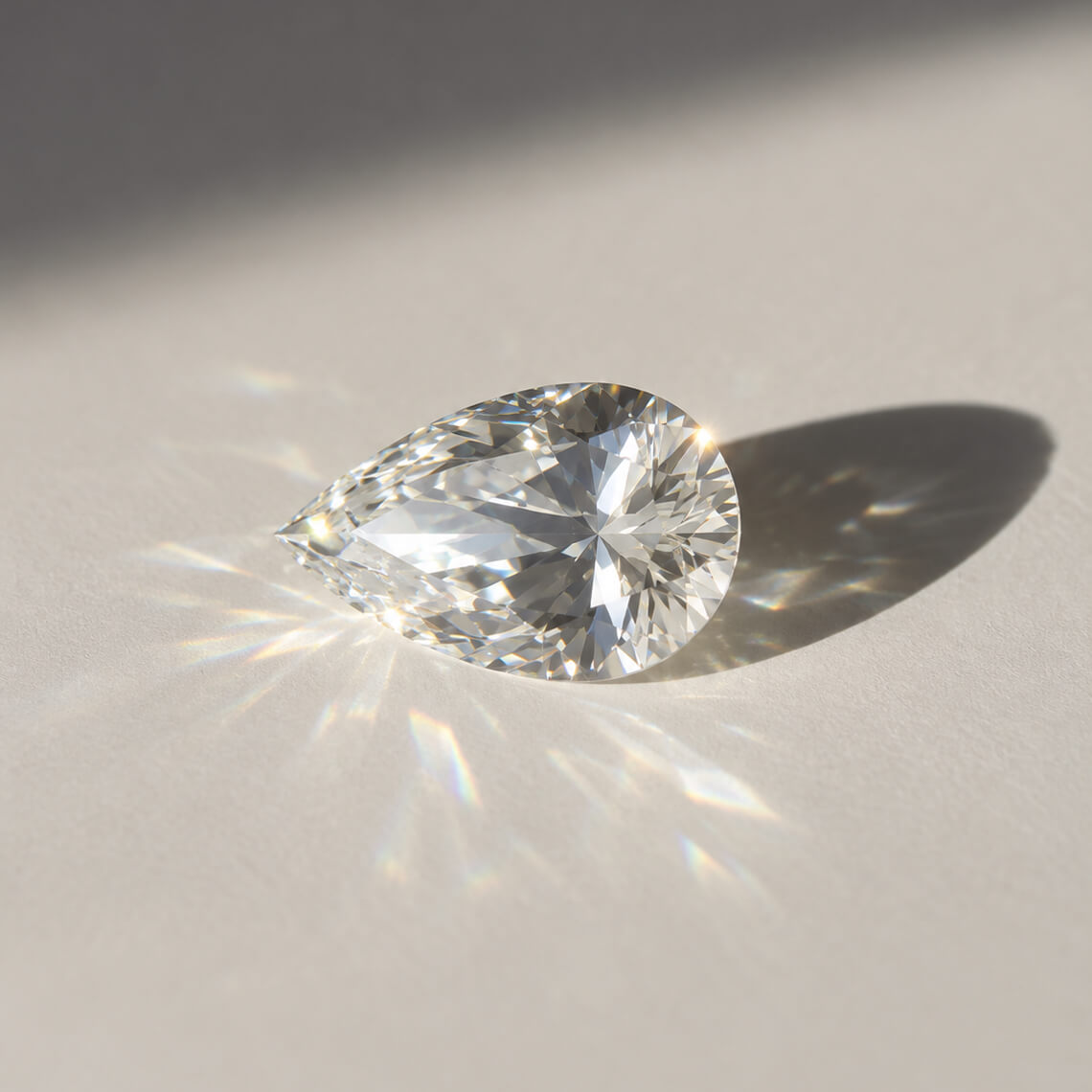
The round, oval, cushion, and emerald shapes require different cuts and have different demands. However, they may have varying values although their carat weight is the same, thus making it possible to mislead consumers by doing a carat-to-carat comparison.
IGI and GIA Grading Reports
IGI offers grading reports for lab-grown diamonds that include an assessment of the 4C’s. At the same time, GIA introduced its Premium and Standard quality assessment system for eligible colorless to near-colorless lab-grown diamonds on October 1, 2025. Buyers should look into the actual report, as both systems offer different information.
Setting and Customization Fees
All factors such as metal, settings, stones, and customization impact the value of the jewelry piece. One should analyze the cost of the loose diamond and also the cost of the ring individually.
How Can You Compare Lab-Grown Diamond Values?
For a proper comparison, you will need to compare the diamond's specifications, certification, appearance, and retailer's policies. This is especially true since lab-grown diamond price trends can create an illusion that two diamonds have the same value despite having different appearance-related attributes.
Why Do Similar Diamonds Have Different Prices?
The price will depend on cut ratios, clarity aspects, size, color, and margins to the retailers. Diamonds of the same grades do not have to look identical.
Why Isn't the Cheapest Diamond the Best Value?
Reasons for low cost may differ in the quality of cut or appearance. Spending a bit more on a diamond with better light performance would bring more happiness than buying a bigger diamond.
What Should You Include in a Diamond Comparison Checklist?
When purchasing, compare the following:
-
Carat weight, cut, color, and clarity.
-
Grading certificate and certificate number.
-
Photographs and 360-degree videos.
-
Measurements and inclusions that can be seen.
-
Return, exchange, and upgrade policy.
How Can You Get Maximum Diamond within Your Budget?
Firstly, you need to define the budget limit and determine priorities when buying a stone. You can consider a diamond with a somewhat worse color or clarity grade if the stone looks good visually. Then you will have to compare different offers and evaluate the price of the lab diamond per carat.
Will Lab-Grown Diamond Prices Keep Falling?
These reductions over the past few years might have altered the market, but the prospects of price changes in the future for such diamonds remain unclear. Production cost, availability, price competition, and buying behavior will continue to impact the industry.
What Can Influence Lab-Grown Diamond Prices In The Future?
Price could be further reduced on the basis of low production costs, larger production quantities, and increased competition in pricing. Changes in the cost of production and consumer demand can impact the scenario as well.
Why Is Forecasting Lab-Grown Diamond Prices Uncertain?
Historically, wholesale prices might have stabilized at some points, even if there were substantial drops over a long period of time. This does not mean that one can predict future prices for each diamond. The lab-grown diamond price trends are influenced by various factors that cannot be determined, such as changes in production scales, supply chains, consumer demand, and new technologies.
Do Lab-Grown Diamonds Hold Their Value?
A lab-grown diamond usually needs to be bought for its aesthetics and low cost, rather than for its resale value. Just because a person buys at a lower price does not mean that the diamond retains retail value when reselling.
Retail Price and Resale Value
The retail price of a diamond refers to the purchase price of a brand new diamond, whereas the resale price may refer to the price that a dealer or a regular purchaser is willing to pay for an old diamond. The two may vary widely since new lab-grown diamonds are still sold at relatively low prices.
What Should You Look Out for When Purchasing a Lab-Grown Diamond?
One needs to know the rules for return, replacement, and upgrade before buying. One can prove the purchase with a receipt or a report, but not the resale price.
FAQs
How Much Is a 1, 2 or 3 Carat Lab Created Diamond?
Why Are Lab Grown Diamonds Cheaper Than Natural Diamonds?
Are Lab Diamond Prices the Same at Every Retailer?
Can You Resell or Trade Up a Lab-Grown Diamond?
Are Lab Diamond Prices Still Falling?
Is a Grading Report Required for a Lab-Grown Diamond?