Flat 50% OFF sitewide!
NOW & ON BLACK FRIDAY!
UNLOCK FREE LAB DIAMOND JEWELRY ON PURCHASES OVER $1000 




What Is an Eye-Clean Diamond and How Do You Choose the Right Clarity?
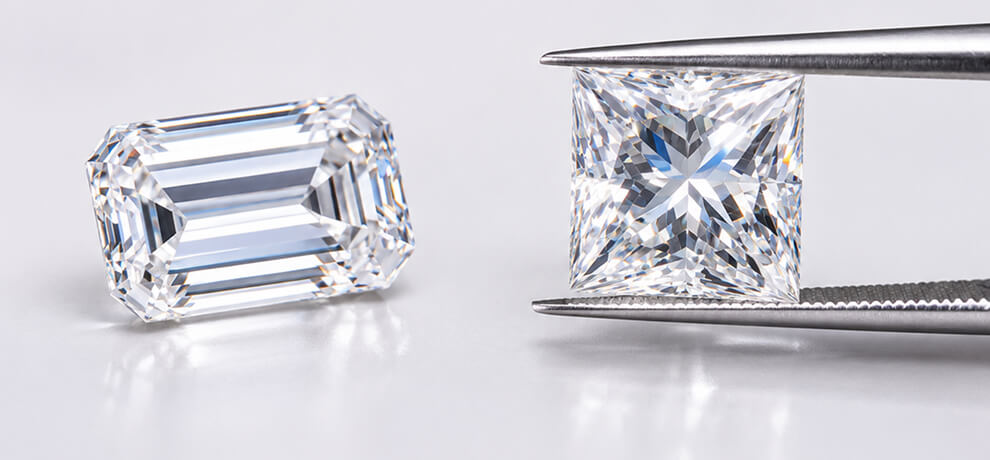
The diamond doesn’t have to be flawless or internally flawless to appear eye-clean. It’s often possible to find eye-clean VS diamonds and even SI clarity diamonds. The trick is to evaluate the specific stone instead of looking at the grade only.
Eye-clean diamonds will let you get a desired look without spending more money on a higher clarity grade that you might not even see. This blog will tell you about eye-clean diamond meaning, what grades to consider, how shape and weight impact visibility, and what to pay attention to when buying.
Table of Content
- What Is An Eye-Clean Diamond?
- Diamond Clarity Scale and Eye-Clean Clarity Grades
- Which Clarity Grades Can Have an Eye-Clean Diamond Appearance?
- How Do Shape and Carat Affect Eye-Clean Clarity?
- What Inclusions Do You Need to Be Careful About in an Eye-Clean Diamond?
- Are Lab-Grown Diamonds Eye-Clean?
- How much can you save on Eye-Clean Diamonds?
- How to Choose the Right Clarity for Your Diamond
- Conclusion
What Is An Eye-Clean Diamond?
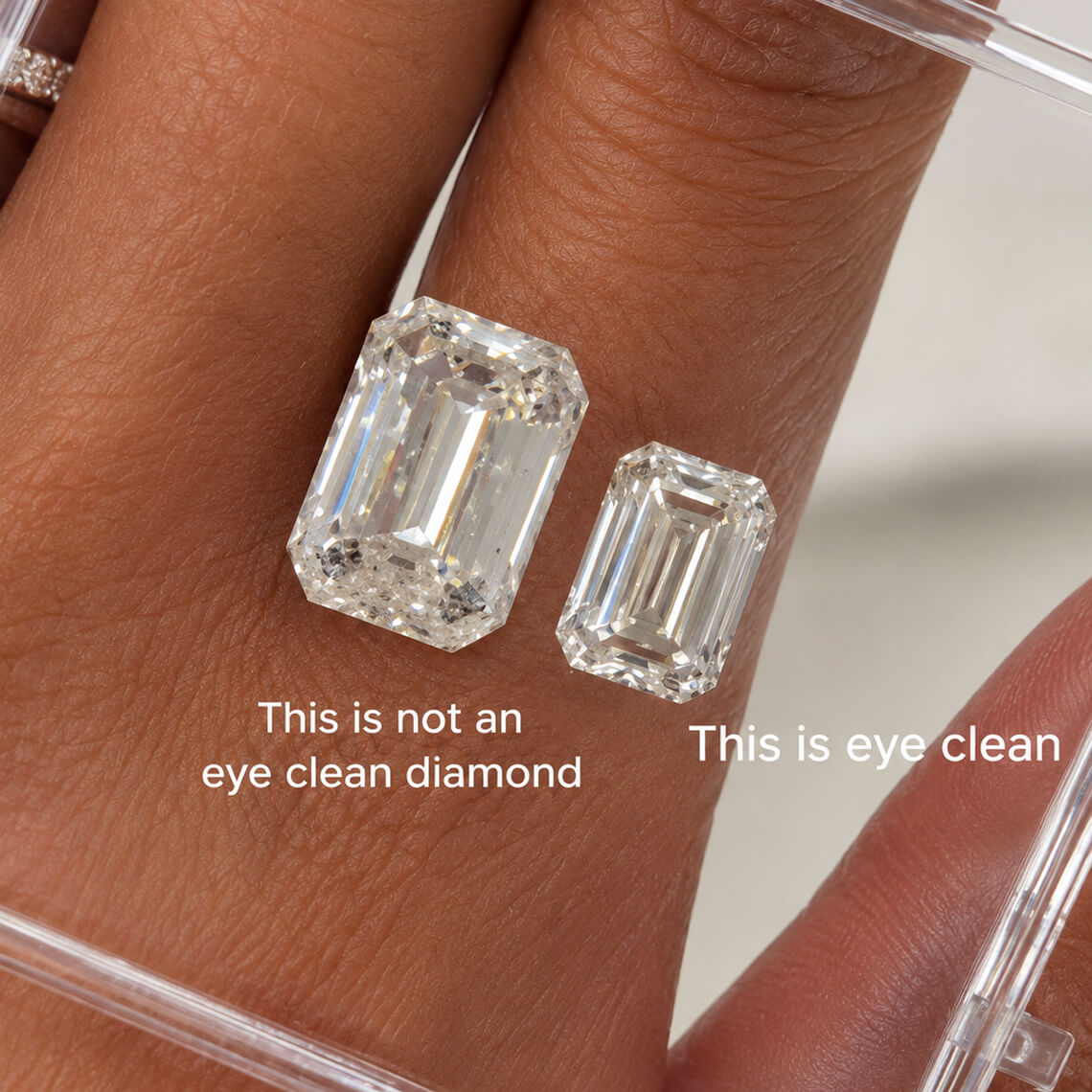
In an eye-clean diamond, there are no inclusions that can be seen without the aid of a magnifying glass in a face-up position. This is because "eye-clean" describes the way a specific diamond appears, not its grade on the clarity scale.
Eye-clean doesn’t mean that a diamond has absolutely no imperfections. Sometimes, in spite of inclusions under 10x magnification, a diamond appears eye-clean. That’s why two diamonds of the same grade may differ in their appearance.
How Is an Eye-Clean Diamond Evaluated?
An eye-clean diamond has no inclusions that can be seen by the unaided eye when viewed face-up under normal viewing conditions. One of the guidelines often used in the industry implies looking at the stone in daylight-equivalent or fluorescent lighting from about 6–12 inches away with normal 20/20 vision.
The guidelines mentioned above come from a gemologist survey cited by IGI. The eye-clean evaluation is not graded by IGI or GIA. The visibility may vary depending on eyesight, lighting, viewing distance, and angle of the stone.
How Does an Eye-Clean Diamond Differ From a Flawless Diamond?
Flawless is the highest clarity grade of a GIA diamond. There are no inclusions or blemishes visible to a skilled grader when viewing the stone under 10x magnification. However, an eye-clean diamond can have inclusions that can be seen under magnification but not visible to the naked eye. For instance, VS2 or SI1 diamonds may look absolutely clean when viewed normally, although inclusions can be spotted under magnification by a grader.
Diamond Clarity Scale and Eye Clean Clarity Grades
GIA has 11 clarity grades for natural diamonds, and IGI uses the same scale for lab-grown diamonds. The diamond’s features are examined at 10x magnification in terms of their size, quantity, location, nature, and visibility. But eye-clean clarity is when you can see the diamond’s features with your naked eye, regardless of the diamond's clarity grade.
|
Clarity grade |
What a grader sees at 10× |
Eye-clean likelihood |
|
FL – Flawless |
No inclusions or blemishes |
Yes |
|
IF – Internally Flawless |
No inclusions; blemishes may be present |
Yes |
|
VVS1 |
Minute inclusions, extremely difficult to see |
Yes |
|
VVS2 |
Minute inclusions, very difficult to see |
Yes |
|
VS1 |
Minor inclusions, difficult to see |
Usually |
|
VS2 |
Minor inclusions, visible with some effort |
Usually, inspect the stone |
|
SI1 |
Noticeable inclusions |
Check Individually |
|
SI2 |
More noticeable inclusions |
Check Individually |
|
I1 |
Obvious inclusions |
Rarely |
|
I2 |
Obvious inclusions |
No |
|
I3 |
Obvious inclusions |
No |
These are just some general expectations and not guaranteed. There could even be differences between diamonds that have been graded in the same grade for clarity.
Which Clarity Grades Can Have an Eye-Clean Diamond Appearance?
VS1 and VS2 are among the most popular choices for people looking for eye-clean diamonds at more affordable prices than those with top clarity grades. Typically, a VS1 stone features fewer or less visible inclusions than a VS2, but both can have eye-clean clarity.
The VS2 eye-clean diamond can prove to be a valuable option with regard to balancing appearance and cost. IGI's mentioned advice notes that eye-clean appearance is reliable when it comes to round brilliant diamonds with VS2 or better grades.
Eye-clean SI1 diamonds can be found too. The thing is that some SI1 diamonds have inclusions, which do not catch anyone's eye unless they use magnification. The inclusions in question should be small in size and should not be located close to the center of a stone.
Eye-clean SI2 is a less reliable grade. It means that some diamonds have an eye-clean appearance, while others have inclusions that are easy to see. In other words, you cannot take for granted that an SI2 diamond with a nice price in the listing is an eye-clean stone.
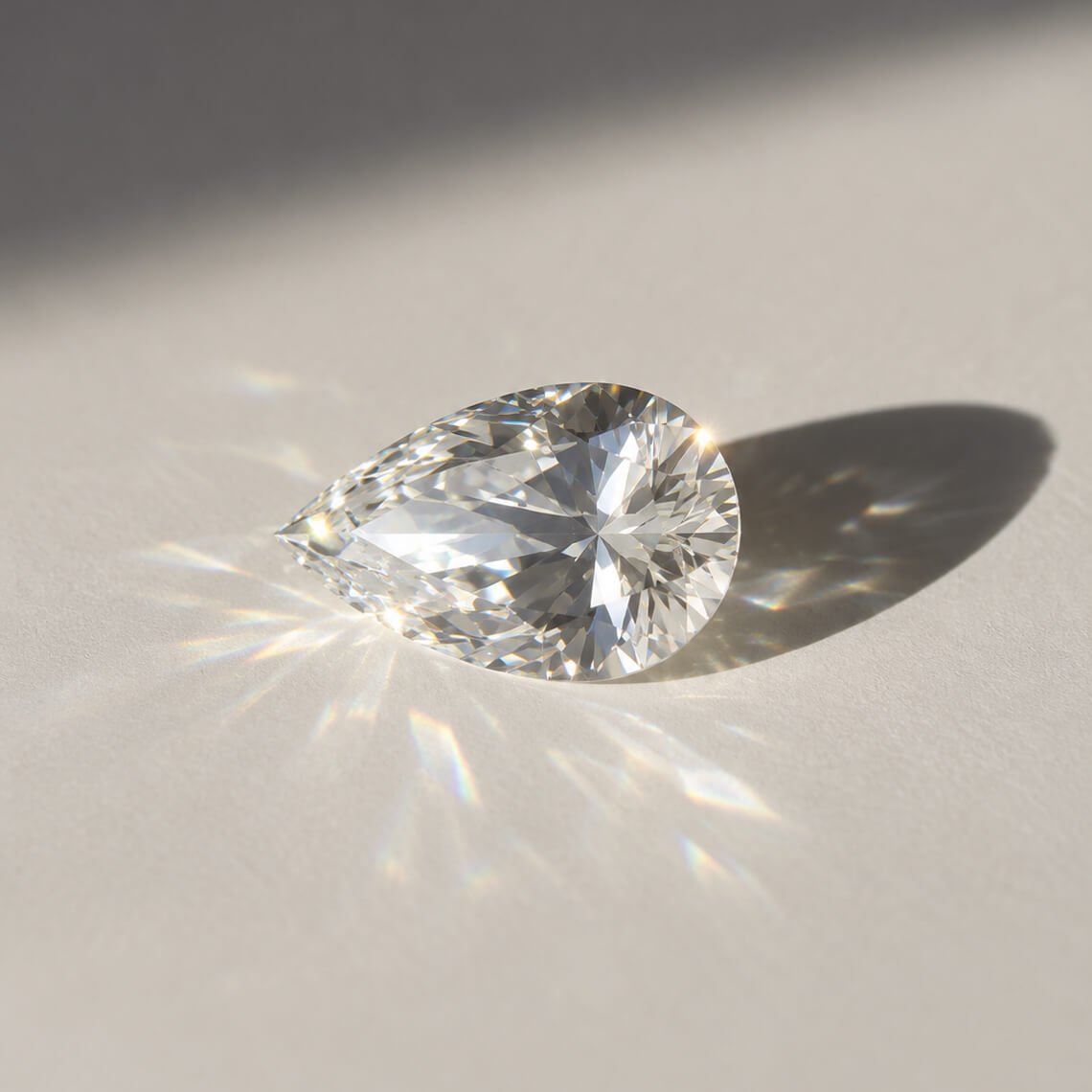
What Inclusions Do You Need to Be Careful About in an Eye-Clean Diamond?
The clarity grade is not everything you should know about the diamond. Make sure to pay attention to the type and location of the inclusions that you see on the diamond's video and grading report.
-
Dark crystals: Dark crystals are those that contrast significantly with the diamond, especially if they appear close to the center.
-
Inclusions under the table: The table facet is the large facet on the crown of the diamond. Any inclusion under the table is more visible when viewed from above than an inclusion near the edge.
-
Clouds and cloudiness: Clouds are a group of pinpoints. A few clouds might not affect the diamond much, while heavy clouding can make it look hazy. Remember that you should evaluate the transparency of the stone, not the term itself.
-
Surface-reaching feathers: A feather is a crack inside the diamond. The depth, location, and size of the feather need to be considered. A surface-reaching feather is especially important if it appears near the girdle or the point of the diamond.
How Do You Know if a Diamond is Eye-Clean?
Clarity grading and plotting will tell you about a diamond, but they won't take the place of looking at the real thing. If you want to know whether a diamond is eye-clean, look at the diamond itself and not just its grading report.
Online Diamond Eye-Clean Check
Look for a 360-degree video of the specific diamond, not a generic picture. Look at the diamond face-up and from all sides, and zoom out so that you can see what it looks like at a realistic viewing size. Zoomed-in pictures may make very small inclusions seem much larger than they really are. Friendly Diamonds offers 360-degree videos of individual lab-grown diamonds with grading information.
Reading the Clarity Plot and Report Comments
A plot shows the location of inclusions and blemishes detected during the evaluation. It could assist you in determining whether there is an inclusion in the center of the diamond, near the edge of the diamond, or any other location within the diamond.
The plot does not tell you how visible an inclusion would be to your eye. Use the plot along with the video and grading report. Verify the report number of the issuing laboratory on their official website.
Physical Checking
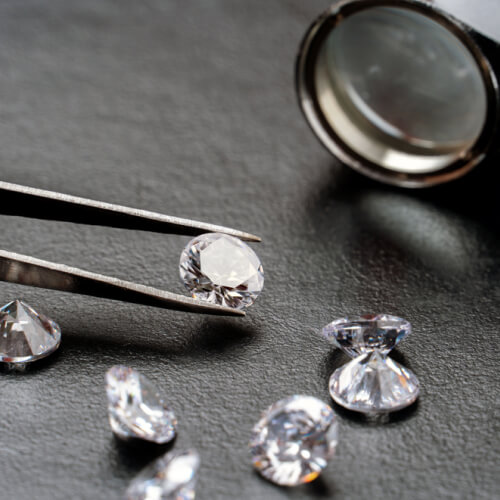
Look at the diamond face-up from 6 to 12 inches away with normal lighting. Check for dark spots, haziness, or any other inclusions without using a loupe first. Then inspect the diamond sideways and ask for the inclusions to be shown using a loupe.
If you are extremely picky about inclusions, use your own vision to make the final call. A diamond that appears clean to one person may appear differently to another.
Are Lab-Grown Diamonds Eye Clean?
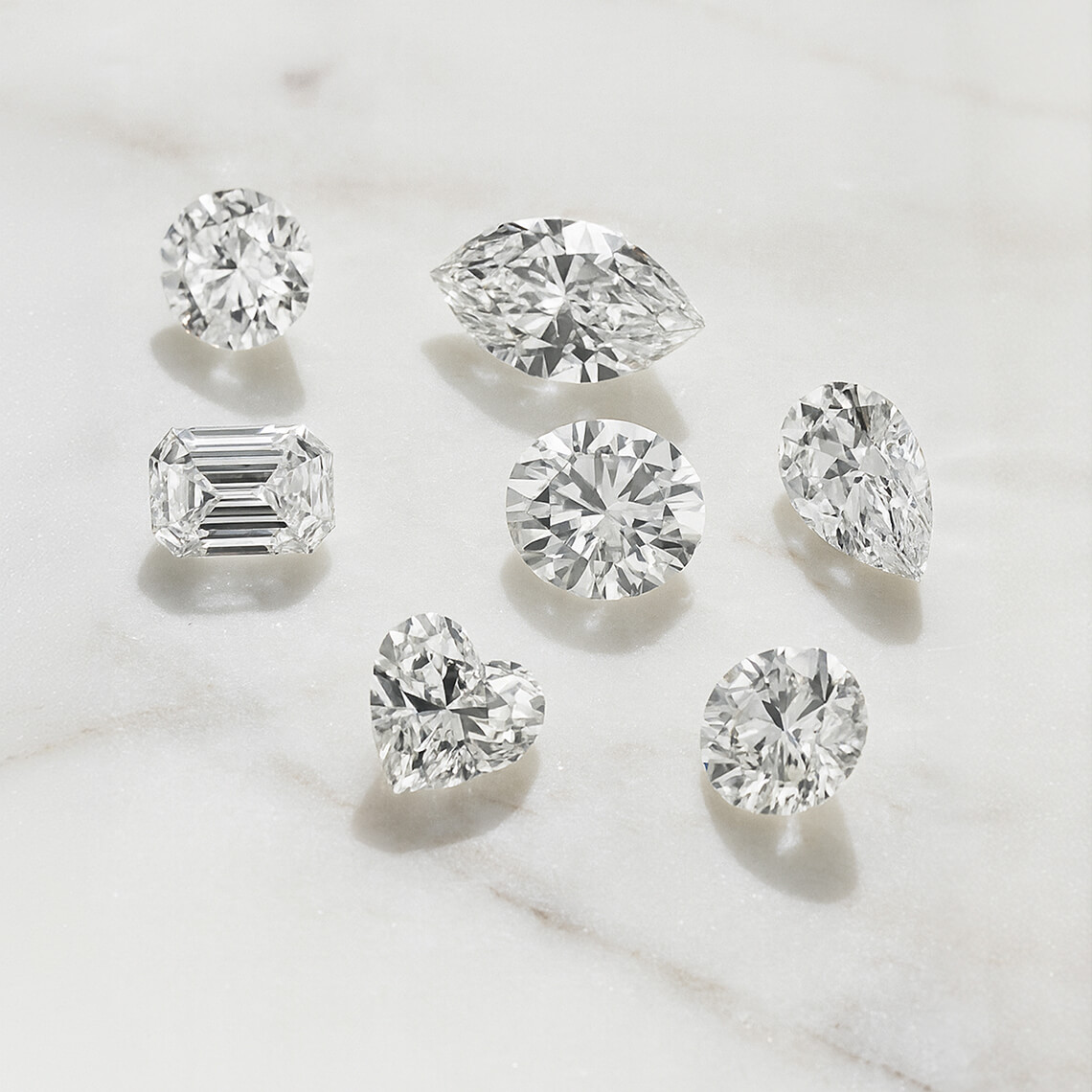
A lab-created diamond can be eye clean, but the method used to create it cannot assure a specific degree of clarity or eye cleanliness. Just like a mined diamond, lab-created diamonds can have clarity characteristics or inclusions that should be evaluated using clarity scales by considering the inclusion factors.
It comes down to the same practical considerations as usual. Check the clarity grade, observe the particular diamond, and watch a video of it. While one VS2 grown diamond will be eye-clean, another of the same grade could show an inclusion.
How much can you save on Eye-Clean Diamonds?
A less clear diamond may prove cheaper compared to a clearer diamond with all other factors being equal. According to the GIA, the cost per carat tends to increase with clarity if the rest of the value factors stay unchanged.
|
Grade of clarity |
Price trend |
Things to consider |
|
VS1 |
Usually higher |
Fewer inclusions than in VS2 and SI1 |
|
VS2 |
Usually lower than VS1 |
May give an eye-clean look without being VS1 |
|
SI1 |
Usually lower than VS2 |
Can save more money if the particular stone is clean |
It's necessary to note that these are tendencies, which cannot serve as quotes. The amount of savings cannot be provided because the prices fluctuate depending on market conditions. In order to get a true comparison, one needs to compare prices on the same weight, color, cut, and shape of diamonds from the same lab.
The real opportunity is the ability to pay only for what you actually need.
How to Choose the Right Clarity for Your Diamond
Consider the following tests before choosing a diamond:
-
Choose SI1 clarity for price reduction for stones under 2 carats, but look at every stone to see if any inclusion is visible to your eye.
-
Consider VS2 clarity for a practical range for an eye-clean diamond look at an affordable price, in case you buy a round brilliant diamond.
-
SI2 is always a risky choice and should be tested in person.
-
Consider dark inclusions, centrally located cloudy areas, and feathers near the surface.
-
Check the grading certificate as well as the real diamond video, not just its clarity grade.
-
Compare diamonds with the same carats, color, shape, and cut quality to see if it is worth paying extra money for a higher clarity grade.
-
The most suitable choice is a diamond that looks clean to your eye and meets your budget requirements, not necessarily one with the highest clarity grade.
Conclusion
An eye-clean diamond can help you look the way you want to look without paying for a clarity grade that will make virtually no difference. Consider how VS2 and SI1 diamonds look. Look at how the diamonds are positioned and what they look like. Make sure you check the certificate before buying any diamond. Friendly Diamonds provides individual stone pages with grading reports and videos in 360 degrees.
FAQs
Is a VS1 diamond eye-clean?
Is it possible that an SI2 diamond is eye-clean?
Is VS2 always eye-clean?
What clarity should be eye-clean for an emerald cut?
What clarity is eye-clean for 2-carat diamonds?
Does eye clean influence sparkle?
Are eye-clean diamonds and colorless diamonds the same?
Is a lab-grown diamond always eye-clean?
Will eye-clean diamonds be cheaper?