Flat 50% OFF sitewide!
NOW & ON BLACK FRIDAY!
UNLOCK FREE LAB DIAMOND JEWELRY ON PURCHASES OVER $1000 




Diamond Polish and Symmetry: Do They Matter?
Diamond shoppers will likely compare the cut, color, clarity, and carat weight to choose the right stone for jewelry. There are, however, two other specifications you need to pay attention to: polish and symmetry.
Learning the difference between diamond polish and symmetry can help you recognize quality and enable you to compare diamonds based on grading reports. Knowing about polish will help you determine if the upgrade in grade is worth the price for your diamond.
Quick answer: they matter, but less than cut. For most diamonds, Very Good polish and symmetry look the same as Excellent to the naked eye.
Table of Content
- What is Diamond Polish?
- What is Diamond Symmetry?
- What are the Differences Between Diamond Polish vs Symmetry?
- Polish and Symmetry Grades Explained
- How do Polish and Symmetry Impact Cut Grade?
- How do Polish and Symmetry Affect Sparkle?
- Do Polish and Symmetry Affect Diamond Price?
- Polish and Symmetry in Lab-Grown Diamonds
- What Polish and Symmetry Grades to Choose?
- Conclusion
What is Diamond Polish?
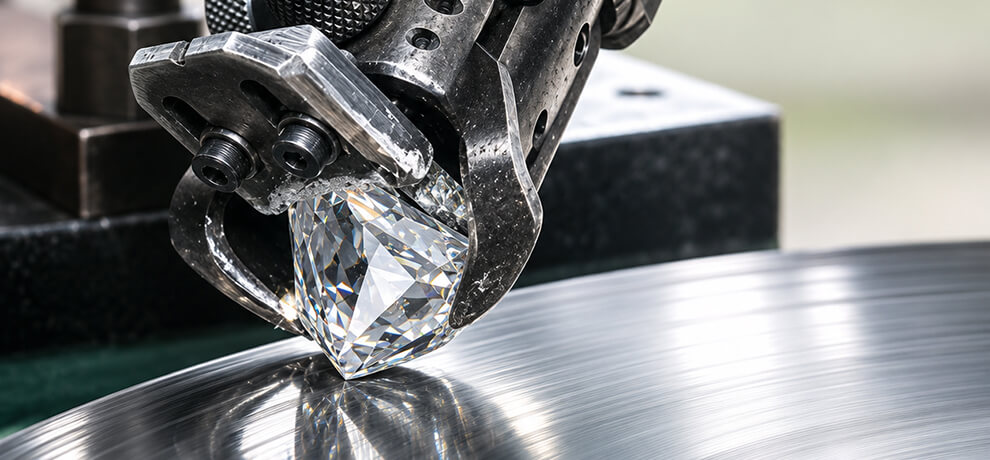
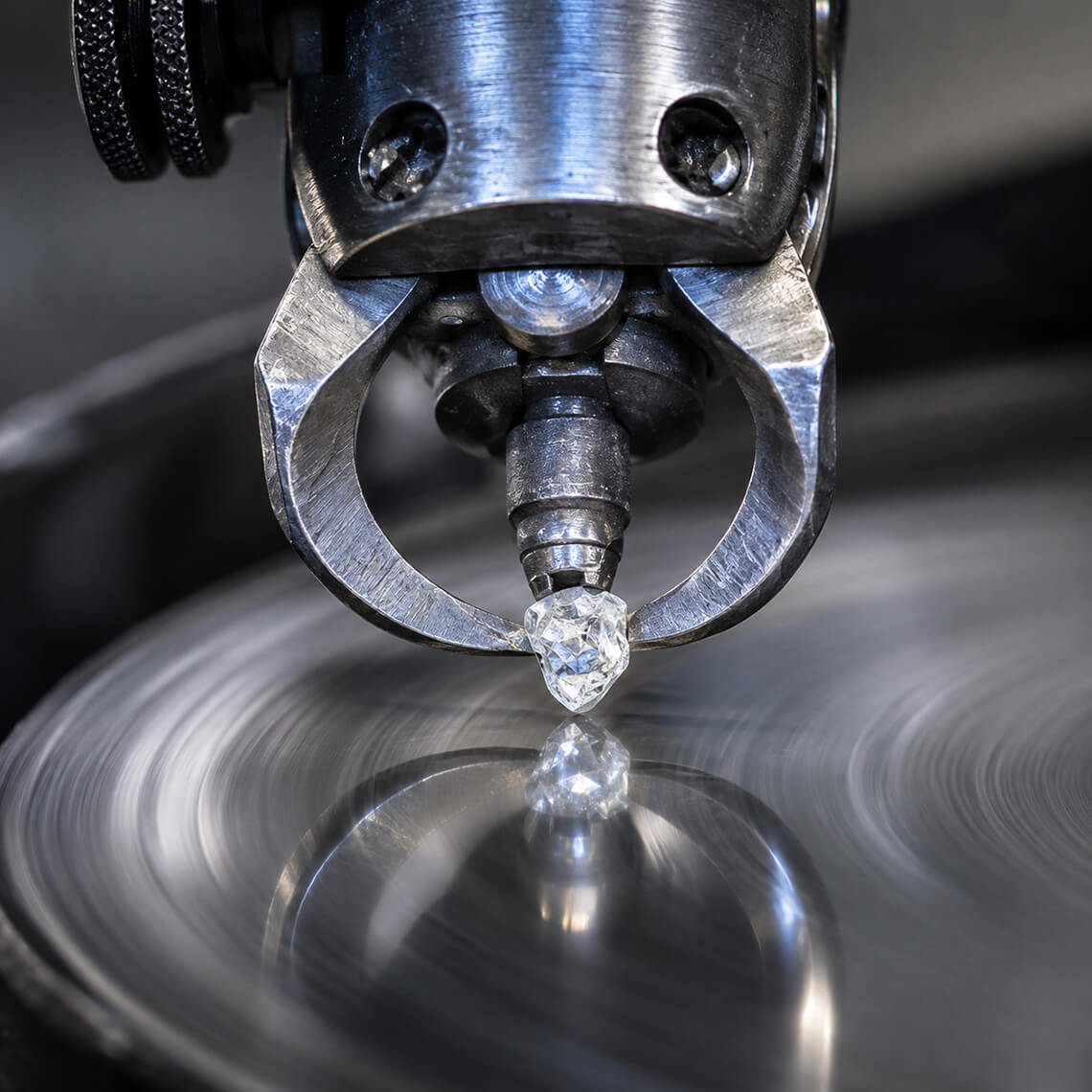
This term refers to the state and quality of the diamond's surfaces and facets. In the process of polishing and cutting a diamond, small imperfections can arise on the diamond's surfaces.
There are many common polishing imperfections, such as-
• Scratches - Fine surface markings on the diamond.
• Pits - A few imperfections within a facet of the diamond.
• Burn marks - Cloudy, whitish sections caused by polishing.
• Polish lines - Minute lines that run parallel, caused by polishing.
There are many variables involved when determining a final polish grade, such as the visibility and severity of these polish imperfections.
What is Diamond Symmetry?
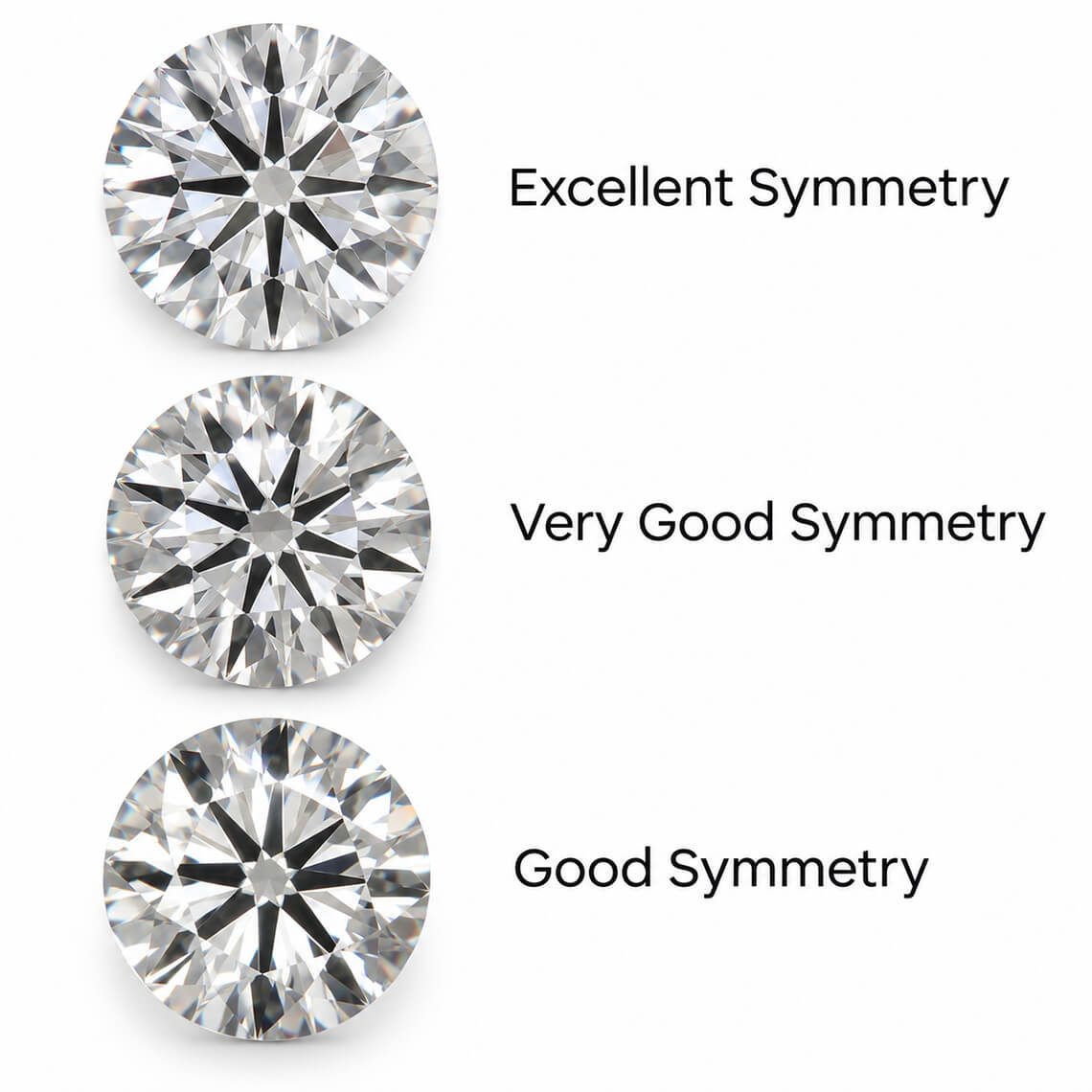
Now let us look at diamond symmetry. It shows how accurately the facets line up with one another. So, here you would examine these flaws-
• Off-center table - The biggest table facet is not centered.
• Off-center culet - The bottom point or facet is not centered properly.
• Misaligned facets - Problem with positioning of the facets.
• Extra facets - These irregularities can affect the diamond's overall balance, outline, and facet alignment.
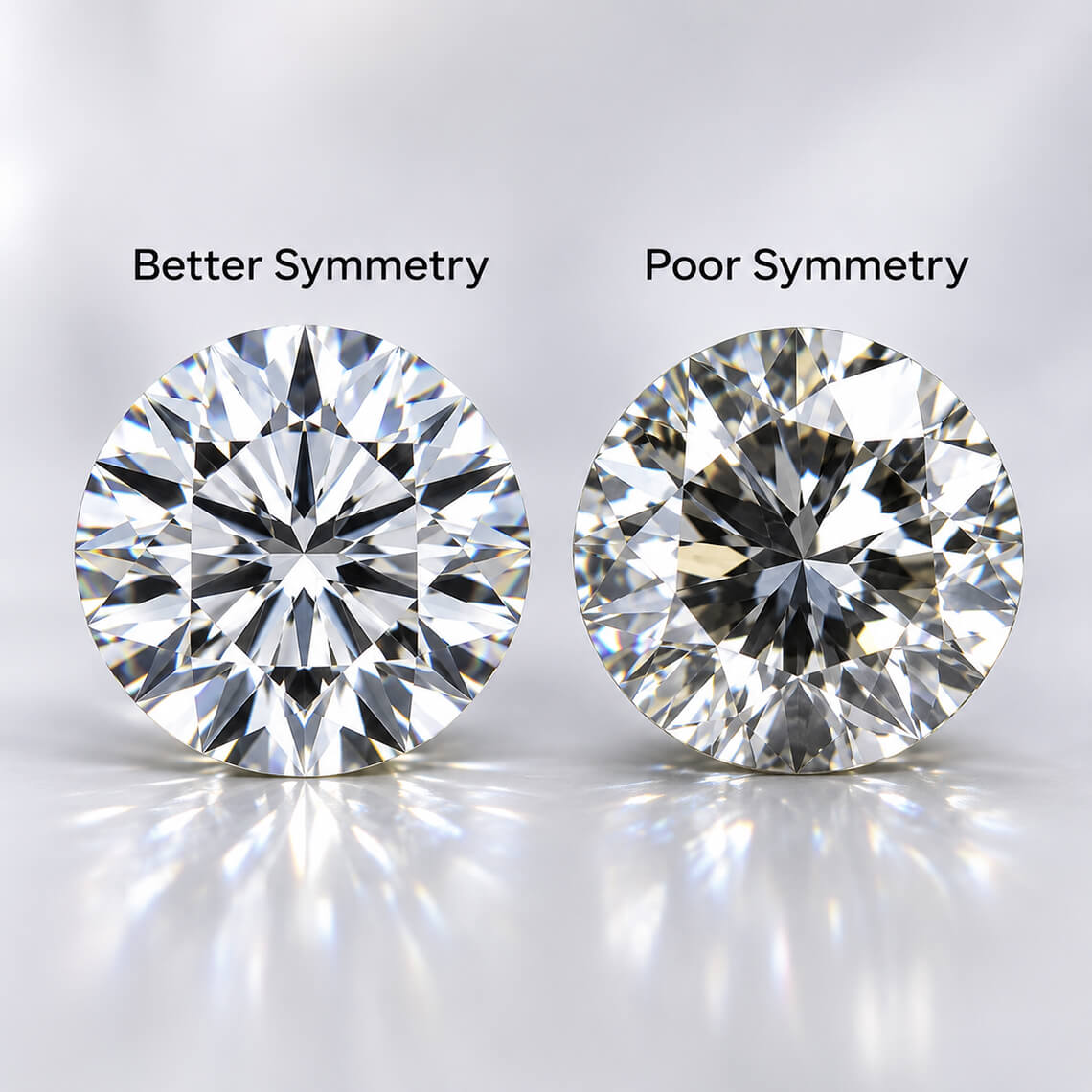
Irregular symmetry can affect the outline and sparkle in the stone.
What are the Differences Between Diamond Polish vs. Symmetry?
Both grades measure artistic skill. However, they measure different aspects of a diamond.
|
Factor |
Diamond Polish |
Diamond Symmetry |
|
What it measures |
Surface finish |
The precision of facet alignment and their shape |
|
Common imperfections |
Scratches, pits, polish lines |
Table and facets are misaligned |
|
Visual impact |
Surface appearance |
Balance and proportions |
|
Effect on sparkle |
May alter the reflection of light |
May influence how light reflects back |
|
Grading method |
10x magnification |
10x magnification |
|
Highest grade |
Excellent |
Excellent |
Diamond Polish and Symmetry Grades Explained
The Gemological Institute of America (GIA) has a specific measure in place. It grades symmetry and polish using a 5-point scale
|
Grade |
What It Means |
|
Excellent or EX |
No significant polish or symmetry features are visible under 10x magnification. |
|
Very Good or VG |
Minor features or deviations are difficult to locate under 10x magnification. |
|
Good or G |
Features or deviations are more noticeable under 10x magnification. |
|
Fair or F |
Features or deviations are readily visible under 10x magnification. |
|
Poor or P |
Significant features or deviations may be visible without magnification. |
What Does an Excellent Polish Diamond Mean?
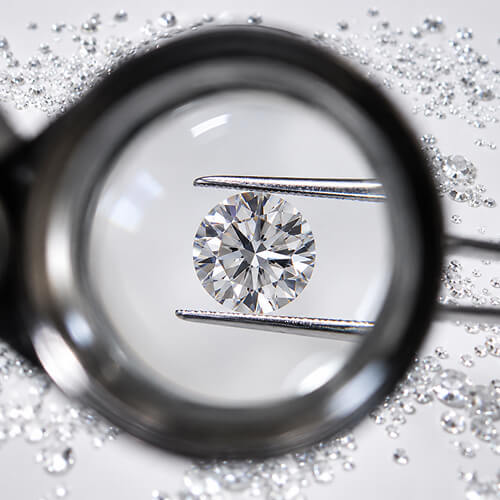
An Excellent polish grade indicates that a diamond has an exceptionally smooth surface, with no significant polish features visible under 10x magnification during grading. This means a high grade of surface finish.
What is a Triple Excellent Diamond?
Many stones are also graded a Triple Excellent or 3EX. They get an ‘Excellent’ grade in 3 areas: cut, polish, and symmetry. But these grades don’t mean the diamond provides stellar light compared to other Excellent-cut diamonds.
How do Polish and Symmetry Impact Cut Grade?
The overall cut grade of a standard round brilliant diamond is based on seven factors by GIA. These are brightness, fire, scintillation, weight ratio, durability, polish, and symmetry.
Interestingly, the Very Good polish or symmetry finish of a round diamond can still earn an Excellent cut grade.
GIA does not assign an overall cut grade to fancy-shaped diamonds, such as oval, pear, and emerald cuts, under its standard cut grading system. IGI offers cut grading for fancy shapes using a methodology that considers polish, symmetry, proportions, shape-specific craftsmanship, and light return.
How do Polish and Symmetry Affect Sparkle?
Smooth facet surfaces as well as their alignment dictate how the diamond interacts with light. But proportions and facet angles are significant, too.
Is it possible to distinguish ‘Excellent’ from ‘Very Good’ polish or symmetry with your naked eye? Experts say that often the difference would be too subtle to notice.
In many cases, the difference between Excellent and Very Good polish or symmetry is difficult to notice without magnification. However, lower grades may indicate more noticeable imperfections or irregularities, so it's worth examining the diamond's actual appearance before making a decision. As a buyer, you can compare actual diamond videos (that show the sparkle and brilliance from different angles). This would prove to be better than relying only on a grading report.
Do Polish and Symmetry Affect Diamond Price?
Excellent diamond polish and symmetry grades could drive up the price of diamonds. However, overall cost will also depend on other factors. These include the shape, color, clarity, and carat weight.
At Friendly Diamonds, you can easily compare lab-grown loose diamonds.
When two diamonds appear equally attractive, it is natural to be confused. You may prefer a ‘Very Good’ polish over ‘Excellent’. You should avoid lowering the cut quality simply to get higher finish grades.
Polish and Symmetry in Lab-Grown Diamonds
Both mined and lab-created stones undergo the process of cutting and polishing. You can check for diamond polish and symmetry under the Additional Grading Information section of an IGI grading report.
On October 1, 2025, GIA introduced a new Laboratory-Grown Diamond Quality Assessment for eligible colorless to near-colorless lab-grown diamonds. Instead of using its traditional grading terminology for these stones, GIA now classifies them as Premium or Standard based on a combination of quality factors, including color, clarity, polish, symmetry, and cut for round brilliant diamonds.
However, IGI continues to provide individual polish and symmetry grades on its lab-grown diamond reports. You can find these details in the grading information section of the report.
What Polish and Symmetry Grades to Choose?
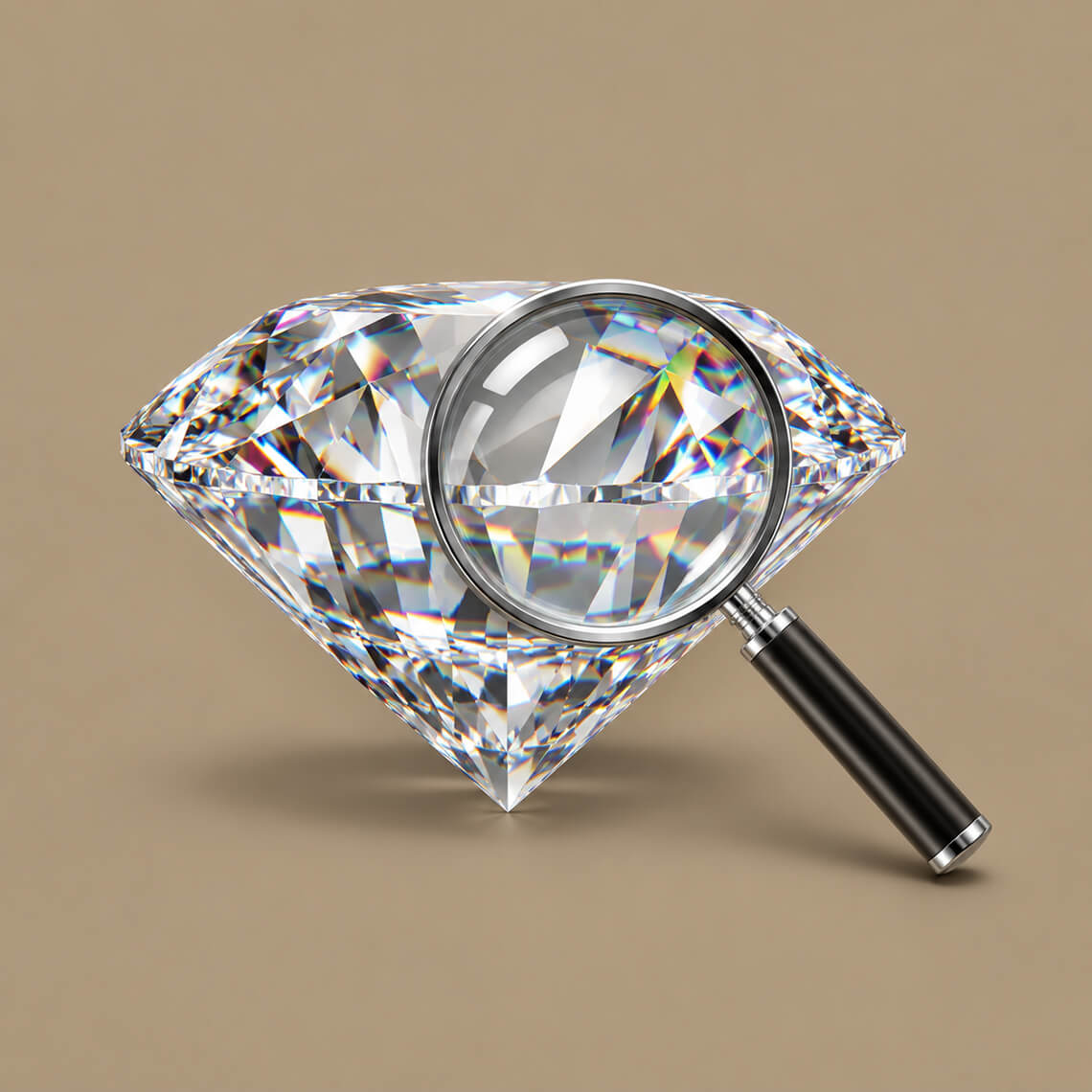
A combination of shape, budget, and preference will decide your final selection of the grade.
|
Diamond shape |
Budget |
Premium Preference |
|
Round brilliant |
Very Good or higher |
Excellent |
|
Oval, pear, marquise |
Very Good or higher |
Excellent |
|
Cushion, radiant, princess |
Very Good or higher |
Excellent |
|
Emerald, Asscher |
Very Good or better (but with careful visual check) |
Excellent |
These are general recommendations, not strict grading requirements. For elongated shapes, pay attention to the diamond's outline and facet alignment. For step-cut diamonds, such as emerald and Asscher cuts, look for evenly aligned facets and a balanced geometric pattern.
Conclusion
Diamond polish and symmetry can help you know more about the diamond’s quality. But do not make it the sole basis for your next purchase. You should also look at the overall cut quality, proportions, grading report, and visible appearance. With Very Good finish grades, a well-chosen diamond can appear beautiful and offer good value.
FAQs
Is Excellent polish worth paying for more?
Is diamond symmetry more important than polish in a diamond?
Do lab-grown diamonds have better polish and symmetry?
Is it possible to re-polish a diamond?