Flat 50% OFF sitewide!
NOW & ON BLACK FRIDAY!
UNLOCK FREE LAB DIAMOND JEWELRY ON PURCHASES OVER $1000 




How Should a Tennis Bracelet Fit? Sizing and Comfort Guide
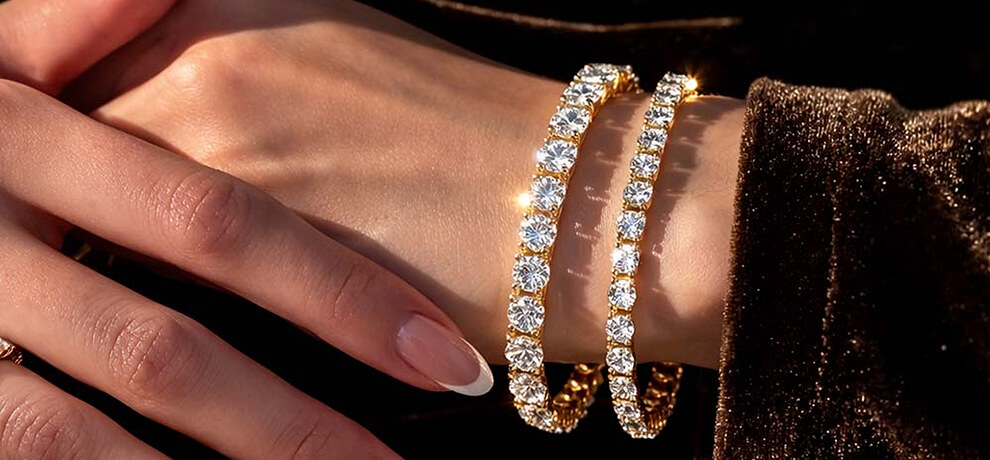
The tennis bracelet is supposed to be comfortable when worn and secure enough that it won’t slip off while wearing it. This will ensure that the bracelet is properly secured and that it looks better when worn, since the diamonds will lie perfectly on the skin surface. However, choosing the correct length will depend on different factors, and this tennis bracelet fit guide is here to help.
This blog explains how a tennis bracelet should fit, how to take wrist measurements at home, and what bracelet length should be chosen for a snug or loose fit. It also gives information about bracelet safety, sizes, and resizability.
Table of Content
- How Should a Tennis Bracelet Fit?
- How to Measure Your Wrist for a Tennis Bracelet
- Tennis Bracelet Size Chart
- What Affects How a Tennis Bracelet Fits?
- What Are The Signs Your Tennis Bracelet Doesn't Fit?
- What Makes a Tennis Bracelet Clasp Secure?
- What Should You Consider When Choosing a Men's Tennis Bracelet?
- What If Your Tennis Bracelet Doesn't Fit?
- Conclusion
How Should a Tennis Bracelet Fit?
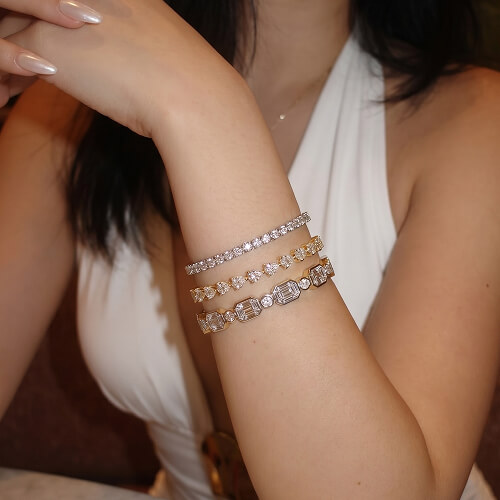
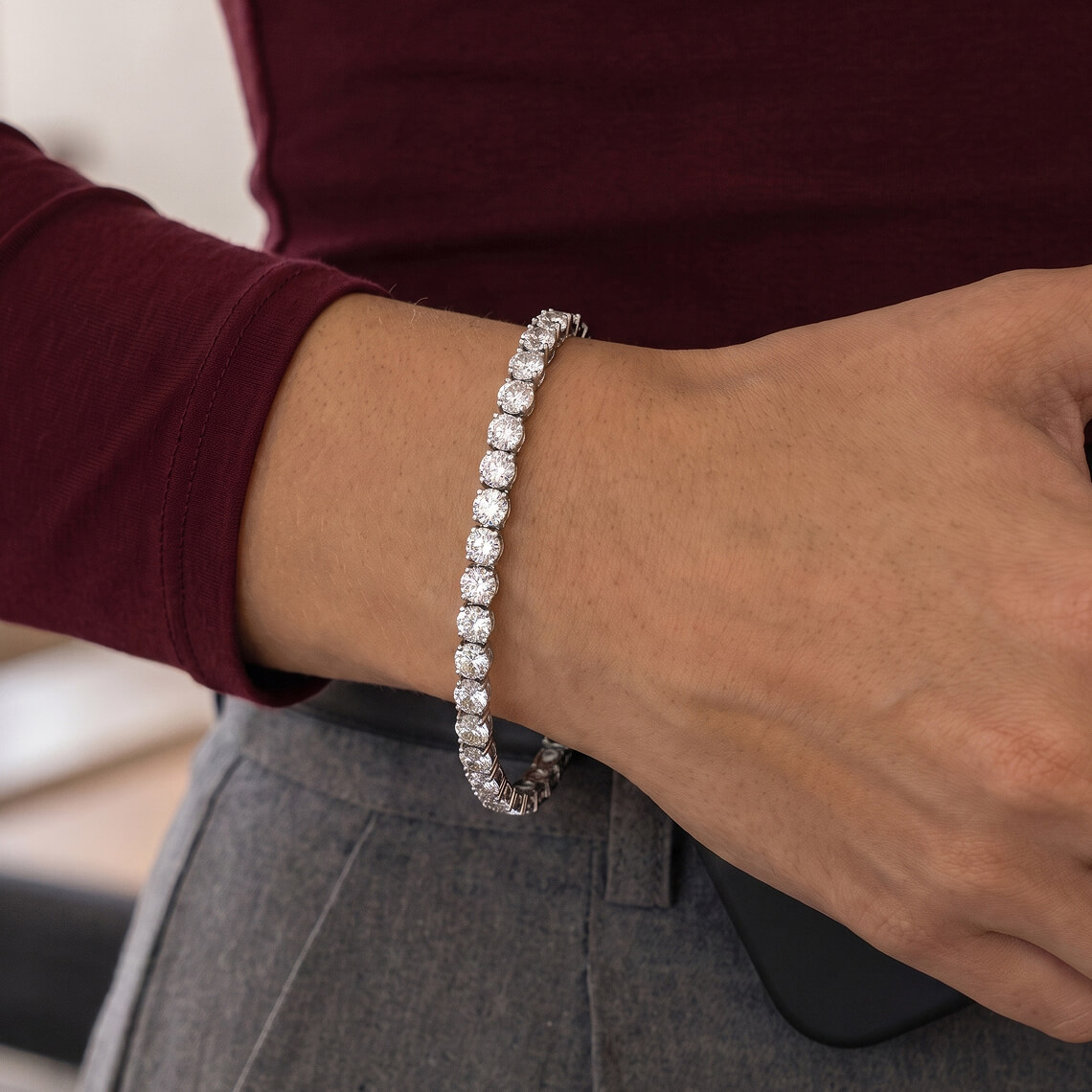
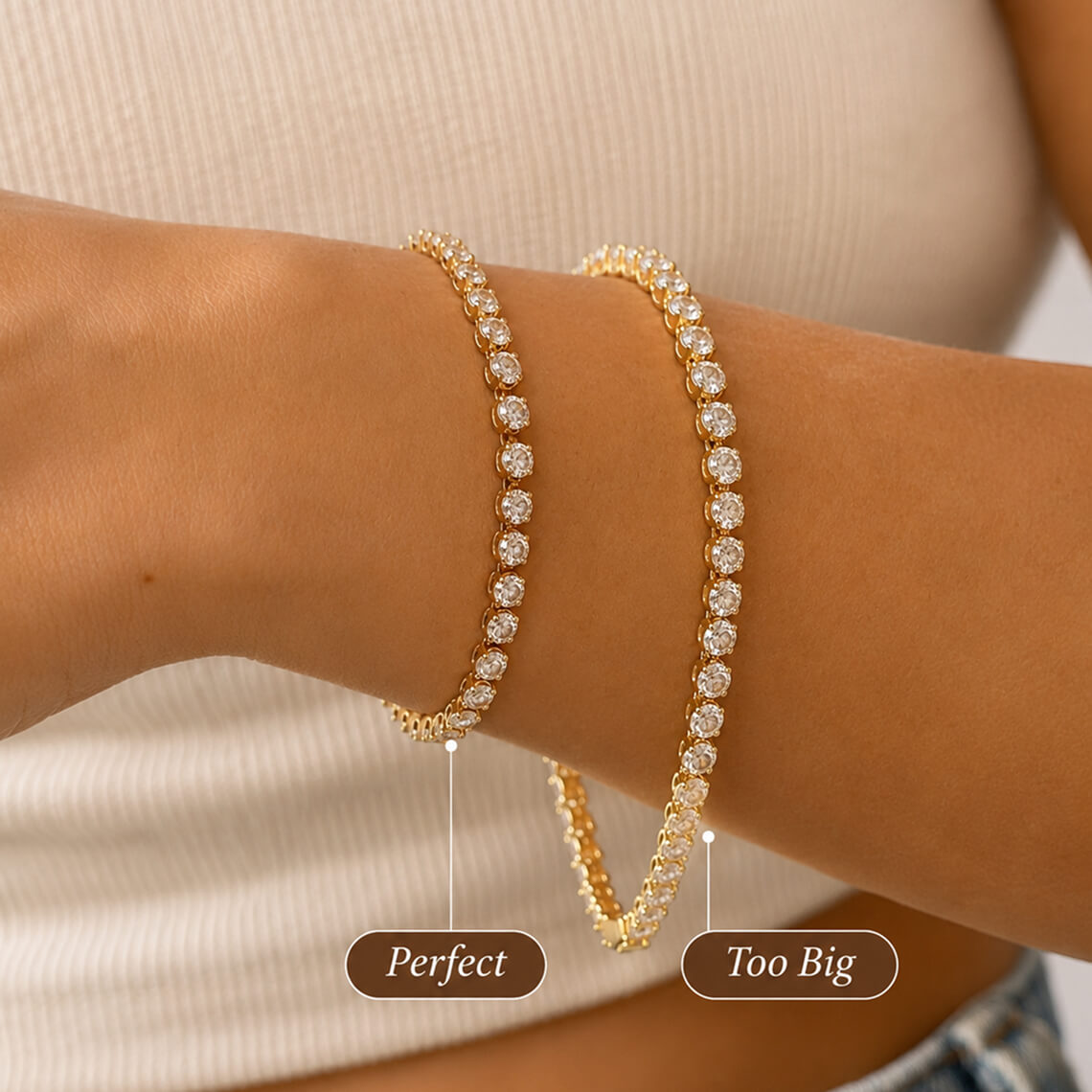
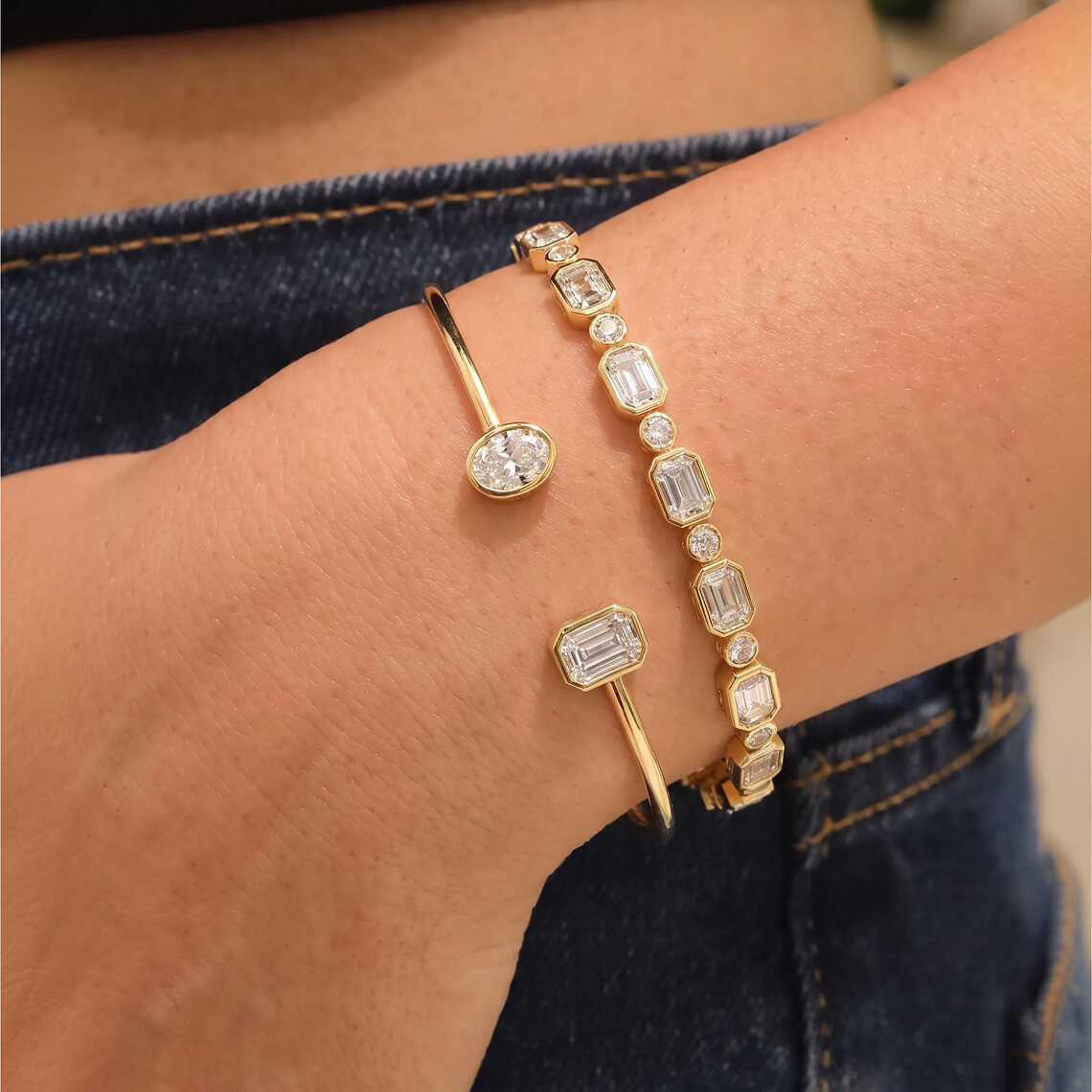
An appropriate tennis bracelet will sit just below the wrist bone, and there will be a little space between the bracelet and the skin of the wearer. It will move freely as the hand turns, but it won't fall to the palm of the hand.
The bracelet should not create any marks or pinch the wearer's wrist, or feel like it can come off the wrist during wear. It should also be comfortable to be worn all day long without constant repositioning.
The One Finger Rule
The one finger rule is a practical technique used to measure the tennis bracelet fit. Once the bracelet is securely fastened, it should be checked whether a single finger can go under the bracelet and the wrist.
-
One finger can fit comfortably: There is enough space for free movement.
-
No finger can fit under the bracelet: The bracelet may be too tight.
-
Two fingers can fit easily: The bracelet may be too loose and needs a better fit.
It is a more practical guideline, rather than an exact measurement, because people have different finger thicknesses and wrist shapes, which need to be considered when measuring.
Should a Tennis Bracelet Be Tight or Loose?
A tennis bracelet should be neither too tight nor very loose. While the bracelet should have sufficient flexibility for slight movement during hand use, it should not continuously rotate around your wrist or hang on it.
A tighter fit will ensure proximity to your wrist, while a looser bracelet will allow more movement. In any case, you can find a comfortable fit with roughly one finger's width as a starting point.
How to Measure Your Wrist for a Tennis Bracelet
An accurate measurement of your wrist will make it easier to choose the right bracelet size. You can measure your wrist using a flexible measuring tape, a string, paper, or an existing bracelet.
Using a Measuring Tape
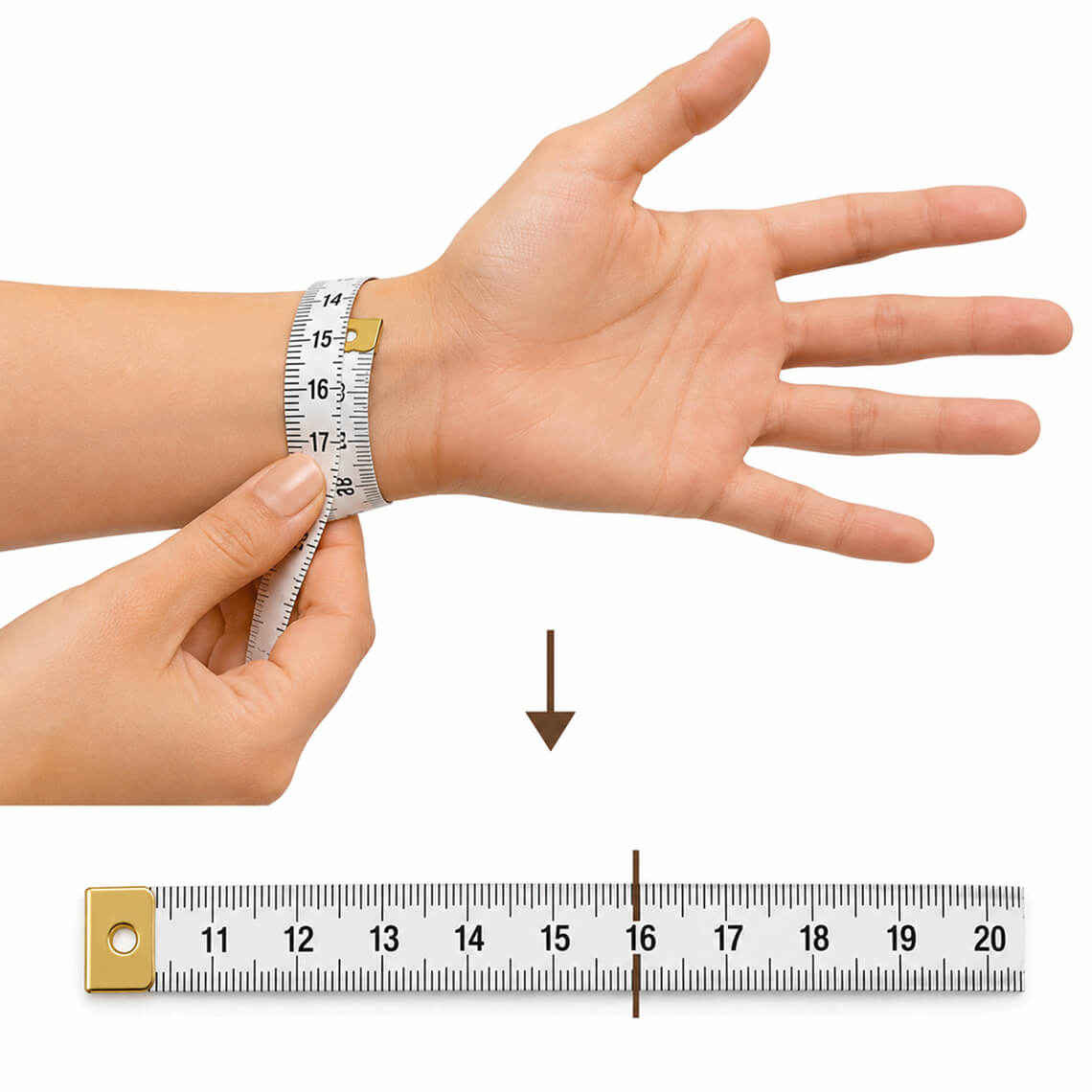
A measuring tape is the best method for taking a direct measurement.
-
Take the measuring tape and wrap it around your wrist below the wrist bone.
-
Do not tighten the tape; it should touch your skin.
-
Record the measurement in either inches or centimeters.
-
Your wrist measurement in inches or centimeters is the circumference of your wrist, as used in the size chart below
Do not allow any extra room during the measurement process. This extra room should be accounted for during the selection of the bracelet length.
With The Help of a String or Piece of Paper
You don't need measuring tape; you can simply use a piece of string or a strip of paper for this purpose.
-
Wrap it around your wrist in the same place as a bracelet should be.
-
Mark the spot where both ends meet.
-
Take off the string or piece of paper and compare its length against a ruler.
-
Don't pull the string or paper too hard, because you shouldn't stretch it, but don't leave it too loose, as even the smallest discrepancy will influence the results of your calculation.
With Your Existing Bracelet
In case you already own a bracelet that fits perfectly, you can use it as an example. Simply lay it on a ruler and mark its overall length, including clasps. That is useful information for measuring bracelet size. But keep in mind that it doesn't apply to all bracelets. Flexible chain bracelets and diamond tennis bracelets might sit differently on your wrist. Watch the instructional video from Friendly Diamonds for simple steps on how to measure your wrist for a tennis bracelet.
Tennis Bracelet Size Chart
After knowing the circumference of your wrist, add some length to get the bracelet size. How much length you add depends on how tight you want your bracelet to be.
The tennis bracelet fit guide below gives you approximate measurements. Your bracelet size may vary due to other factors as well.
|
Wrist Size |
Snug Fit |
Comfortable Fit |
Loose Fit |
|
5.5 in (14 cm) |
6 in |
6.25 in |
6.5 in |
|
6 in (15.2 cm) |
6.5 in |
6.75 in |
7 in |
|
6.5 in (16.5 cm) |
7 in |
7.25 in |
7.5 in |
|
7 in (17.8 cm) |
7.5 in |
7.75 in |
8 in |
|
7.5 in (19.1 cm) |
8 in |
8.25 in |
8.5 in |
|
8 in (20.3 cm) |
8.5 in |
8.75 in |
9 in |
These are recommended bracelet lengths but not standard sizes. The chart assumes that there is an extra 0.5 inches for a snug fit, 0.75 inches for a comfortable fit, and 1 inch for a loose fit. Please refer to the jeweler’s size availability before purchasing.
What Affects How a Tennis Bracelet Fits?
Two individuals who have an identical wrist circumference could have different preferences about the length of a bracelet. Design and wrist shape also change how a tennis bracelet should fit.
Carat Weight & Bracelet Width
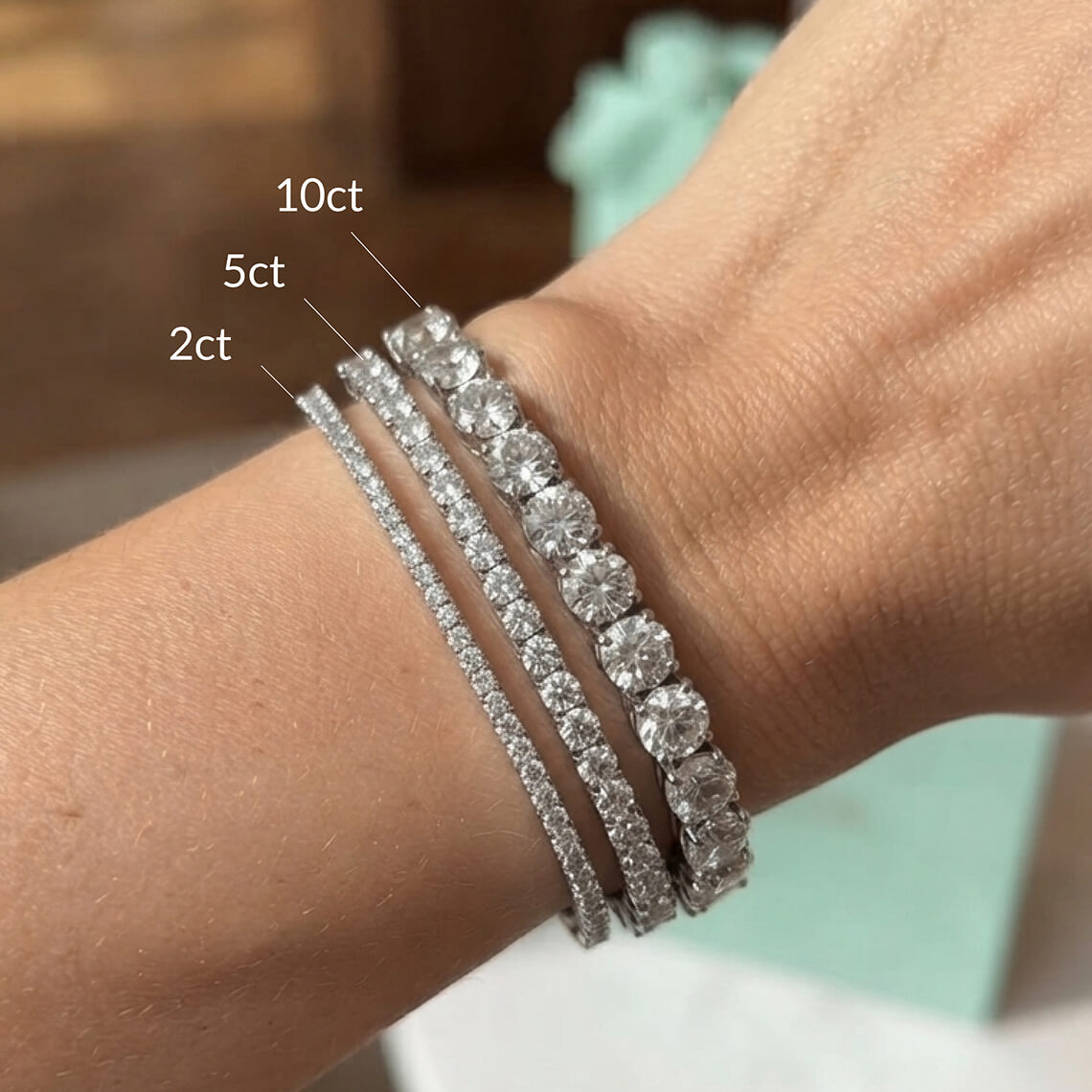
Carat weight and bracelet width would affect the overall weight and feel of the bracelet. A thinner bracelet that contains smaller diamonds may appear more flexible compared to a thicker bracelet.
A 5-carat tennis bracelet that measures 2.9 mm in width will be a great example of a bracelet whose appearance varies depending on its design, even though it has the same length. The wider bracelet could need more space than the other one. It is always best to try the bracelet on if you can.
Wrist Shape
The shape of the wrist can impact the movement of a bracelet. Some people have round wrists, whereas some have flat ones or have wrist bones that stick out. A bracelet will move around more freely on a smaller and rounder wrist than on a larger one. Make sure you focus on the resting point of the bracelet instead of the measurement alone.
Wrist Swelling Throughout the Day
The size of your wrist can fluctuate during the day due to various factors such as temperature, physical activity, and fluid retention. A bracelet that fits perfectly in the morning can become tighter later on. Measure later in the day, and choose a length that still feels comfortable when your wrist is at its largest.
What Are The Signs Your Tennis Bracelet Doesn't Fit?
Here are some indications that can help identify problems with a fit.
Too Tight
Here are the indicators to look out for:
-
It is pressed into your skin.
-
It does not allow you to slide a finger underneath.
-
It creates visible imprints on your skin after you take it off.
-
It inhibits your ability to move your hand freely because your wrist feels constricted by it
If your bracelet shows these signs, it has to be resized, since wearing it very tight for an extended period of time may lead to discomfort and unnecessary stress upon the links and clasp of a bracelet.
Too Loose
If the bracelet:
-
Keeps moving toward your palm
-
Rotates around your wrist
-
Gets easily caught on your clothes or something else
-
Hangs low and there is a risk that it may slip from your hand
If your bracelet shows these signs, then it is possible that the bracelet is too big. There is a looming risk of losing the bracelet, as a loose bracelet may slip off the wrist unnoticed. In such cases, it is better to get the bracelet resized before wearing.
What Makes a Tennis Bracelet Clasp Secure?
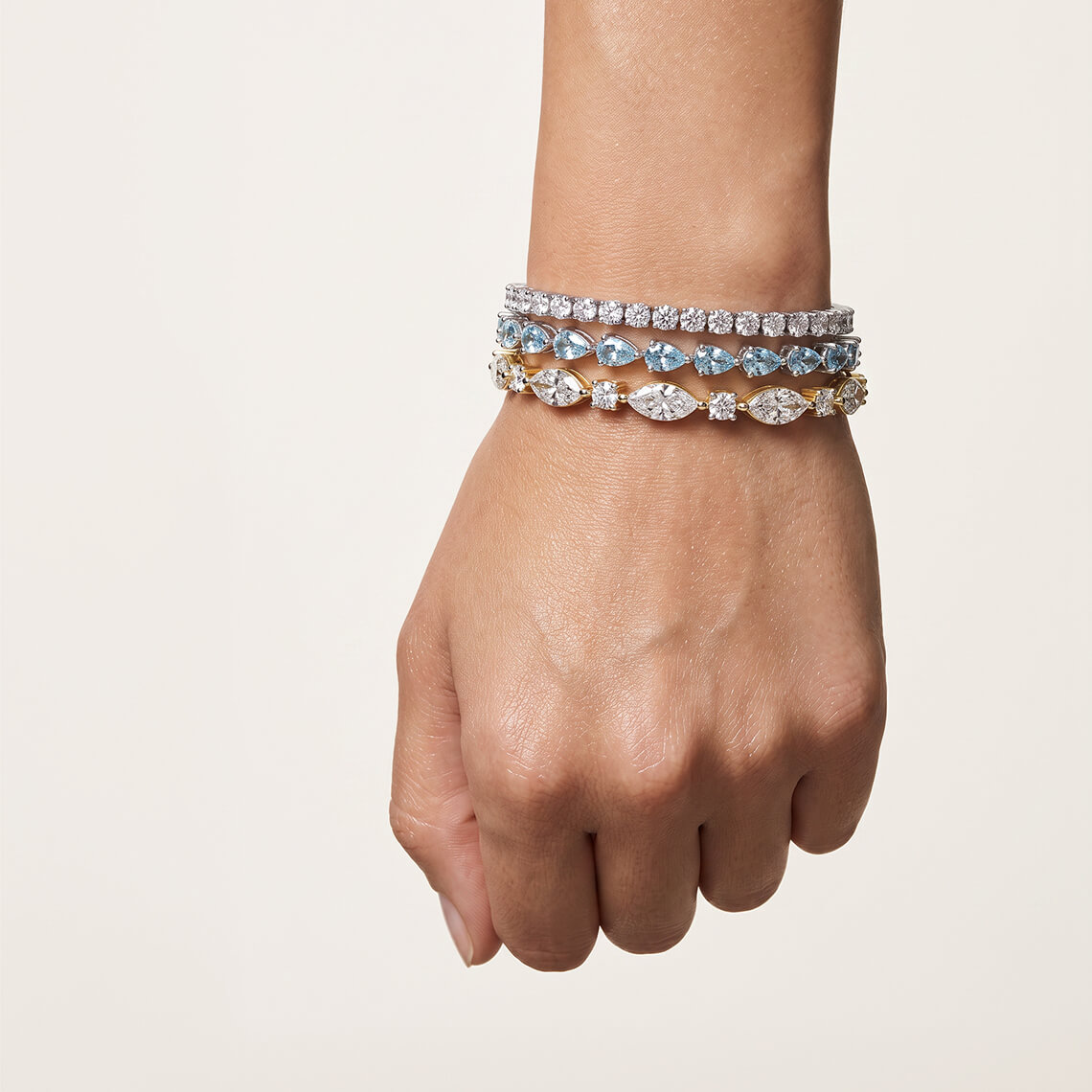
The clasp is an integral element of security for a tennis bracelet. Even a perfectly fitting bracelet will be lost if it does not close securely. Examples of clasps include box clasps, fold-over clasps, spring ring clasps, and lobster clasps. Some clasps have extra safety latches that offer another layer of closure security.
When closing your bracelet, make sure that:
-
The clasp is securely fastened and engaged.
-
Any extra safety latches are secure.
-
The closure does not come undone with light movement of the bracelet.
-
Links near the closure are not bent or damaged
Friendly Diamonds also offers information about various types of closures for bracelets, such as spring ring, fold-over, and lobster clasps. The choice depends on the bracelet construction and weight.
What Should You Consider When Choosing a Men's Tennis Bracelet?
Sizing of tennis bracelets is not limited to any gender category. The correct length will depend on the circumference of the wrist and the movement required. Men's tennis bracelets come in longer lengths like 7.5 inches, 8 inches, and 8.5 inches, which can be considered the basic starting points for selecting your size. These are not fixed sizes for men but will depend on the circumference of the wrist and movement.
For instance, if you have a 7.5-inch wrist, you might want an 8-inch bracelet for a comfortable fit, and for an 8-inch wrist, you may require an 8.5-inch bracelet. It does not matter what type of bracelet you purchase; the one-finger rule always applies.
What If Your Tennis Bracelet Doesn't Fit?
If you find it difficult to wear or your tennis bracelet is moving too much, a jeweler might help you fix its length.
Adding or Taking Links Out
Tennis bracelets can be made smaller by taking out links or parts of the bracelet. A jeweler can also add additional links to make a bracelet larger, depending on the specific bracelet and available material. The jewelry has to stay flexible, look good, and be structurally sound.
Can All Tennis Bracelets Be Resized?
Not all tennis bracelets can be resized. Whether your bracelet will be adjustable or not will depend on the design and construction of the jewelry. Some bracelets can be adjusted easily due to their structure, while other pieces won’t be easily altered because of their design. Before buying your jewelry, ask whether it can be adjusted.
Conclusion
Choosing a perfect tennis bracelet means finding the design that speaks to you, a clasp that keeps it secure, and a size that isn’t too tight or too loose. The right fit lets you wear your bracelet with ease throughout the day, without constantly adjusting it or worrying about it slipping off. So measure your wrist, decide how you want it to sit on your wrist, and get that tennis bracelet you’ve been eyeing.
FAQs
What is the two-finger rule for bracelets?
What size tennis bracelet for a 6-inch wrist?
What is the standard tennis bracelet length?
What if I'm in between the sizes?
Should the clasp go on top or underneath?
Can a tennis bracelet slip off?
How do I reduce the size of my tennis bracelet?
What size tennis bracelet should I buy as a gift?