Flat 50% OFF sitewide!
NOW & ON BLACK FRIDAY!
UNLOCK FREE LAB DIAMOND JEWELRY ON PURCHASES OVER $1000 




Oval Vs. Pear Engagement Rings: Which Shape Suits You?
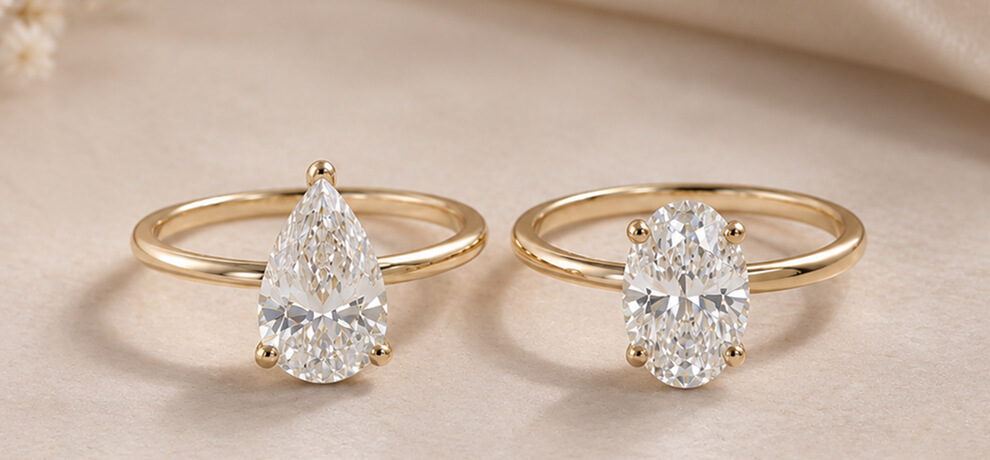
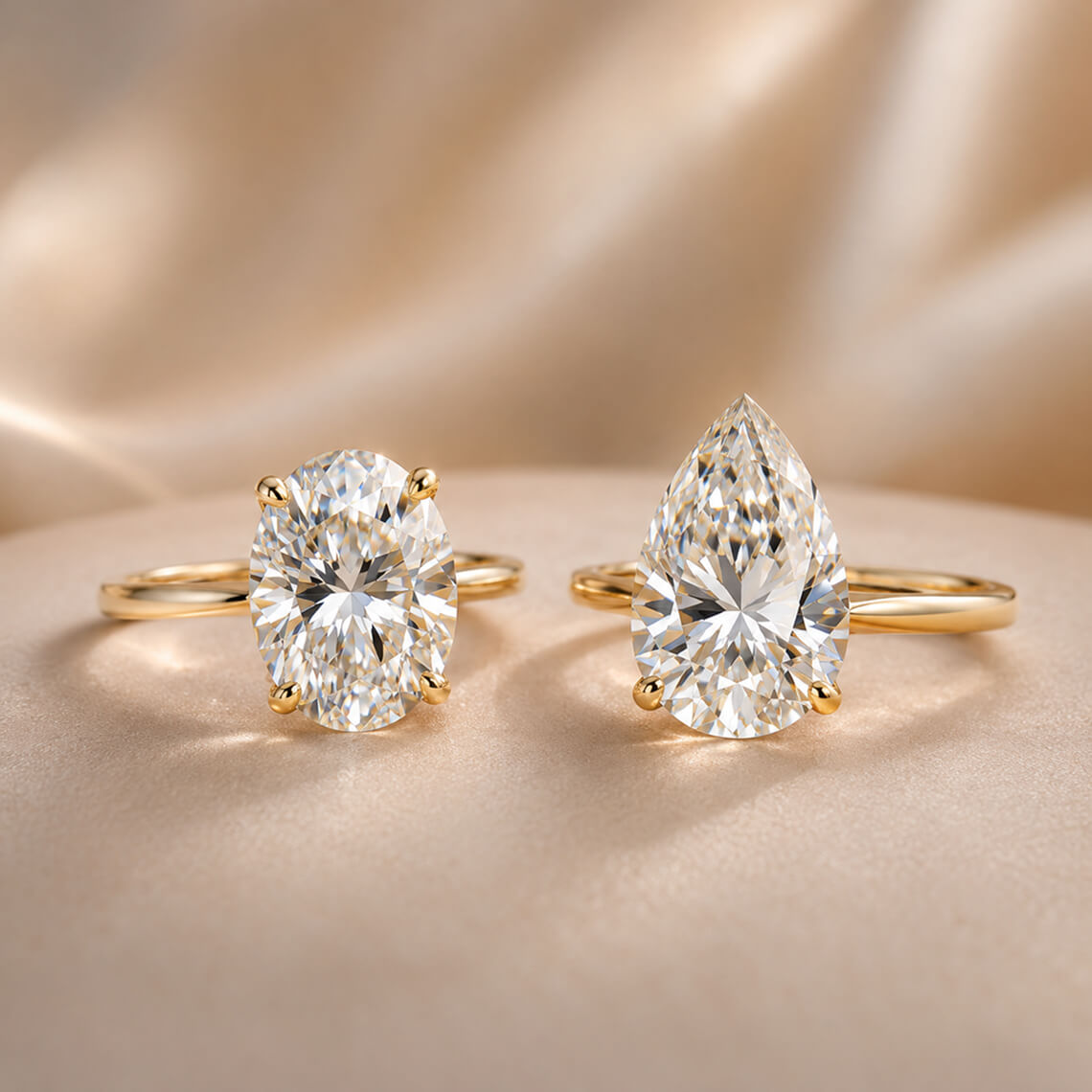
Oval and pear engagement rings are popular with anyone who loves elongated diamonds. They both give an illusion of longer fingers, have an eye-catching appearance, and work with different types of settings. But the shapes of these rings create different looks. So, the shape of an oval is smooth and symmetrical, while the shape of a pear includes both a round part and a point.
While deciding between an oval vs pear engagement ring, pay attention not only to appearance but also to measurements, length-to-width ratio, light performance, durability, and design of the setting. This blog will help you choose the right shape.
Table of Content
- Understanding Oval and Pear Engagement Rings
- Oval vs. Pear Engagement Rings: Side-by-Side Comparison
- Which Is Larger in Look: Oval or Pear?
- How Will the Ratio Affect the Appearance of Diamonds in Regards to Their Size?
- Which Engagement Ring Shape Suits Your Hand Best?
- Which One Is More Durable - Oval or Pear Engagement Rings?
- Which Setting Is Best for Oval and Pear Engagement Rings?
- How Much Do Oval and Pear Engagement Rings Cost?
- Style and Popularity of Oval and Pear Engagement Rings
- Oval or Pear Engagement Ring – Which Shape Suits You Better?
Understanding Oval and Pear Engagement Rings
What Is an Oval Engagement Ring?
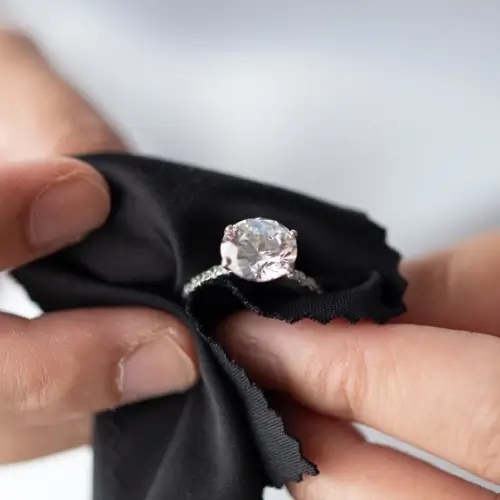
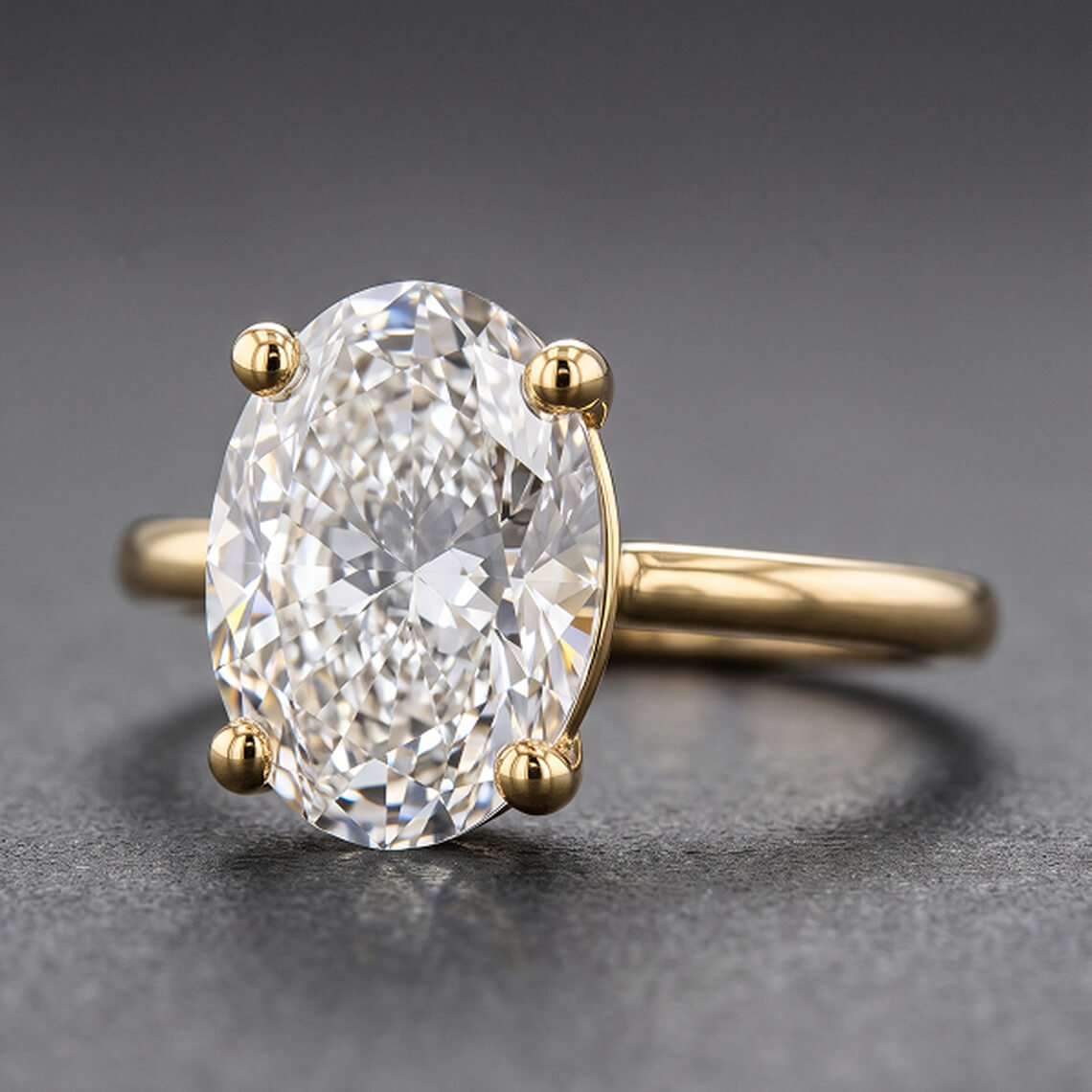
Oval-shaped engagement rings refer to an elongated and rounded diamond with a balanced outline. Thanks to brilliant-cut faceting, it is nearly as bright as a round diamond, but due to the elongated shape, it has another appearance on the finger. Thus, the first feature to consider when comparing a pear vs oval engagement ring is this difference in shape.
Usually, oval diamonds have the proportions of 1.30:1 to 1.50:1, where the first proportion indicates a rounder diamond and the latter denotes the elongation of the stone. One thing to notice is the bow tie effect. It refers to a black shadow that appears in the center of the diamond, and it is not noticeable equally in all of them.
What Is a Pear Engagement Ring?
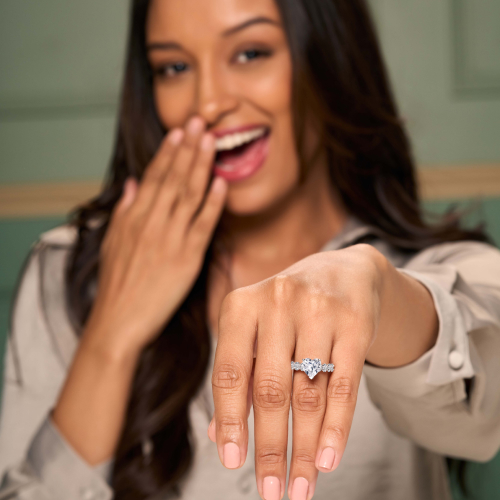
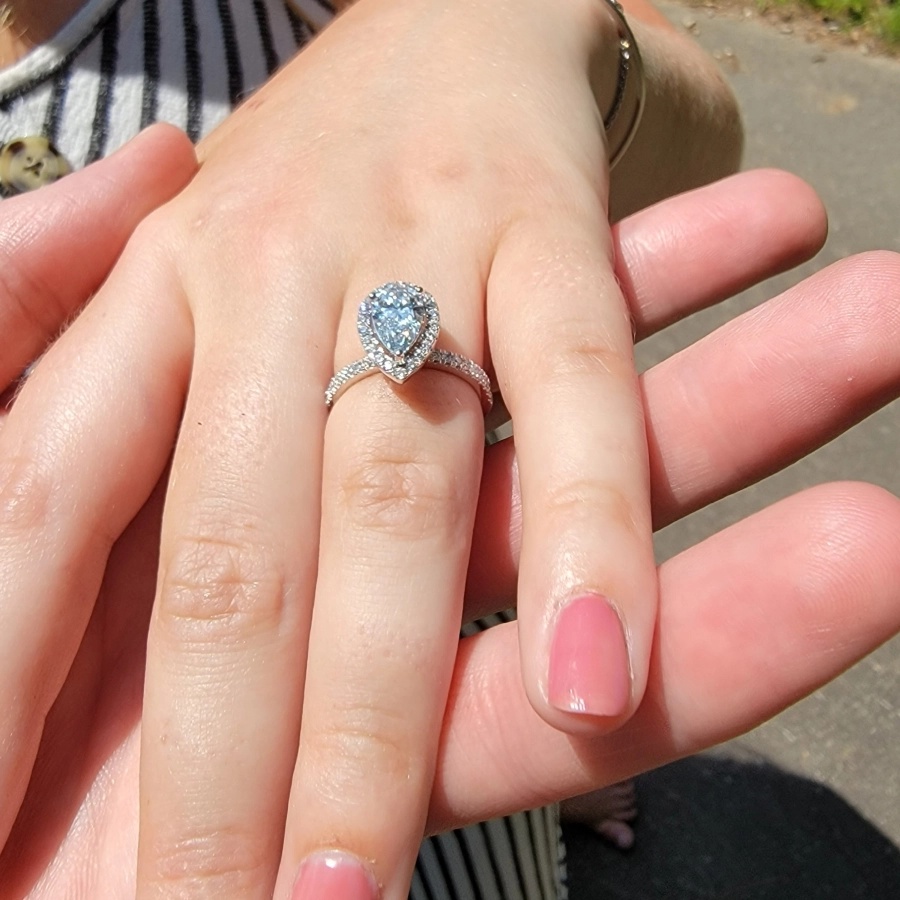
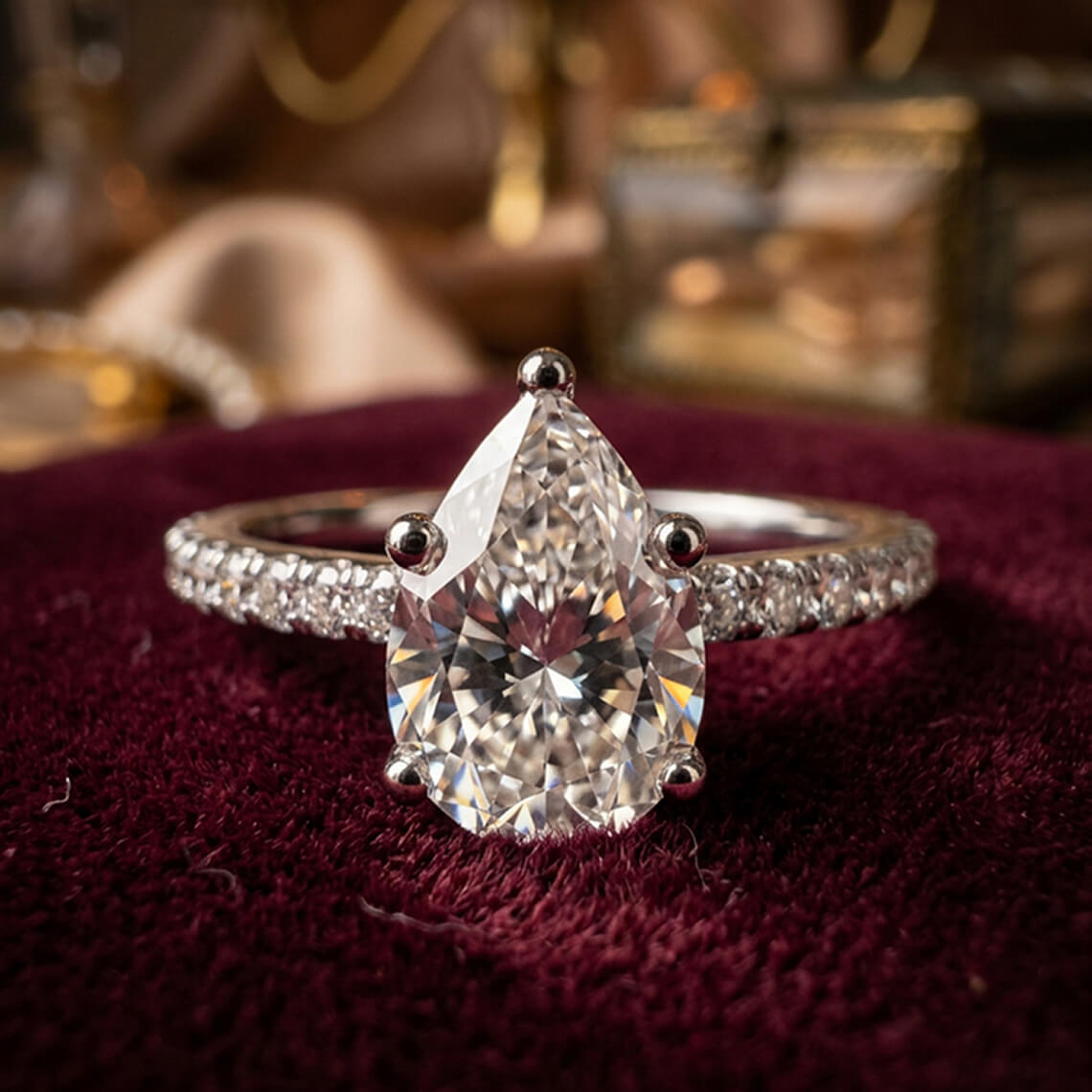
The pear engagement ring has a teardrop diamond with one end being rounded while the other end is pointed. The pear engagement ring shape consists of the round shape of the round diamond and the tapering shape of the marquise. The shape makes it one of the most sought-after shapes by consumers when comparing a pear vs. oval engagement ring.
When set, the pear diamond is normally oriented with the pointed end toward the fingertip, although it may be set in the opposite manner or even at an angle. The ratios of pear diamonds can be highly variable. The ratio of 1.45:1 to 1.75:1 will give a good start when considering classic pear ratios, although personal preference is key. Pear diamonds may also have a bow-tie effect, just like oval diamonds do. Symmetry is very important, with the two curved sides having to match up and the pointed end lining up with the middle of the rounded end.
Oval vs. Pear Engagement Rings: Side-by-Side Comparison
When considering a pear vs oval ring comparison, there are differences when it comes to shape, symmetry, look from above, sparkle, durability, and possible settings of each type. Both rings feature elongated shapes, yet there are differences in terms of design.
|
Feature |
Oval Diamond |
Pear Diamond |
|
Shape |
Symmetrical elongated oval shape |
Pear-shaped with a rounded tip and point |
|
Symmetry |
Balanced in both length and width directions |
Balanced around the central axis |
|
Face-up size |
More elongated appearance |
About 11% longer than an oval of the same carat |
|
Sparkle |
Brilliant cut |
Brilliant cut |
|
Durability |
Does not have any exposed points |
Requires extra care for the point |
|
Best setting |
Solitaire, halo, hidden halo |
Solitaire, halo, bezel, three-stone |
|
Price |
Depends on the individual specifications of the diamond |
Depends on the individual specifications of the diamond |
|
Style |
Classic style |
Expressive style |
There is no guarantee that either of these will give you more brilliance or better value. It is the properties of the particular diamond that should influence your choice.
Which Is Larger in Look: Oval or Pear?
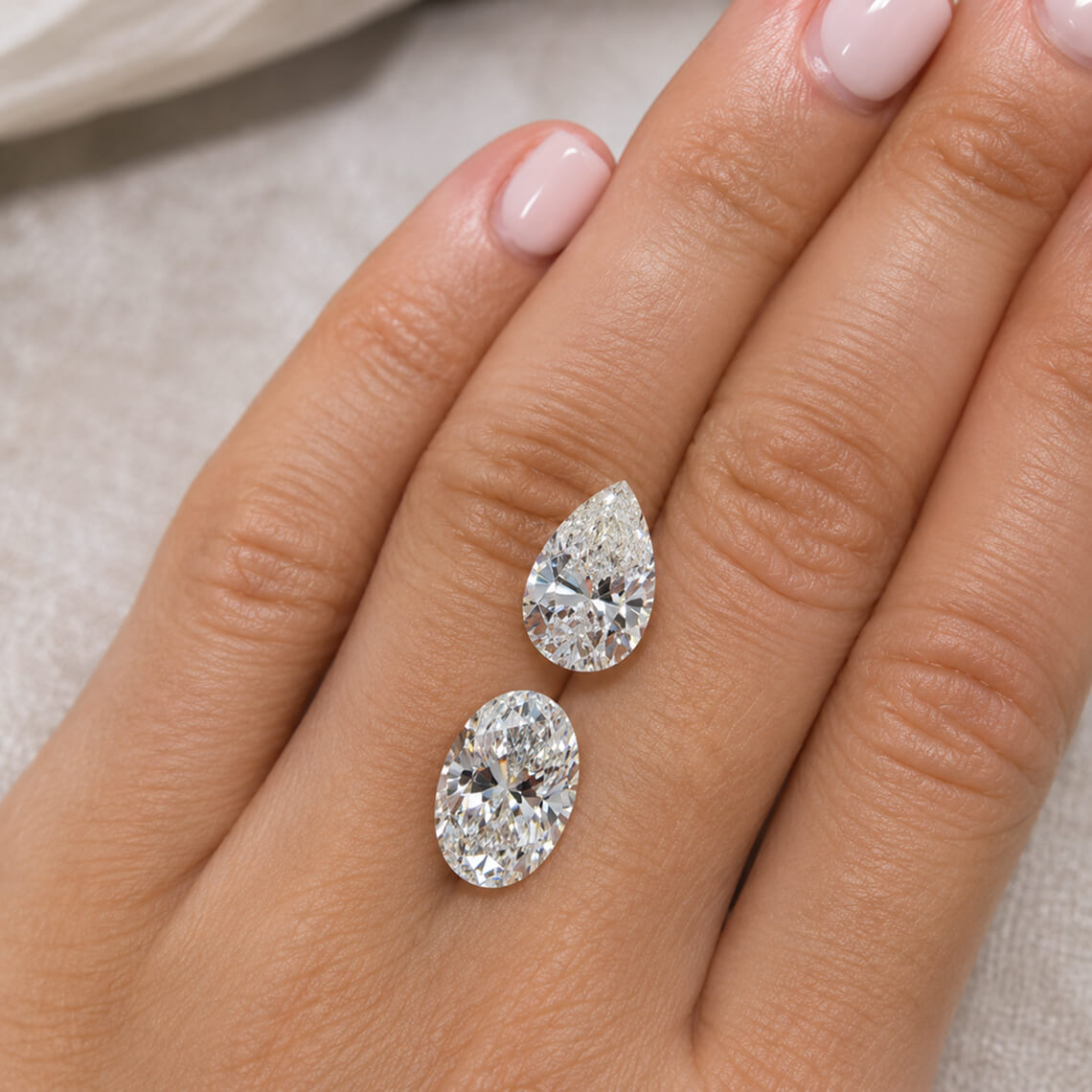
In terms of the face-up size of pear vs. oval engagement rings, both may possess an elongated look. Pear diamonds look longer than oval diamonds of the same carat weight, at almost the same width, though the visual size is defined by their length and width, proportions, and cutting depth.
Diamond Face-Up Size in Carats
Carat is diamond weight but not the measure of its dimensions. Diamonds of the same carat weight may differ in length and width measurements.
In the table below, you will find some average values for the length and width of oval and pear-shaped diamonds. Note that these are not set standards for the industry.
|
Carat Weight |
Oval (L × W) |
Pear (L × W) |
|
1 ct |
8.12 × 5.41 mm |
9.05 × 5.45 mm |
|
1.5 ct |
9.29 × 6.19 mm |
10.36 × 6.24 mm |
|
2 ct |
10.23 × 6.82 mm |
11.40 × 6.87 mm |
|
3 ct |
11.70 × 7.80 mm |
13.05 × 7.86 mm |
In these examples, it becomes clear that the pear-shaped diamond has a much longer silhouette in comparison to the oval, but the width is nearly the same. Of course, this doesn’t guarantee that every pear diamond will always appear larger compared to every oval diamond.
How Will the Ratio Affect the Appearance of Diamonds in Regards to Their Size?
The ratio of the diamond refers to the elongation of a diamond. It represents the quotient that comes when the diamond’s length is divided by its width.
-
Oval: 1.30:1 to 1.50:1 ratio is the range that allows having various elongation levels – from fuller to slim.
-
Pear: 1.45:1 to 1.75:1 ratio allows choosing classic teardrop shape proportions.
It is important to understand that a longer diamond will take up more space on the finger vertically, while the wider one will cover the finger visually better horizontally.
Which Engagement Ring Shape Suits Your Hand Best?
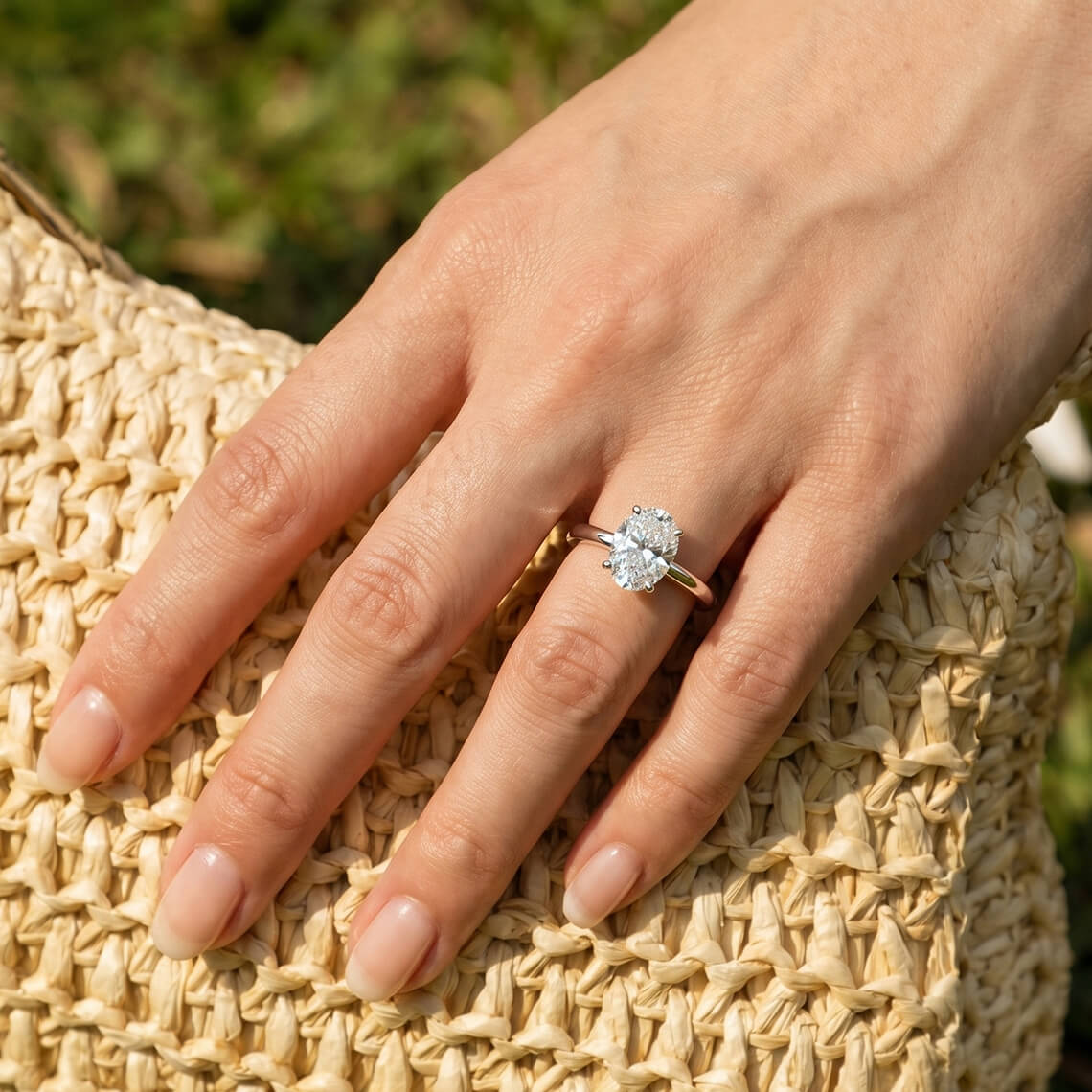
If you are conducting a pear vs oval ring comparison, think about your finger length, width, and diamond preference. Although both shapes are known to elongate the fingers, their contours create a different visual impression. Wear both rings to see which one complements your hands better based on your ring size and diamond preference.
Short or Fat Fingers
While both shapes are good for elongating the fingers, the following points should be considered:
-
An oval creates a round contour without any angles.
-
A pear has a tapering effect, particularly when its point is directed upwards.
-
A ratio may influence the elongation effect, while a wider shape will cover the finger more.
Long or Slim Fingers
Both rings will go well with long fingers.
-
A fatter oval will add width while keeping an elongated contour.
-
A wider pear will create a balanced look without making the ring look too narrow.
-
A longer pear will create a more eye-catching silhouette.
Which One Is More Durable - Oval or Pear Engagement Rings?
Comparing pear vs. oval engagement rings in terms of durability, the main difference between the two is the pointed tip of the pear-shaped diamond, which can easily get chipped or broken by strong impact.
How Can One Protect the Point of the Pear-Shaped Diamond?
It is crucial to provide the tip of the pear diamond with good protection, and there are a few setting options to choose from, such as the following:
-
V prong: A prong shaped like a V protects the pointed tip of the diamond.
-
Bezel: The tip and edges of the stone are surrounded by a metal bezel setting.
The other prongs should also hold the stone firmly.
Which is better for an active lifestyle?
The oval diamond doesn’t have an exposed sharp tip, thus eliminating a weak point present in pear diamonds. Yet, neither diamond can be considered completely safe from harm. If you tend to use your hands a lot while working out, exercising, or engaging in other activities where your ring might sustain hard impacts, it would be wise to take it off.
Which Setting Is Best for Oval and Pear Engagement Rings?
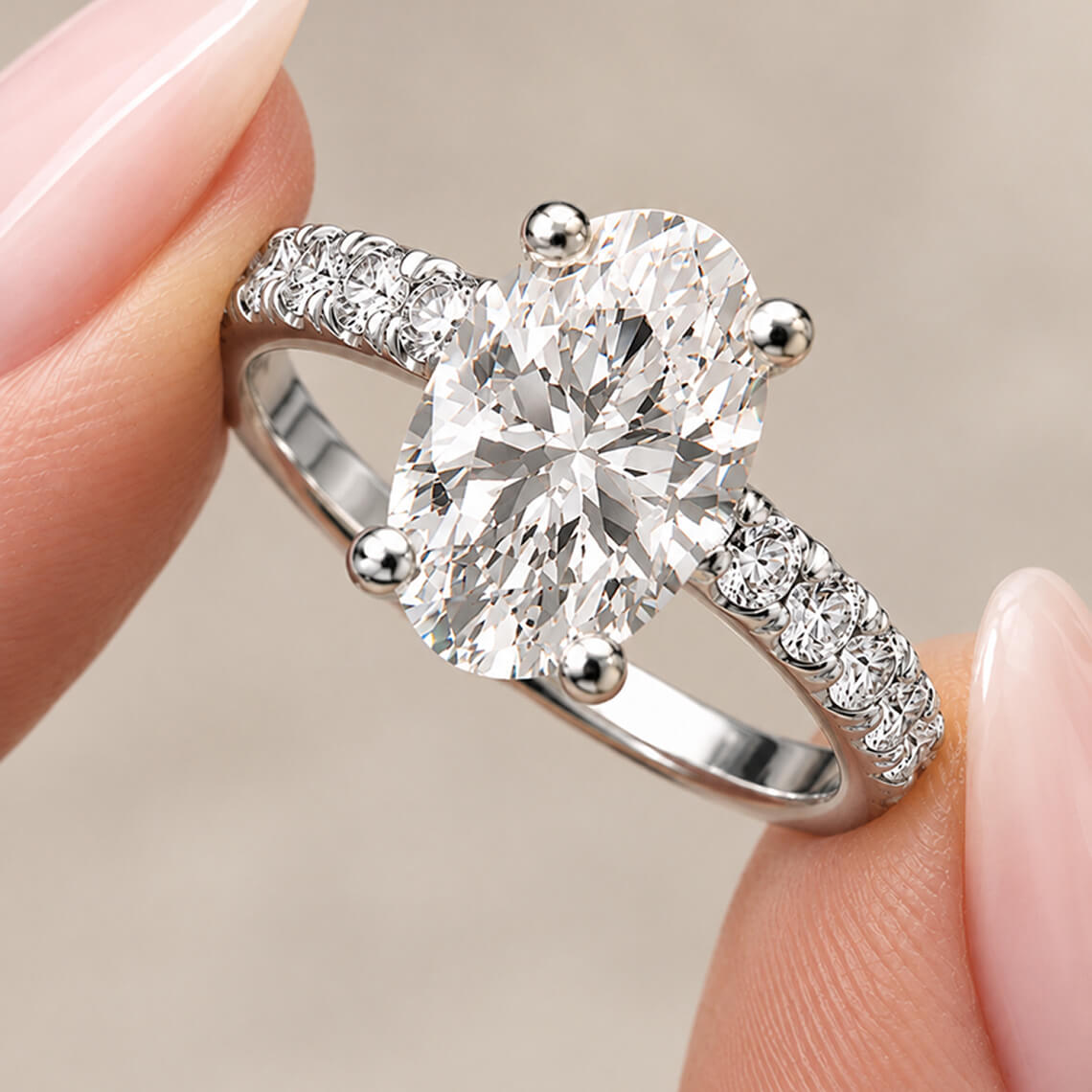
The setting affects the appearance of the center diamond, its visibility, and security. Comparing pear vs oval engagement ring settings should take into account the diamond shape, its orientation preference, and the position of the wedding band next to it.
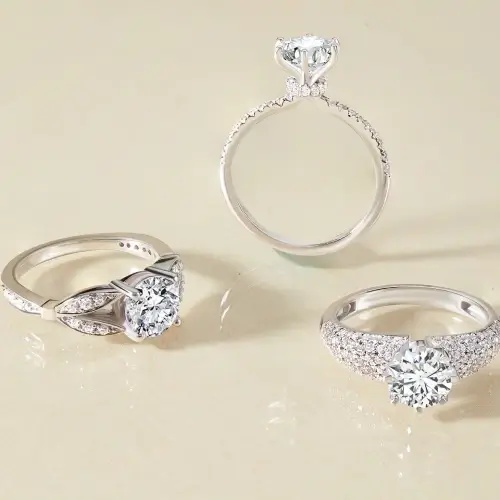
Solitaire, Halo and Hidden Halo
-
Solitaire: A single central diamond gives the ring a clear and neat look. It can be used for both oval and pear shapes.
-
Halo: Small diamonds around the center stone add details and increase the total size of the ring.
-
Hidden halo: Small diamonds beneath the center stone make the ring sparkle from the sides without creating a halo.
In the case of a pear solitaire, the pointed part of the diamond should have a protective setting.
East-West Settings
In the east-west setting, the elongated diamond is placed horizontally on the finger instead of vertically. The Oval in this setting looks harmonious and modern. The horizontally positioned pear gives a unique design due to its pointed end. Both designs are suitable for people who prefer something unusual instead of the traditional north-south setting.
Toi et Moi: The Combination of Oval and Pear
In this ring, there are two center stones sitting side-by-side. The two diamonds are quite contrasting in that while the oval has a round shape, the pear has a pointed one. They can both be oriented at various angles to either complement or face each other.
Matching a Wedding Band
The simple wedding band may look good next to some oval solitaire rings, but depending on the height and basket of the ring, the fit may not be perfect. If you have a pear engagement ring, then it is likely that you will need either a curve or contour wedding band. The simple wedding band may work for certain pear ring designs. Test the wedding band alongside your engagement ring.
How Much Do Oval and Pear Engagement Rings Cost?
The cost of oval and pear engagement rings is based on much more than just the diamond cut. Carat weight, color, clarity, proportions, certification, and even the individual diamond itself can affect the price.
Both shapes are available as lab-grown diamonds. To make a comparison of similar stones, look for a diamond with the same carat weight, color, clarity, and grading laboratory. A 1-carat D color, VS1 clarity, pear-shaped diamond needs to be compared against a 1-carat D color, VS1 clarity oval diamond, rather than one with other specifications.
The full price of the ring includes:
-
The center diamond
-
The metal and weight of the setting
-
Accent diamonds, if any
-
Design complexity and extra setting
Diamond Prices Without The Setting
The prices shown are for specific diamonds and may vary from one stone to another. Each diamond is individually priced based on its characteristics, including carat weight, cut, color, and clarity. As you browse and select different diamonds, the displayed price will update accordingly. This means the final price of your jewelry will depend on the diamond you choose.
|
Diamond Shape |
Price |
|
1-carat Pear (F, VVS2, EX, IGI) |
$517 |
|
1-carat Oval (F, VVS2, EX, IGI) |
$747 |
Style and Popularity of Oval and Pear Engagement Rings
In terms of oval vs. pear engagement ring styles, sometimes it is as important to consider the style preferences of the buyer as the proportions of diamonds. Thus, an oval shape is rather classical and balanced, whereas a pear shape is rather expressive and unusual.
Which Shape Is More Classic and Which One Is More Romantic?
Oval engagement rings are suitable for people who favor a smooth and balanced outline. The rounded outline of such stones fits not only traditional solitaires but modern ring designs as well.
Pear engagement rings have rather expressive outlines. The teardrop outline of pear diamonds is quite unusual for an engagement ring and represents an interesting variation from the classical round and oval outlines.
Current Trends of Oval and Pear Shape Rings?
Oval and pear shapes can be successfully used in modern engagement rings. East-west settings, hidden halos, and toi et moi rings are several options for styling elongated diamonds. Instead of considering only trends, think about which kind of outline you like more.
Oval or Pear Engagement Ring – Which Shape Suits You Better?
The choice between an oval vs pear engagement ring depends on the shape, proportion, and setting that you like. Both shapes are elongated, but with unique designs that attract people of different styles.
Pick an oval engagement ring if:
-
You like a smooth and symmetrical shape.
-
You want a classic yet modern look.
-
You prefer the shape of a long diamond without any point at its end.
-
You have the option to choose from various settings such as solitaire, halo, and hidden halo.
Pick a pear engagement ring if:
-
You like a unique teardrop-shaped ring.
-
You prefer a pointed diamond with a rounded bottom.
-
You wish to try out different orientations of stones.
-
You have an expressive style and like toi-et-moi rings.
-
You can choose a protective setting for the tip of the diamond
Compare the proportions, measurements, and individual look of oval and pear lab-grown diamonds at Friendly Diamonds to pick your engagement ring.
FAQs
Do Oval or Pear Diamonds Look Bigger?
Which Is More Expensive, Oval or Pear?
Do Pear Diamonds Chip More Easily?
Is the Pear Shape Going Out of Style?
Which Shape Suits Short Fingers: Oval or Pear?
Can You Combine an Oval and a Pear in One Ring?