Flat 50% OFF sitewide!
NOW & ON BLACK FRIDAY!
UNLOCK FREE LAB DIAMOND JEWELRY ON PURCHASES OVER $1000 


How To Recognize Fake Diamonds: Real Diamonds Vs. Diamond Simulants

You are looking for diamond jewelry online, and you find a beautiful piece at a really good price. The difference in price on different sites is inevitable, but sometimes, low prices or lack of information might raise doubts in your mind about the authenticity of the diamond. The doubts are valid, as there are businesses that sell fake diamonds as real. This blog will guide you through how to read the flags that the diamond you are buying might not be real.
Table of Content
- The Diamond Market Has a Disclosure Problem
- Why Does Diamond Certification Matter?
- Real Diamonds Vs. Diamond Simulants
- Ways to Check if a Diamond Is Real
- How To Check Before You Buy
The Diamond Market Has a Disclosure Problem
Lab-grown diamonds and mined diamonds are recognized as real diamonds. Moissanite, zircon, and other diamond simulants mimic real diamonds in look but are very different when it comes to composition, sparkle, and durability.
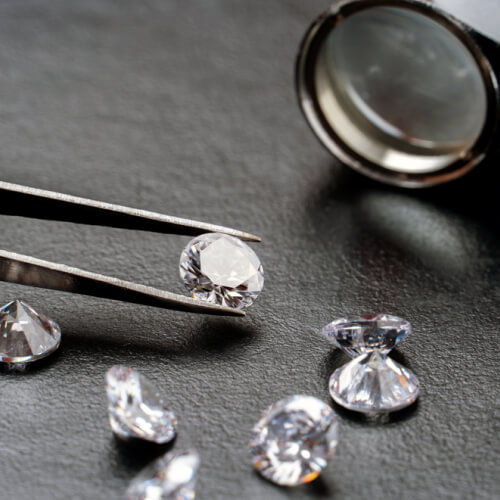
Studio lighting in a ring photo can make cubic zirconia throw much sparkle on a screen. With good angles and smart photography, the diamond simulant might come off as a real one in the images. The trouble occurs when the seller lets you assume 'diamond', particularly in marketplaces and social listings where photos do the talking and documentation is an afterthought.
When it comes to real diamonds vs. diamond simulants, the difference is considerable when it comes to value, shine, and price. Failing to clearly disclose whether a stone is a diamond, laboratory-grown diamond, or simulant can mislead consumers and may violate applicable advertising or consumer-protection rules.

Why Does Diamond Certification Matter?
If you compare real diamonds vs. diamond simulants, you will notice notable differences in the features and pricing. However, it is difficult to tell one from the other with just pictures. That is where certification comes in. A grading report documents key characteristics of the diamond, including its 4 C’s and whether it is identified as natural or laboratory-grown. Certain specialized reports can provide additional information, such as geographic origin or growth method. The report plainly outlines whether the diamond is lab-grown or natural.
The International Gemological Institute (IGI) and the Gemological Institute of America (GIA) are reputable diamond grading laboratories and evaluate the diamonds based on the 4 C’s. Neither sells diamonds. Diamond grading reports document key quality characteristics such as carat weight, color, clarity, and cut or quality assessment, depending on the report type. However, both institutes differ in their strictness, turnaround time, and market focus.
Why Independence Is Important
Pricing their own inventory gives a jeweler an incentive to round up. An independent lab has no stake in the sale either way, which is why the grade printed on an IGI or GIA report carries more weight than a seller's own description.
Every certificate carries a unique report number. Enter that number directly into the issuing lab's own verification tool, and the result should match the stone in hand, including its weight and measurements. If the numbers don't line up, or the seller can't produce a certificate at all, stop and ask questions before you trust the sales copy.
What the Report Won't Tell You
A grading report confirms what the stone is and how it measures against the 4 C’s. It doesn't set the price, and it doesn't guarantee the mounting, the metal purity, or the retailer's service after the sale. Two diamonds with near-identical reports can still be priced differently depending on the seller's markup, overhead, and return policy. Treat the certificate as proof of the stone itself, not as a stamp of approval on the whole transaction.

Real Diamonds Vs. Diamond Simulants
Real diamonds include mined diamonds (also known as natural diamonds) and lab-grown diamonds. Chemically, optically, and physically, a lab-grown diamond is a real diamond. It's grown in a controlled setting using high pressure and high temperature (HPHT) or chemical vapor deposition (CVD), rather than formed underground over billions of years. Simulants only mimic that look. They never become the real thing.
Cubic zirconia and moissanite have real, legitimate places in jewelry. Sold honestly, either one is a reasonable choice as long as you know exactly what you're buying.
The trouble starts when listing photos, vague descriptions, or algorithm-driven marketplaces blur the line between those simulants and an actual diamond, lab-grown or mined. There is no winner in the real diamonds vs. diamond simulants debate; it all depends on preference and communicating honest information. Listing a ring simply as 'sparkling gemstone ring,' with diamond-style photography and no certificate mentioned anywhere, is a red flag regardless of price. Don't let a four-figure decision rest on a one-line description alone.

Ways to Check if a Diamond Is Real
1. Check the Diamond Report
Before anything else, read the grading report carefully and confirm these details match the physical stone:
- Report number: A unique ID assigned by the lab (GIA, IGI)
- Stone measurements: Length, width, and depth in millimeters
- Carat weight: Should match what the seller listed
- Shape: Round, oval, cushion, etc.
- Color grade: The D-to-Z scale (or fancy color designation)
- Clarity grade: FL, IF, VVS, VS, SI, I, etc.
- Lab-grown/natural designation: The report must explicitly state whether the diamond is natural or laboratory-grown; this should also match how the seller advertised it
- Laser inscription (where applicable): The report should list the inscription code so you can cross-check it against the actual stone
If any of these details don't match the physical diamond in front of you, that's a red flag.
2. Verify the Report Directly With the Laboratory
Never trust a verification link supplied by the seller; it could lead to a fake or mirrored page. Instead:
Go directly to the laboratory's official website yourself (e.g., gia.edu for GIA, or igi.org for IGI)
Enter the report number in their official report-check tool
Confirm the details returned (carat, color, clarity, shape, natural/lab-grown status) match what's on the physical report and the stone
This step confirms the report itself is legitimate and hasn't been altered or copied onto a different stone.
3. Check the Diamond's Inscription
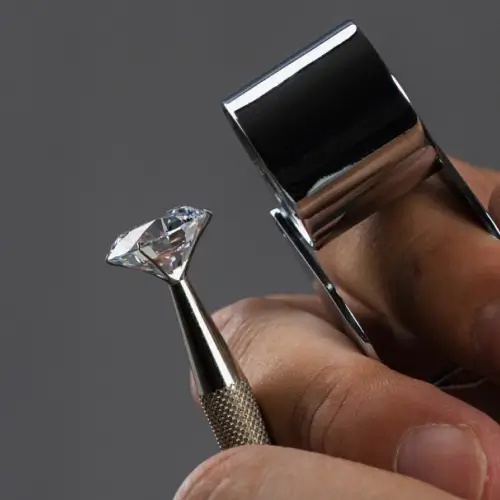
Most lab-created and many natural diamonds with grading reports carry a microscopic laser inscription on the girdle (the thin edge around the widest part of the stone), visible only under magnification.
- GIA inscribes lab-grown diamonds with the words "Laboratory-Grown" plus the report number
- Use a jeweler's loupe or microscope to locate and read the inscription
- Match the inscribed report number against the number on the paperwork and the lab's online database
This is one of the most reliable checks because it physically ties the stone to its report — a mismatched or missing inscription is a serious warning sign.
4. Get Professional Testing
Visual inspection and paperwork checks can only go so far. A jeweler or gemologist has access to specialized equipment, thermal/electrical conductivity testers, spectrometers, and diamond-type screening devices that can:
- Distinguish a real diamond from simulants like cubic zirconia or moissanite
- Detect treatments or synthetic origin that aren't obvious to the naked eye
- Confirm the stone matches its accompanying report
This step matters because even experienced buyers can be fooled by sight alone, especially with high-quality simulants or diamonds that have been mounted in a way that hides inclusions or inscriptions.
5. Don't Rely on Home Tests Alone
Tests like the fog test, water test, or sparkle/refraction check can be fun, quick checks, but they aren't proof of authenticity:
- They can suggest whether a stone is a diamond simulant (glass, cubic zirconia) but can't confirm it's specifically diamond versus another material with similar properties (like moissanite)
- They absolutely cannot tell you whether a diamond is natural or lab-grown, since both are chemically identical
- Environmental factors (humidity, stone temperature, cleanliness) can easily skew results
Home tests should be treated as a first, informal screening, never as a substitute for report verification, inscription checks, or professional testing.

SHOP Hidden Halo Engagement Rings
How To Check Before You Buy
Ask directly whether the center stone is a natural diamond, a lab-grown diamond, or a simulant, and get the answer in writing, not just verbally at a counter.
- Request the IGI or GIA report number before finalizing any purchase, not after.
- Look up that report number on the lab's own website, not a link the seller provides.
- Confirm the carat weight, measurements, and grading on the report match the actual stone.
- Check that the listing explicitly names the material if the price seems unusually low for a diamond.
- Ask what the return policy covers if the stone turns out not to match its certificate.
A retailer with nothing to hide will produce this information without hesitation. At Friendly Diamonds, lab-grown diamonds are accompanied by certification information so customers can review the stone's documented characteristics before purchasing. That kind of transparency should be the baseline, not a selling point.
If you're buying loose and having a ring built around the stone afterward, ask to see the certificate before the setting work begins. Once a stone is mounted, comparing its measurements against the report gets harder for anyone without a jeweler's tools, so the easiest checkpoint is before it ever touches the ring.
|
Stone Type |
Is It a Diamond? |
Can it have a Grading Report |
Origin |
|
Natural Diamond |
Yes |
Yes |
Naturally formed |
|
Lab-Grown Diamond |
Yes |
Yes |
Laboratory-grown |
|
Moissanite |
No, a distinct mineral |
Yes, through appropriate gemstone grading services |
Laboratory-created mineral |
|
Cubic Zirconia |
No, a synthetic simulant |
May have separate documentation |
Synthetic simulant |
FAQs
Can a lab-grown diamond be mistaken for a simulant like cubic zirconia?
Not once it's certified. A lab-grown diamond is a real diamond chemically and physically, while cubic zirconia is an entirely different material. An IGI or GIA report settles the question because it identifies the exact substance being graded.
How do I verify an IGI or GIA certificate is real?
Take the report number printed on the certificate and enter it directly into the IGI or GIA website's own lookup tool. The details it returns- carat weight, measurements, and grading- should match the stone you were shown.
Is it illegal to sell cubic zirconia or moissanite without disclosing it?
Rules vary by region, but reputable retailers disclose the material regardless of what's legally required. A listing that avoids naming the stone at all is a reason to ask direct questions before buying.
Do lab-grown diamonds come with grading reports?
Yes. Laboratory-grown diamonds can be accompanied by grading reports from recognized gemological laboratories. The exact information and report format depend on the laboratory and report type. These reports can identify the stone as laboratory-grown and document relevant quality characteristics.
Does a certificate cover the ring setting or just the diamond?
Just the diamond. The report grades the stone itself against the 4 C’s and confirms whether it's natural or lab-grown. It says nothing about the metal, the mounting, or the retailer's return policy, so check those separately.
How can I tell the difference between moissanite and a diamond?
Moissanite gives off more rainbow-colored sparkle, while diamonds sparkle mostly white. If you're not sure, a jeweler can test it properly in a few minutes.
FAQs
Can a lab-grown diamond be mistaken for a simulant like cubic zirconia?
How do I verify an IGI or GIA certificate is real?
Is it illegal to sell cubic zirconia or moissanite without disclosing it?
Do lab-grown diamonds come with grading reports?
Does a certificate cover the ring setting or just the diamond?
How can I tell the difference between moissanite and a diamond?