Flat 50% OFF sitewide!
NOW & ON BLACK FRIDAY!
UNLOCK FREE LAB DIAMOND JEWELRY ON PURCHASES OVER $1000 


3-Prong vs. 4-Prong Tennis Bracelets: Which Setting Is Right For You?
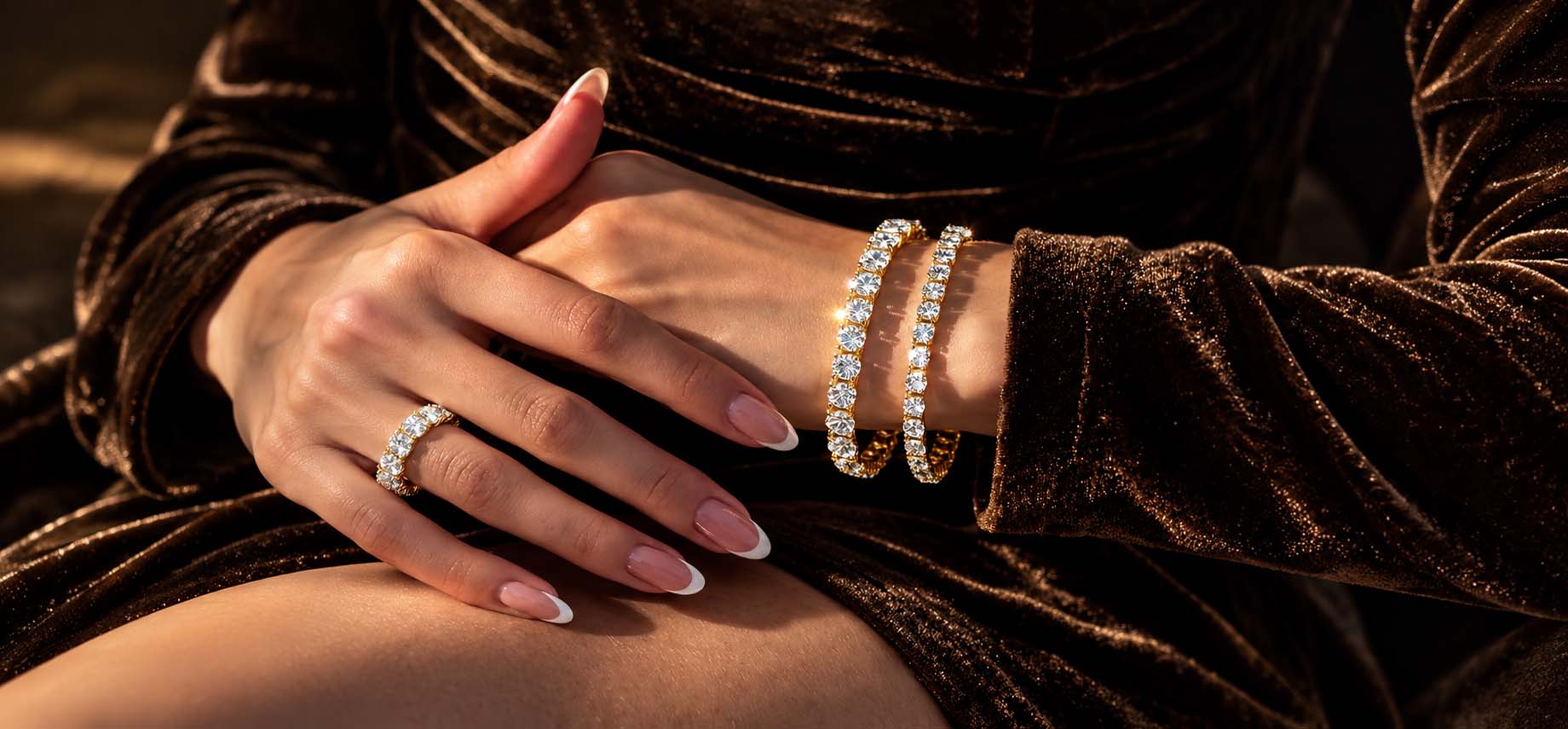
While looking for that perfect tennis bracelet, you must have considered the carat weight, diamond quality, and color of the metal. You may find yourself at the crossroads, and the question you face now is choosing between 3-prong and 4-prong settings.
It seems unnecessary to think long and hard about such an issue, but, indeed, the differences are quite significant.
Setting is not only the way to attach diamonds. Setting defines the amount of the stone visible to the eye, the amount of metal in the piece of jewelry, and the feeling of security of your jewelry after years of wearing it. Two tennis bracelets, made of the same diamonds, will appear totally different due to the different settings of those diamonds.
Here's what is important to know before buying a 3-prong tennis bracelet vs. a 4-prong tennis bracelet.
Table of Content
- How Does the Prong Setting Function?
- Difference Between 3-Prong and 4-Prong Tennis Bracelet
- Design and Metal Exposure
- Which Sparkles Better?
- Durability and Daily Wearing
- Comfort and Maintenance
- Is there a Difference in Price?
- Which Setting Is Right for You?
How Does the Prong Setting Function?
It is always necessary to know how the diamonds are held together in a tennis bracelet. Diamonds in the tennis bracelets are all held in their respective positions by tiny metal claws called prongs.
There are two factors determined by the number of prongs:
-
Visible part of the diamond
-
Secure placement of the stones
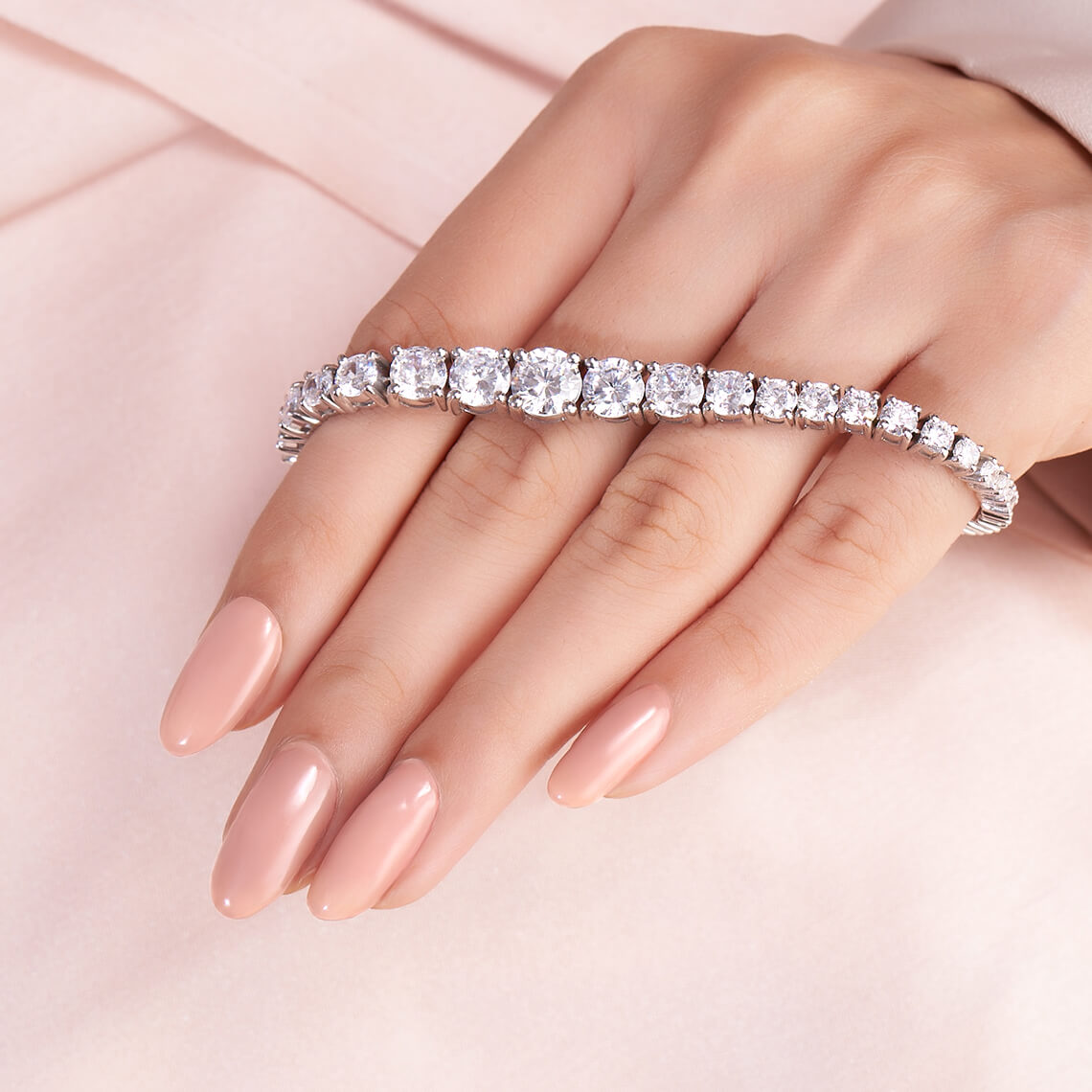
Using three prongs means showing more of the diamond and less of the metal prongs, whereas using four prongs results in a little more coverage of the diamond stones.
Difference Between 3-Prong and 4-Prong Tennis Bracelet
Instead of choosing which setting is better, it would be wiser to know how each one performs.
Feature |
3-Prong Tennis Bracelet |
4-Prong Tennis Bracelet |
|
Diamond visibility |
More of each diamond is exposed, making the bracelet appear more diamond-forward. |
Slightly more metal surrounds each diamond, creating a balanced look. |
|
Metal visibility |
Less metal is visible between the stones, giving the bracelet a seamless appearance. |
More metal separates each diamond, adding definition to the design. |
|
Overall style |
Modern, sleek, and minimal. |
Classic, timeless, and structured. |
|
Perceived sparkle |
Creates the illusion of a continuous ribbon of brilliance because the diamonds appear closer together. |
Sparkle is equally beautiful, but each diamond stands out individually. |
|
Diamond security |
Three points of contact securely hold each diamond, but regular inspections are recommended. |
Four points of contact provide additional support, making it a popular choice for everyday wear. |
|
Comfort |
Slightly lighter feel with a more open design. |
Feels a little more substantial without being bulky. |
|
Maintenance |
Clean regularly and check prongs periodically to ensure every stone remains secure. |
Similar care is required, although the extra prong provides added reassurance over time. |
|
Best suited for |
Buyers who want maximum diamond visibility, a contemporary look, or a statement piece. |
Buyers looking for classic styling, everyday durability, and long-term wear. |
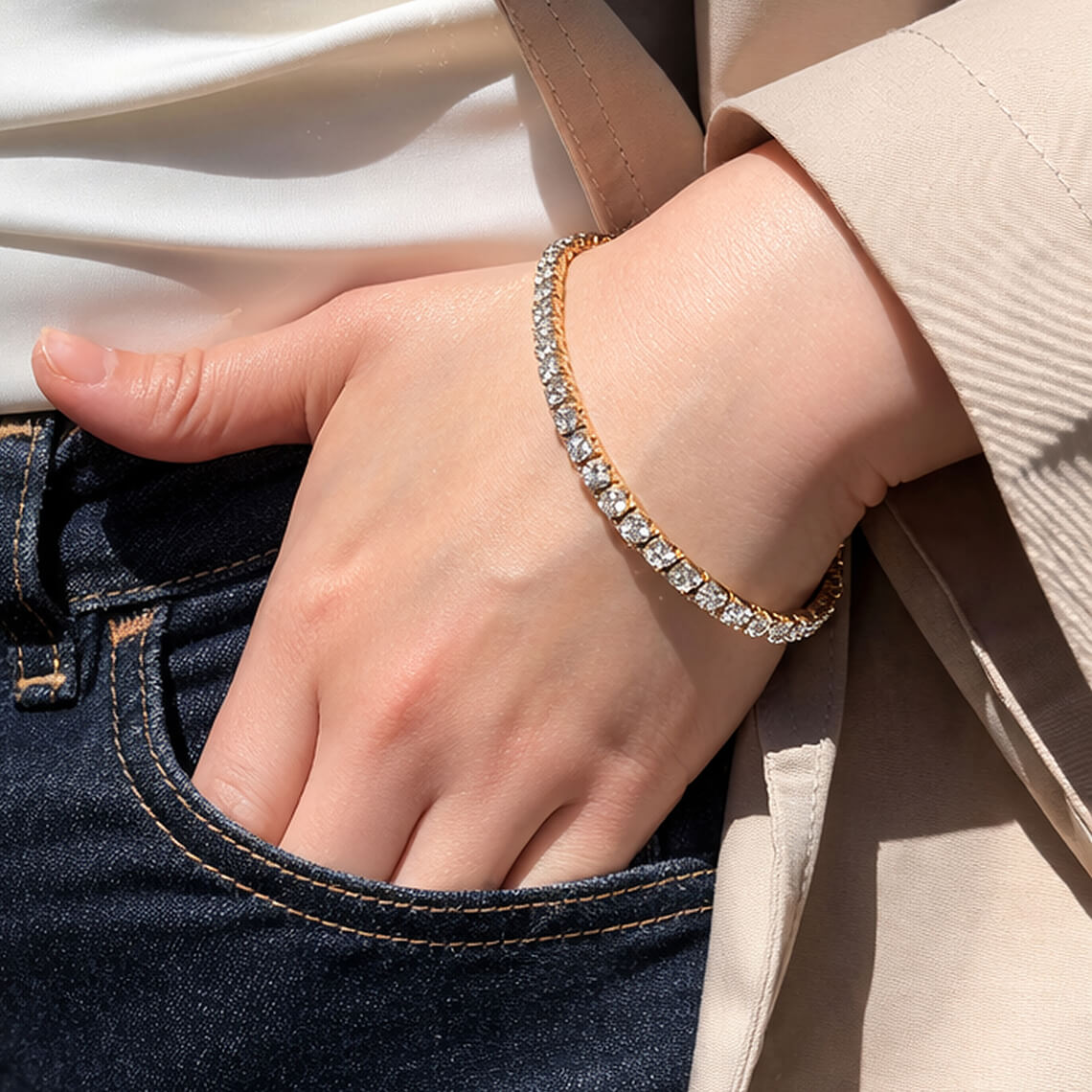
SHOP Darcy Round Lab Diamond Tennis Bracelet
Design and Metal Exposure
It is always the first thing that people tend to notice while looking at two different types of bracelets.
A 3-prong tennis bracelet is made with the help of less metal around each diamond. Stones seem to be placed closer to each other, making an elegant line, allowing the stones to become the main characters. Less metal makes the bracelet look modern and light.
A 4-prong tennis bracelet is slightly more complicated. It gives each diamond its own frame and makes the whole bracelet look very balanced and elegant. Traditional fine jewelry lovers will find this setting familiar for sure.
There is no better one, but it all depends on your personal preference for whether you like less or more metal.
Which Sparkles Better?
The number of prongs does not matter when it comes to the sparkle of the diamond. It all depends on the cut of the diamond. What really changes is only how the sparkle is perceived.
Due to the fact that a 3-prong tennis bracelet has a lot more uncovered diamonds than the 4-prong tennis bracelet, this bracelet will have the appearance of one long line of sparkle. This is especially noticeable with bigger diamonds.
The 4-prong tennis bracelet provides a good sparkle, but there is more metal that separates the stones. There are people who appreciate it, as it gives each stone a separate look.
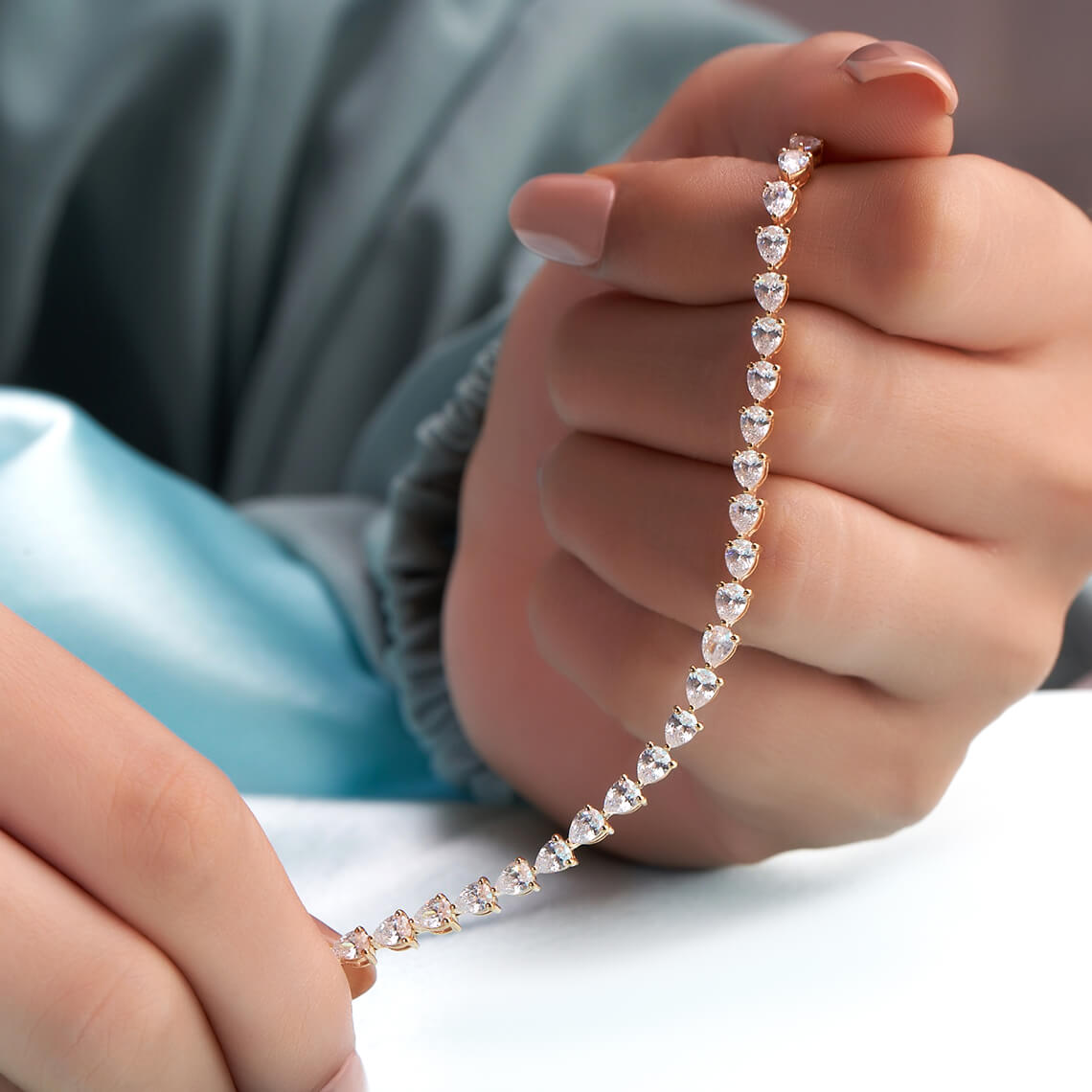
SHOP Serene Pear Lab Diamond Tennis Bracelet
Durability and Daily Wearing
When wearing your tennis bracelet on a daily basis, the durability of the piece should not be neglected any less than its look.
With respect to four-prong settings, each diamond is supported at four points. Hence, with such a setting, in case one prong gets damaged, the other prongs will keep supporting the diamond until it is repaired.
In three-prong settings, bracelets are meant for wearing on a day-to-day basis. However, because of the extra load that falls on each prong, frequent inspections become necessary.
For those people who want their bracelets to be worn every day, a four-prong setting can be preferable.
Comfort and Maintenance
Comfort does not lie in the quantity of prongs but depends on the quality of the bracelet itself. However, some differences do exist.
As for the three-prong bracelet, it is quite light in weight, as there is less metal in it. It is something that is quite appealing for a lot of people as they like wearing light jewelry.
As for the four-prong bracelet, it will have more volume but will not look too heavy. In addition, such bracelets are usually selected due to their classic style.
As far as the maintenance is concerned, both settings need regular cleaning and inspection from time to time. With any type of fine jewelry, there is going to be natural wear and tear, and therefore, it is necessary to check all prongs.
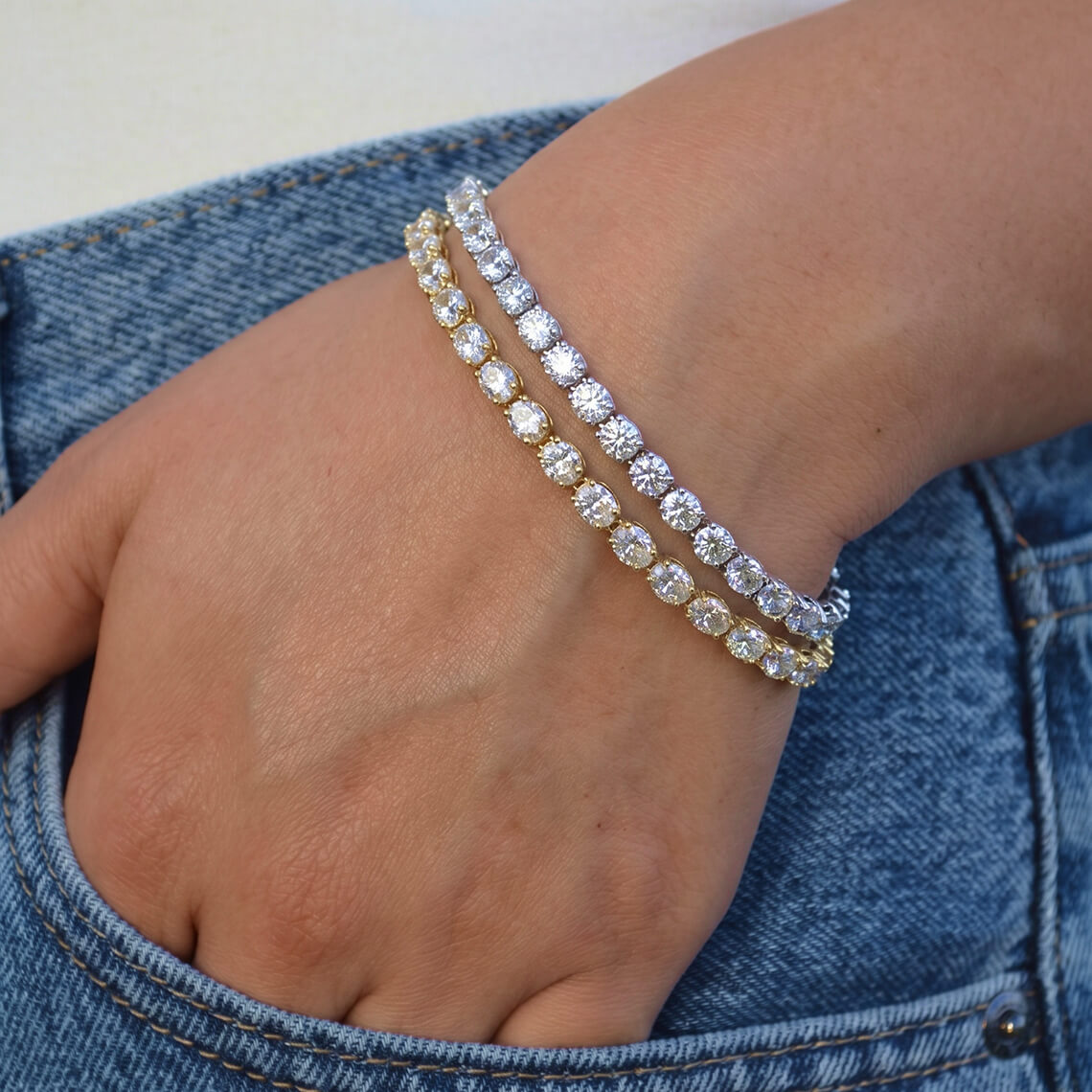
SHOP Aldea Oval Lab Diamond Tennis Bracelet
Is there a Difference in Price?
In the majority of cases, it is not the environment that influences pricing significantly.
Even though a 4-prong setting would mean a little extra material and labor, both of these factors become unimportant in comparison with other important factors and bracelet features like overall carat weight, clarity grading, quality of diamonds being used, length of the bracelet, metal, etc.
The bracelet price is not affected much by the number of prongs, so it is wise to concentrate on its quality instead.
Which Setting Is Right for You?
It's much easier to figure out by considering how you are going to wear it rather than how it looks on display at a jeweler's counter.
Go for a 3-prong tennis bracelet when:
-
You love the modern design.
-
You want your diamonds to be easily visible.
-
You want minimal metal surrounding your diamonds.
-
You want your diamonds to stand out because of their size
Go for a 4-prong tennis bracelet when:
-
You want to wear it daily.
-
You love the classic design.
-
You want to give extra protection to your diamonds.
-
They are collecting jewelry
Simply put, there is no correct choice. There is no x is better than y. The prong setting affects the look of the bracelet and durability. The right setting for you ultimately depends on your personal taste and lifestyle.
FAQs
Is a 3-prong tennis bracelet strong enough to wear on a daily basis?
Do diamonds in a 4-prong tennis bracelet shine less?
Which of them makes diamonds appear bigger?
Which of the two settings requires less care?
Which of the two is preferable for a lab-grown diamond tennis bracelet?